
Good-quality logs are only half the battle. Proper storage is the other crucial half that ensures your firewood burns efficiently all winter long. Even kiln-dried logs can absorb moisture if stored incorrectly, reducing heat output and inviting mould or rot. In this guide, we’ll walk you through practical, easy-to-implement storage strategies so your logs stay dry, seasoning properly and ready when you need them.
Why storage matters
When you bring firewood home, you’re just a step away from a cosy, efficient fire, provided the wood is stored correctly. Moisture is the enemy of good burning. If logs absorb ambient humidity or rain, their energy content drops, and you’ll need more fuel to achieve the same heat. The goal is to keep the moisture content as low as possible and to promote airflow around each piece so that moisture can escape. This is why the simple principle of correct storage is as important as buying good-quality logs.
In this post, we’ll cover practical tips on how to store firewood correctly once it’s delivered, with a focus on keeping logs off the ground, allowing airflow, using smart covers, and balancing indoor and outdoor storage. By following these guidelines, you’ll maximise efficiency and minimise waste.
1) Elevate logs off the ground
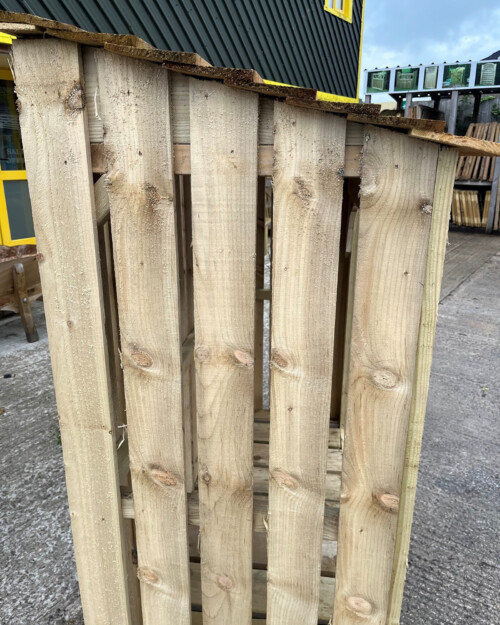
One of the simplest and most effective storage practices is to keep logs raised above the ground. Storing wood directly on soil or damp surfaces invites moisture to wick into the bottom layers, especially after rain or dew. Raising logs on pallets, a dedicated log store, or a simple rack creates a barrier between the wood and the ground, reducing damp seepage and prolonging the wood’s quality.
- Use treated pallets or timber stands to create a stable base.
- Ensure the base is level and able to bear the weight of the stacked logs.
- Periodically check for signs of moisture beneath the base and adjust as needed.
This practice also helps prevent pest intrusion and makes it easier to dry the wood evenly from the bottom up.
2) Allow airflow – how to stack for proper ventilation
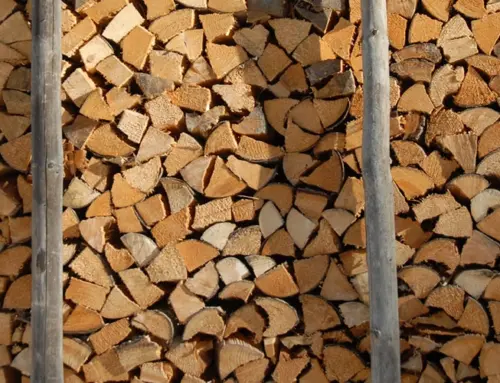
Airflow is essential for drying and maintaining kiln-dried logs. When logs are stacked too tightly, moisture gets trapped, and the wood can start to rot or develop mold. The key is to stack loosely enough to allow air to circulate around each piece.
- Stack logs in a crisscross or loose, single-layer pattern when possible.
- Avoid airtight piles; keep gaps between rows to promote ventilation.
- Consider stacking with small gaps between individual logs, especially in the middle of the pile, to facilitate air movement.
If space is limited, you can still maintain air flow by using a staggered stacking approach or by placing logs on pallets with space between layers. The goal is a natural, consistent airflow that speeds up moisture evaporation without exposing the wood to driving rain.
3) Cover the top, not the sides – rain protection and ventilation
A common mistake is fully wrapping logs or covering all sides. While you want to protect the wood from rain, completely enclosing it can trap moisture and condensation, especially if the wood has residual moisture or if the climate is humid.
- Cover the top of the pile with a breathable, water-shedding cover (e.g., a tarp or roof) to shield from precipitation.
- Leave the sides open to allow air to circulate and to vent any moisture that builds up under the cover.
- Use a frame or shed-like structure to create a dry, shaded area that still breathes.
Fully wrapping logs can create a microclimate where condensation forms on the interior surfaces, leading to damp logs once the cover is removed. By protecting the top while keeping the sides ventilated, you balance rain protection with airflow.
4) Indoor vs outdoor storage – best practices for daily use and long-term stock
Deciding where to store firewood depends on how often you use it and the practicalities of your space. There are distinct advantages to both indoor and outdoor storage, but each requires careful treatment to prevent moisture issues.
- Indoor storage for daily use – A small indoor stack near the door can be convenient for daily use. It reduces the effort to fetch fuel and makes lighting a fire quick. However, indoor stacks should be kept in a dry, well-ventilated area, away from heat sources and humid rooms. Use a short-term, high-ventilation approach to prevent excessive moisture buildup in living spaces.
- Outdoor storage for long-term stock – For long-term storage, place logs outside in a well-ventilated area. Use a purpose-built log store or a simple rack with generous side ventilation. An outdoor setup protects indoor air quality and ensures the wood seasons properly over time. When outdoors, ensure protection from excess rain but maintain air flow to dry the wood. A sheltered but ventilated location is ideal.
Seasoning should be an ongoing consideration. If you’re in a damp climate, you may want to periodically move logs from outdoor piles to sunnier, drier locations during dry spells to speed up drying.
5) Practical setup ideas for different spaces
Depending on your space, you can tailor storage to fit your home while adhering to the principles above.
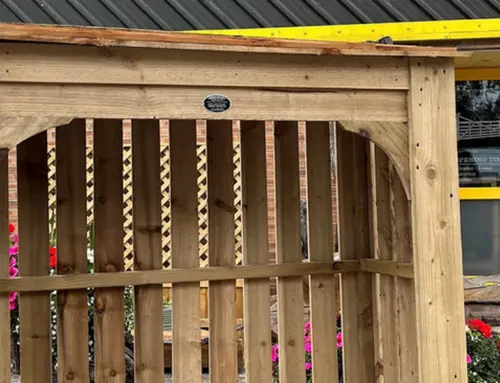
- Small back garden – A compact log store with a raised base, gabled roof for rain, and open sides for ventilation can work wonders. Use a light-colored, breathable cover and ensure there’s a gap at the bottom for airflow.
- Garage or utility room – Build a dedicated drying rack or use pallet-based stacks near a door or window for ventilation, keeping the space safe from backdrafts and excessive humidity.
- Balcony or terrace – A weather-protected freestanding rack can keep logs accessible while still allowing air to circulate. Avoid placing logs directly against walls to prevent moisture transfer.
6) Common mistakes to avoid
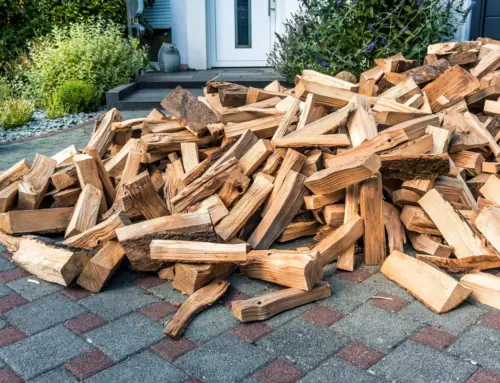
- Stacking logs too tightly – This impedes airflow and promotes moisture retention.
- Fully wrapping logs – Condensation can form inside a fully enclosed cover.
- Storing in damp locations – Basements or poorly ventilated sheds can ruin seasoned wood.
- Ignoring elevation – Logs on the ground can soak up moisture from the soil and rain.
7) Monitoring and maintenance
Regular checks help ensure your storage method remains effective.
- Inspect the pile for signs of dampness, mould, or musty smells.
- Check the base structure for rot or instability.
- Reorganise stacks to improve air flow if you notice slowed drying or damp patches.
Correct storage is a true partner to buying good-quality log storage. By keeping logs off the ground, allowing airflow, covering the top while leaving the sides open, and balancing indoor versus outdoor storage, you protect your wood from moisture and maximise its burning efficiency. Remember – the aim is a dry, well-ventilated stack that stays one step ahead of the wet weather. When you master how to store firewood correctly once it’s delivered, you’ll enjoy cleaner burns, less smoke, and more warmth throughout the season.
For logs for sale Blackburn, logs for sale Burnley, logs for sale Darwen, logs for sale Rossendale, logs for sale Accrington, logs for sale Colne, logs for sale Nelson or logs for sale Clitheroe order online below.