
Weed control fabric is one of the least glamorous items on any garden project list and one of the easiest to leave off it, yet it does more to determine how a deck or a gravel path looks in three years than almost anything else in the order. It goes down early, disappears from view within a day, and then quietly earns its keep for a decade if the right grade went in. As a supplier of fencing and timber supplies in Clitheroe, we sell membrane alongside decking boards right through the summer, and the questions that come up are almost always the same two. Which fabric goes where, and does it genuinely make a difference.
What a membrane actually does under a garden structure
The common assumption is that a membrane kills weeds. It does not. What it does is deny light and a rooting route to whatever is already in the soil, and stop airborne seed that lands on the surface above from reaching the ground below. Those are two different jobs and they matter at different times. In the first season the fabric is suppressing what was already growing. From the second season onwards it is stopping new seed from establishing in the gravel, bark or sand that sits on top of it. A path that stays clean for years is almost always one where the fabric was continuous and properly lapped, not one where a stronger weedkiller was used.
Why decking needs a membrane even when it sits above the ground
People often skip the membrane under a raised deck on the basis that nothing will grow in permanent shade. That holds for the middle of a large deck. It does not hold for the edges, and it does not hold for anything built at low level. Light reaches in from the sides, gaps between boards let daylight through in strips, and bramble, bindweed and horsetail are all perfectly capable of finding it. Bindweed in particular will travel several metres underground to reach a light source and then come up through a board gap where you cannot get at it. Once a deck is down and screwed, the only way to deal with what is growing underneath is to lift boards, which is a miserable job on a warm August weekend.
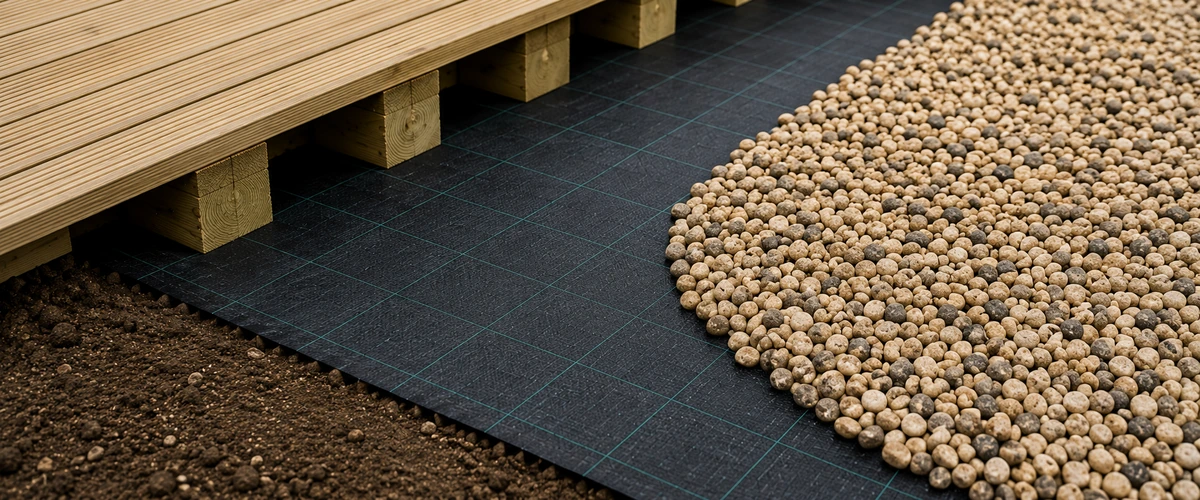
The other reason is airflow and ground moisture. A fabric laid over the ground and dressed with a layer of gravel keeps the soil surface stable, reduces splash-back onto the underside of joists, and stops the sub-frame sitting in the damp that bare soil holds after a wet Lancashire week. It will not replace proper ventilation or the correct joist spacing, but it removes one of the routes by which the underside of a deck stays wet long after the top has dried out.
Gravel paths, borders and driveways
Gravel over bare soil looks right for about one season. After that the stone starts to work down into the ground, the soil works up into the stone, and the whole surface loses its clean line and starts to grow. A fabric holds the separation. The stone stays as a layer rather than mixing into a mush, which means the path drains and stays walkable, and topping it up in future costs a bag rather than a load.
Borders are the other common use, and the one where people most often regret cutting corners. A fabric laid before planting and cross-cut only where each plant goes gives a border that needs a fraction of the weeding for years. Laid afterwards, cut around established planting, it never quite seals and weeds come through the gaps.
Choosing between standard fabric and patio and decking grade
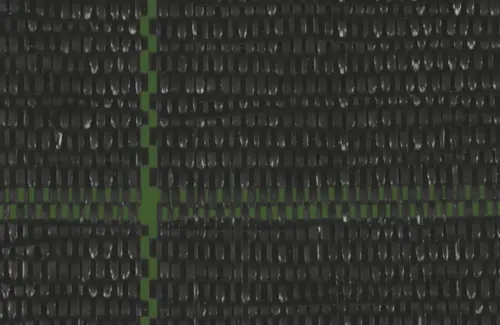
We stock two, and they are not interchangeable. The standard weed control fabric is the general-purpose grade for borders, under bark, under gravel paths and under low-traffic areas. It is woven, it lets water and air through freely, and it is the right choice for most garden use.
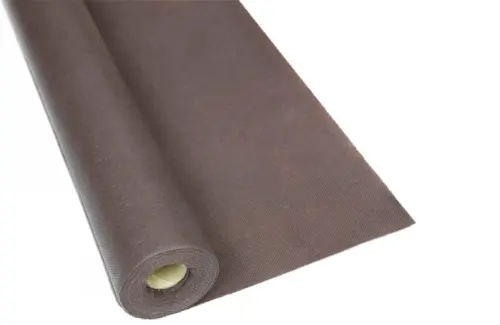
The patio and decking fabric is the heavier grade, intended to sit under a hard surface or a timber structure where something is going to be built on top and where the fabric needs to resist being punctured during the build. If you are laying a patio, building a deck sub-frame, or putting down a base that will carry weight, that is the one to use. Using the lighter grade under a deck is a false economy, because the damage is done during construction when boots, sharp sub-base and dropped tools go through it, and by the time the boards are on you cannot see what state it is in.
Laying it so it does not fail at the edges
Almost every membrane failure happens at a join or an edge rather than in the middle. Lap adjacent runs generously rather than butting them, and lap them so the upper piece overlays the lower in the direction water runs, not against it. Pin the fabric down before dressing it, because a sheet that shifts while gravel is being barrowed on will open a gap that never closes. At the perimeter, carry the fabric up the edge restraint or the sleeper rather than cutting it flush, and trim it back only once the surface material is in and settled. Where the fabric meets a fence line, take it right up to the gravel board so there is no bare strip along the boundary, which is exactly where nettle and bramble tend to establish.
Ordering it with the rest of the project
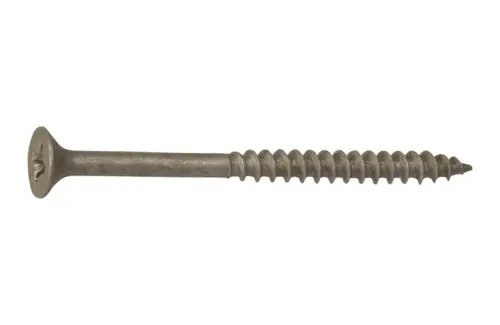
The practical point for a Lancashire garden is that membrane is heavy and bulky relative to what it costs, so it is worth putting on the same order as the timber rather than fetching it separately. Customers building decks around Clitheroe fencing and out towards Whalley fencing generally take it with the joists, the boards and the fixings in one go. Our decking supplies and fixings and accessories ranges sit alongside the timber decking for exactly that reason.
If you are planning a deck, a path or a border this summer and you are not sure which grade you need for the job, ring us on 01200 449930 and describe what is going on top of it. Delivery is free on orders over £150 across all BB postcode areas, so it is worth putting the membrane on the same order as the timber rather than paying to have it brought out on its own.