
Getting your log order right before winter sets in is one of those practical decisions that pays off every time the temperature drops. Order too little and you are making emergency calls in January. Order sensibly early and your fuel is stacked, dry, and ready when you need it most. At Empress Fencing, we supply fencing and timber supplies in Clitheroe alongside Ready to Burn certified kiln-dried logs delivered to homes across Lancashire and all BB postcode areas, and we are asked regularly how much people should be ordering for a full winter season.
Why the Answer Depends on More Than Just the Size of Your House
The honest answer is that winter log consumption varies considerably between households, and the variables that matter most are not always the ones people expect. The size of the room being heated is an obvious factor, but stove efficiency has an equally significant effect. A modern high-efficiency log burner running at five kilowatts in a well-insulated lounge will burn far less fuel than an older open fireplace in a stone-built farmhouse trying to take the chill off a larger space. Lancashire has a good number of both types of property, and the difference in fuel consumption between them over a full winter can be substantial.
How often the fire is used matters just as much as how efficiently it burns. A stove that runs for three hours on winter evenings uses a fraction of the fuel of one that is kept burning all day from October through to March. If the fire is your primary heat source rather than a supplement to central heating, your consumption will be higher and your planning needs to reflect that. Our guide on how many logs I need for winter works through these variables in more detail and gives realistic usage figures for different household types.
What a Typical Bulk Order Looks Like
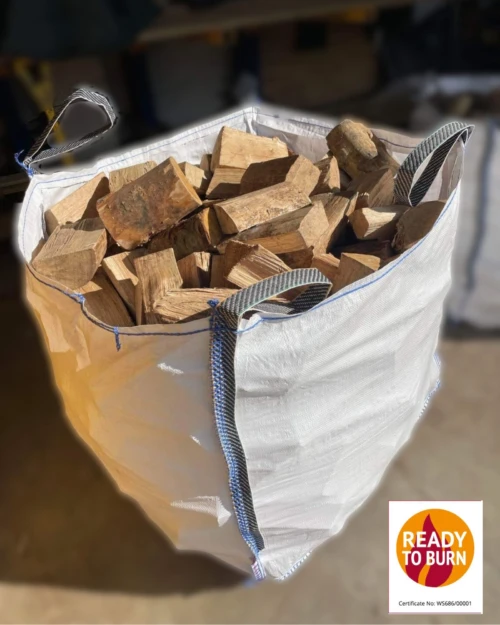
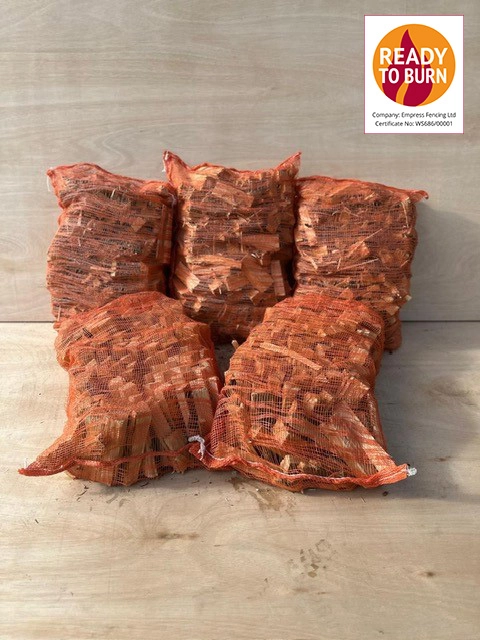
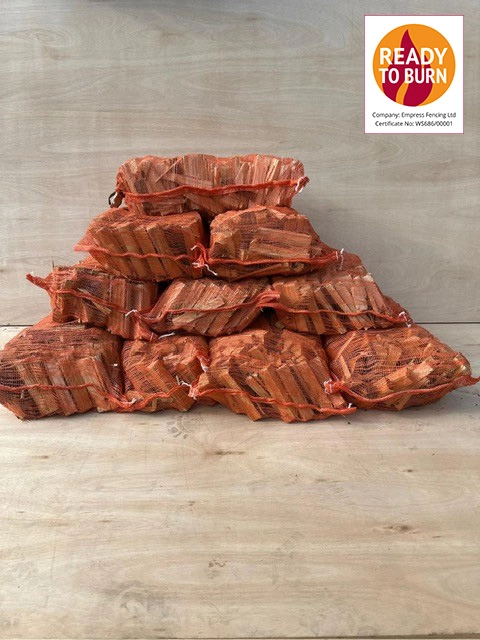
For a household using a modern log burner as a secondary heat source in one room, running the fire on most evenings from November through to the end of February, a reasonable starting estimate is two to three bulk bags of kiln-dried hardwood logs for the season. A larger property where the stove does more of the heating work, or where fires are lit earlier in autumn and later into spring, would typically need more. If you want to understand what a full load delivers in terms of burn time, our post on how long a 1 ton bag of logs last gives a practical breakdown that helps translate volume into actual weeks of use.
The case for ordering a modest surplus is straightforward. Kiln-dried logs store well if kept correctly, and any stock left over in spring costs you nothing extra to hold. Running short in mid-January, on the other hand, means ordering during the busiest period of the year when demand is highest and delivery slots fill quickly across the BB postcode area.
Why Kiln-Dried Logs Make the Calculation More Predictable
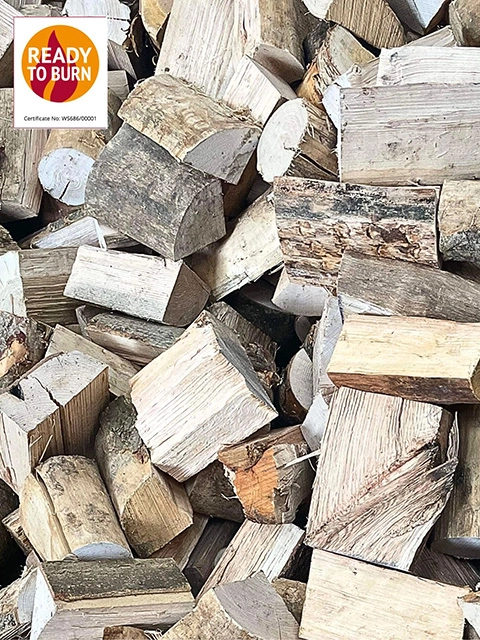
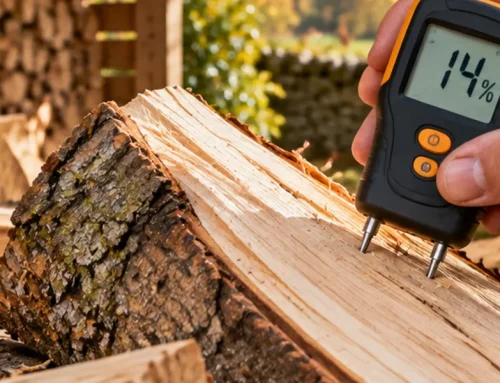
One of the less obvious advantages of buying kiln-dried logs delivered rather than sourcing seasoned wood is that the burn performance is consistent. Seasoned wood varies in moisture content depending on how long it has been dried and how it has been stored before you receive it. Kiln-dried logs from a certified supplier arrive at below 20% moisture content and, if stored correctly, stay there. That consistency means you can plan your consumption more reliably because each log performs in a predictable way rather than varying from delivery to delivery.
The lower moisture content also means less creosote depositing in your flue over the course of the season, which is worth factoring into your overall heating costs. Cleaner burning fuel generally means less frequent chimney sweeping and better stove performance over time. Our post on why kiln-dried logs are better for your chimney and stove explains the mechanism behind this if you want the fuller picture.
Storing Your Order Correctly Once It Arrives
Getting your storage right is what protects the investment in good quality fuel. Kiln-dried logs that are left uncovered or stacked directly on damp ground will reabsorb moisture quickly, particularly through a wet Lancashire autumn. The principle is simple: keep them off the ground on a slatted or raised base, keep rain off the top with a covered roof, and allow airflow through the sides rather than enclosing them on all faces. A breathable cover rather than a solid sealed wrap is the right approach.
If you do not have an existing log store, investing in one before your delivery arrives is worthwhile. Our log storage solutions page covers the options we stock, and our guide on how to store kiln-dried logs properly covers positioning, ventilation, and the practical details that make the difference between logs that stay dry and logs that deteriorate before you burn them.
Ordering Early and Staying Ahead of Peak Demand
Delivery slots across the BB postcode area fill up as the cold weather arrives and households that left ordering late all contact suppliers at the same time. Ordering ahead of that peak, ideally before the first cold snap of autumn, means you choose your delivery timing rather than taking whatever is available. Orders over £150 qualify for free delivery within BB postcodes, so consolidating into a single well-planned order rather than several smaller ones also keeps the cost down.
We supply logs for sale Clitheroe, logs for sale Whalley, logs for sale Burnley, logs for sale Blackburn, logs for sale Nelson, logs for sale Barnoldswick, logs for sale Haslingden, and logs for sale Rawtenstall, along with many other locations across Lancashire. To discuss your requirements or check current availability, call us on 01200 449930 or visit our logs for sale page to order online.