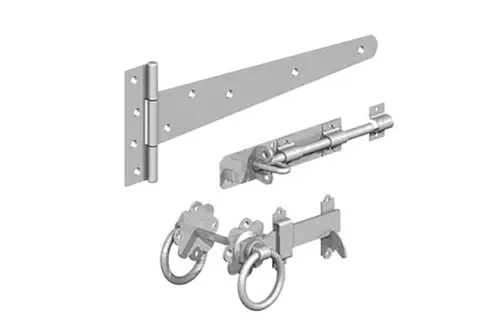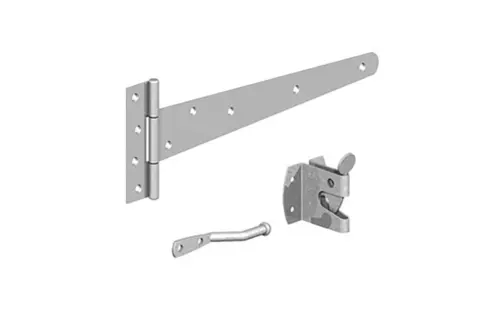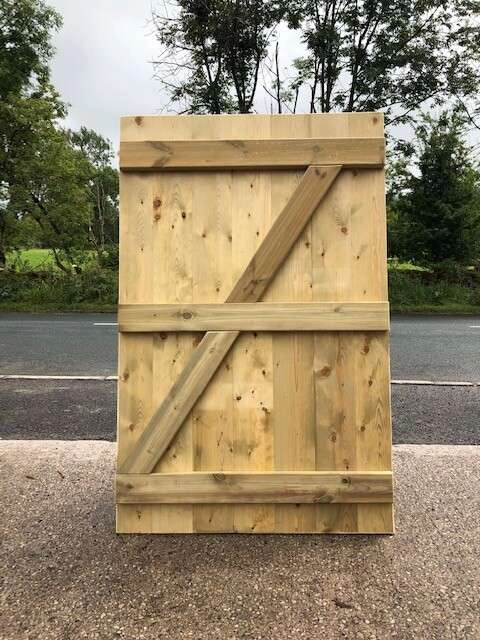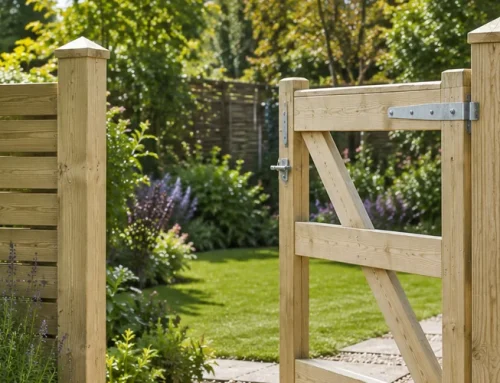

Gate hinges and latches are where almost every gate problem originates, and almost never where people look first. A gate that drops, sticks in summer, rattles in wind or refuses to catch is usually blamed on the timber. Nine times out of ten the timber is fine and the ironmongery is either the wrong specification, fitted in the wrong place, or worn out. Fittings are a small fraction of the cost of a gate and they determine whether it works for two years or twenty. We supply them alongside the gates themselves as part of our fencing and timber supplies in Clitheroe.
Why the fittings fail before the timber does
A gate is the only part of a boundary that moves. A fence panel is fixed once and then does nothing for its whole life. A side gate may be opened and closed several thousand times a year, in all weathers, often one-handed while carrying something, and frequently allowed to swing shut under its own weight. Every one of those movements loads the hinges and the catch.
On top of that, everything is outdoors. Fittings sit in rain, they sit in frost, and they go through the whole cycle again every year. Undersized or poorly protected ironmongery will corrode, and corroded ironmongery binds, which increases the load on everything else and accelerates the failure.
Hinges and the load they carry
The load on a hinge is not simply the weight of the gate. A gate hangs off one edge, so the far edge is trying to rotate downwards around the hinge line, and the wider the gate the greater that leverage. A wide gate of modest weight can load its hinges more than a narrow heavy one.
That is why the top hinge is almost always the one that fails. The bottom hinge is largely in compression and is doing an easier job. The top hinge is in tension, trying to stop the gate pulling away from the post, and it is where you should look first when a gate starts to drop.
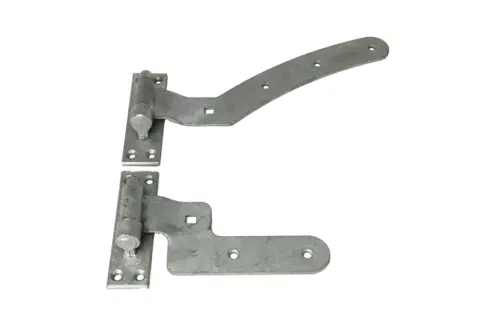
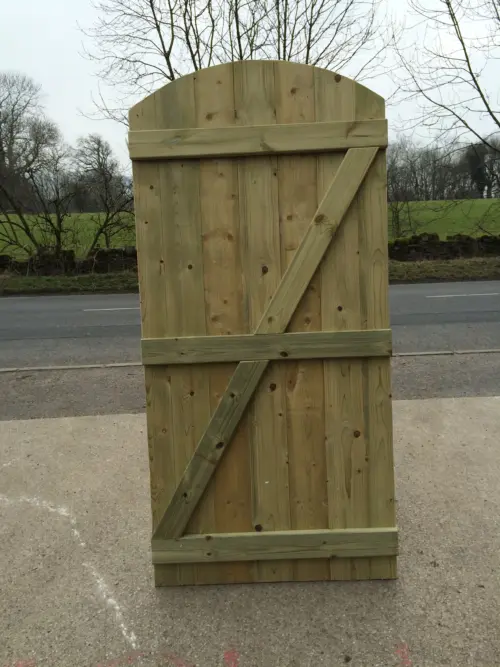
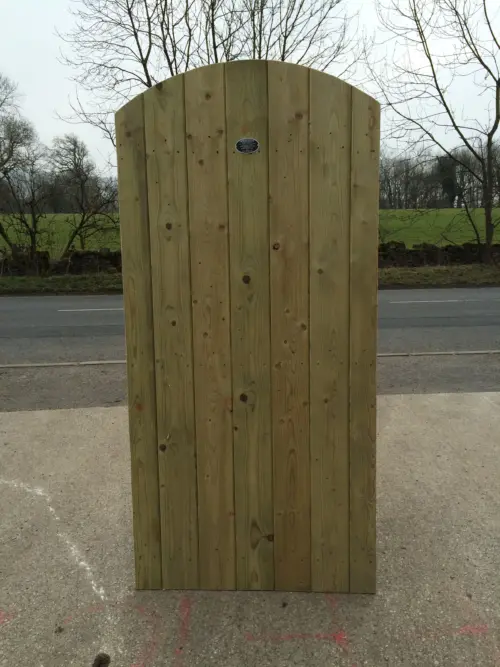
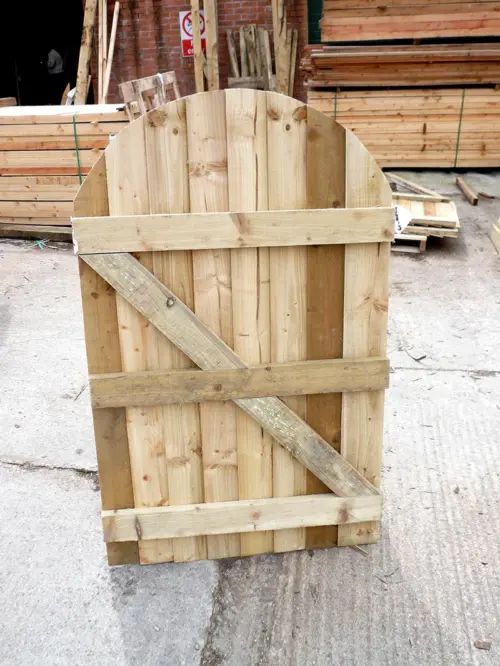
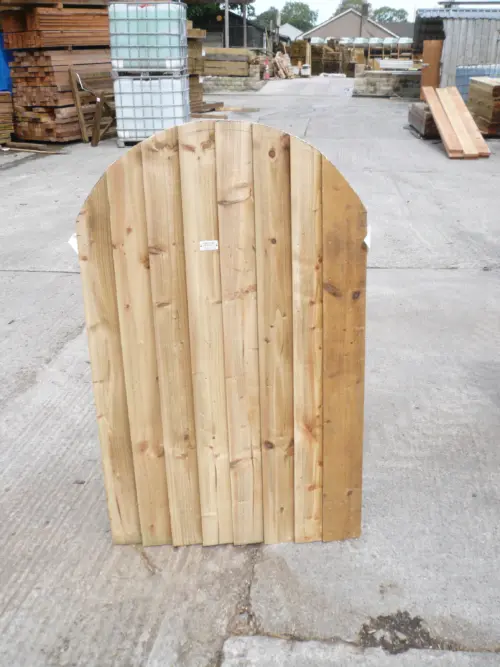
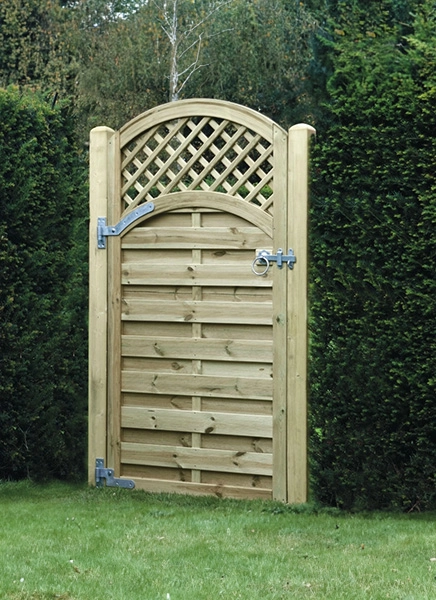
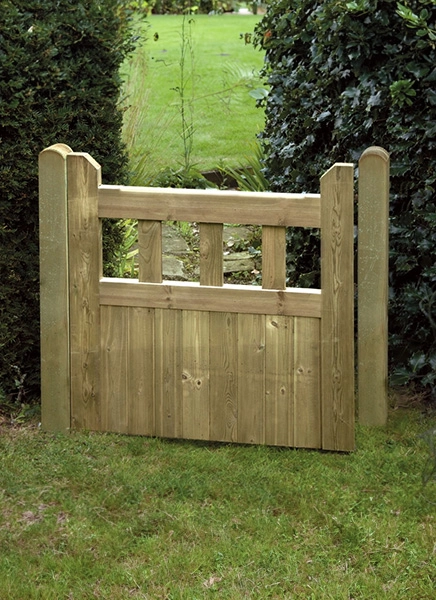
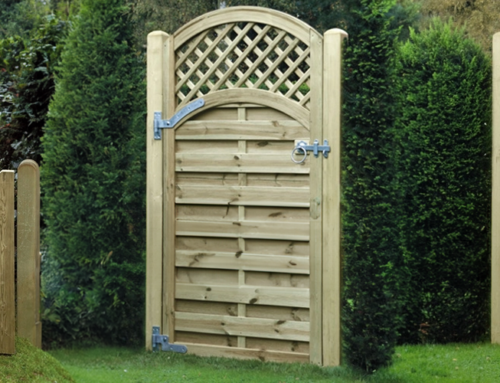
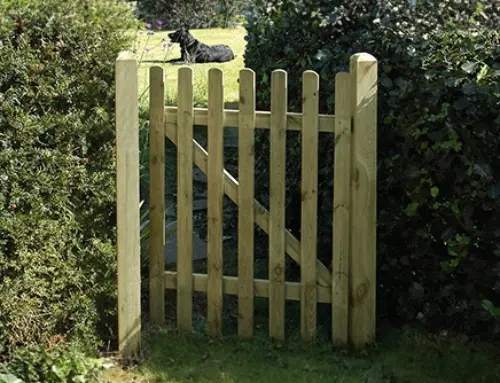
Curved hinge sets suit the arched and shaped gates that are common in domestic gardens, matching the profile of the gate rather than sitting awkwardly across it. Whatever pattern you use, fix into solid timber and into the frame of the gate rather than into cladding, since cladding boards will not hold a hinge under load.
Latches, catches and how they differ
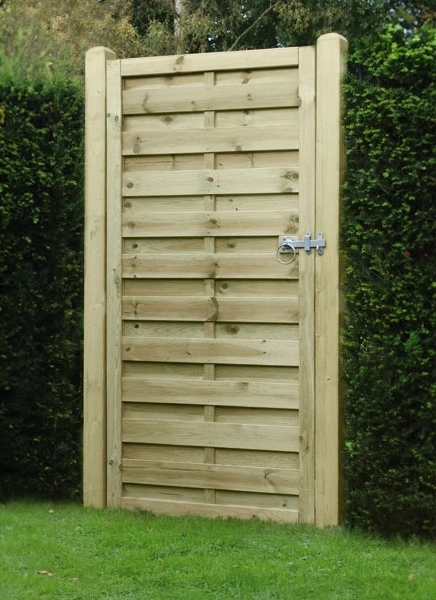
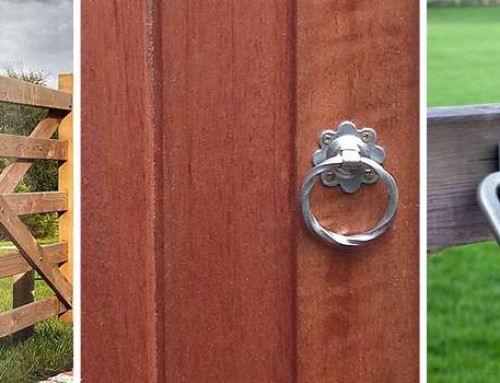
A ring latch is the traditional arrangement, operated by a ring on each face lifting a bar out of a keep. It is simple, it is robust, there is very little to go wrong, and it suits a gate that is opened deliberately. It does need the gate to be hung accurately, because the bar and the keep have to line up.
An automatic catch works differently. The gate closes and the catch engages on its own without anybody lifting anything. That is the right choice where a gate needs to be reliably shut without depending on someone remembering, which in practice means gardens with children, dogs or livestock nearby. It is also better where people go through carrying things and cannot easily operate a latch.
The trade with an automatic catch is that it needs the gate to close accurately every time, so it is less tolerant of a gate that has moved or a post that has shifted. On a gate that is already slightly out, a ring latch will keep working long after an automatic catch has stopped engaging.
Summer movement and why gates stick in August
A timber gate takes up moisture in winter and gives it back in a dry summer, and the dimensions change accordingly. A gate hung tight in February can bind against the post in a wet October, and a gate hung with a generous gap in a dry August can rattle by winter.
The practical response is to hang with a sensible gap that accounts for movement in both directions rather than fitting to the millimetre on the day. If a gate binds only in the wettest months, that is normal seasonal movement rather than a fault. If it binds constantly and progressively, that is the hinge dropping and it needs attention before the post takes damage.
The post matters as much as the ironmongery
Every load a gate applies ends up in the hinge post. An undersized or poorly set post will move, and once it moves the gate no longer closes properly no matter how good the fittings are. If a gate has started to catch and the hinges look sound, check whether the post itself is leaning.
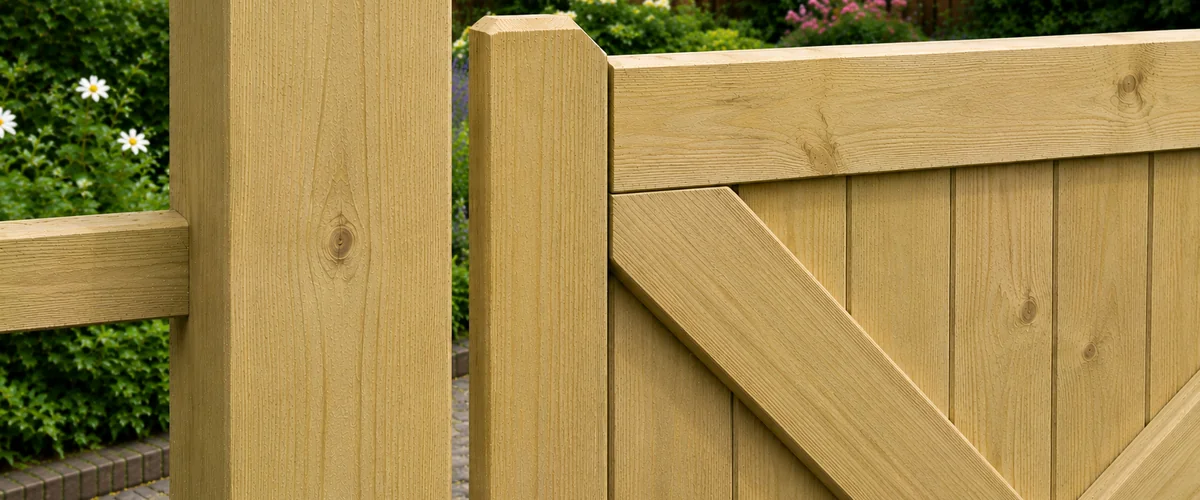
A gate post should be a heavier section than a run post and set deeper, because it carries an eccentric load in one direction for its whole life.
Fitting and maintenance
Fix into the frame of the gate, use fixings suited to outdoor use, and keep moving parts lubricated. A hinge cleaned and lubricated once a year will outlast one that is never touched by a considerable margin, and it takes minutes.
Customers replacing gates around Clitheroe wooden garden gates, Whalley wooden garden gates and Blackburn wooden garden gates generally replace the fittings at the same time rather than reusing old ironmongery on a new gate, which is a false economy.
The fittings sit in our gate fittings range and pair with the traditional garden gates and decorative garden gates sections.
If you are not sure which hinge or catch suits a particular gate, ring 01200 449930 with the gate size and how it will be used. Delivery is free on orders over £150 across all BB postcode areas.