
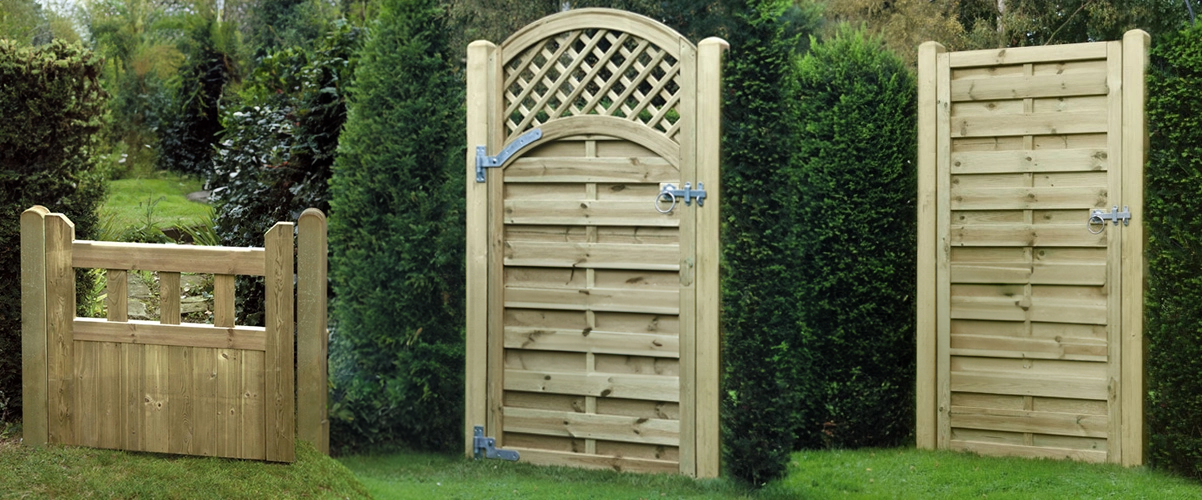
An arched top lifts a garden gate from purely functional to genuinely attractive, and it is one of the most requested features when customers come to us for a new gate. As a supplier of fencing and timber supplies in Clitheroe, we stock arched gates in both feather edge and tongue and groove construction, and the choice between them affects both the look and the privacy of the finished gate. This guide explains how the two differ so you can pick the one that suits your boundary.
The Two Constructions Side by Side
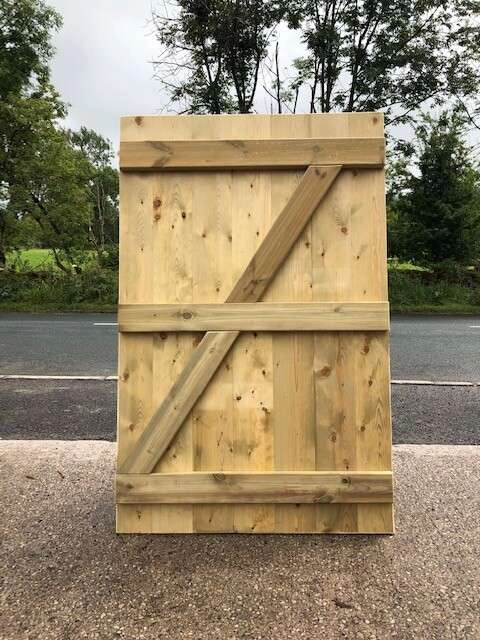
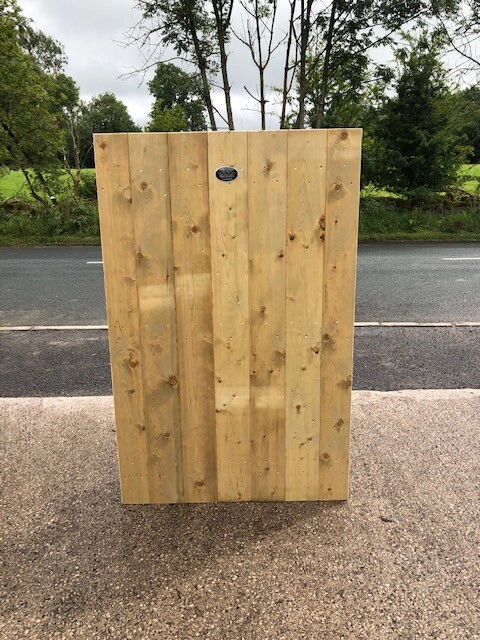
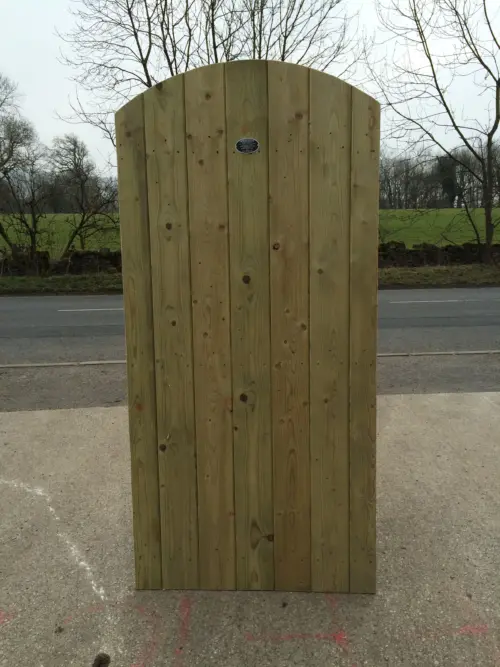
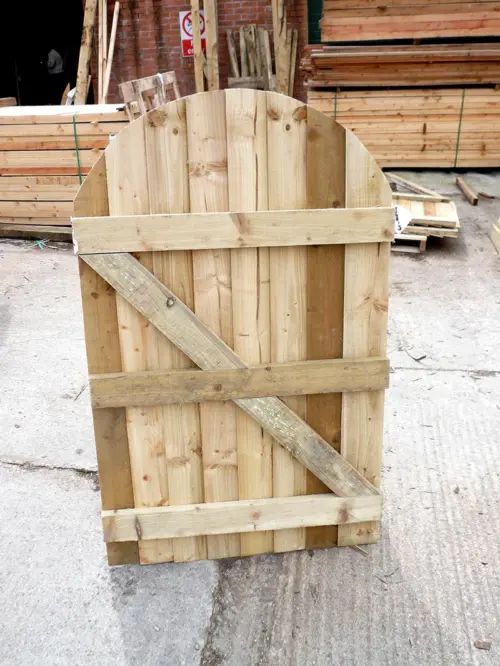
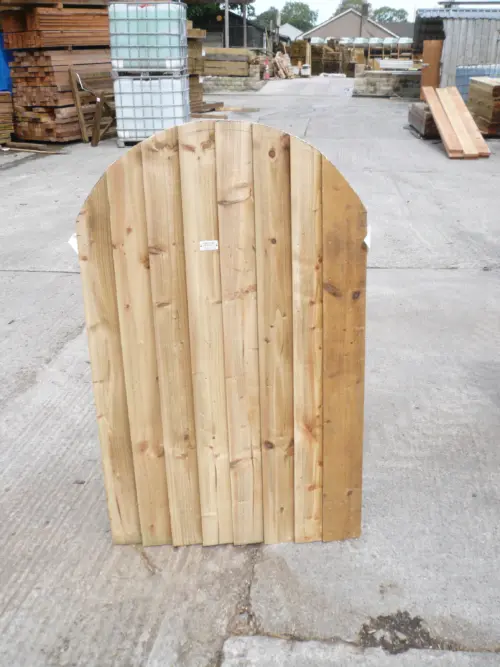
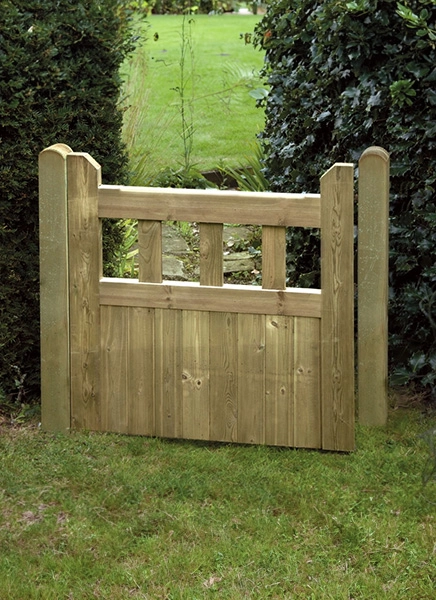
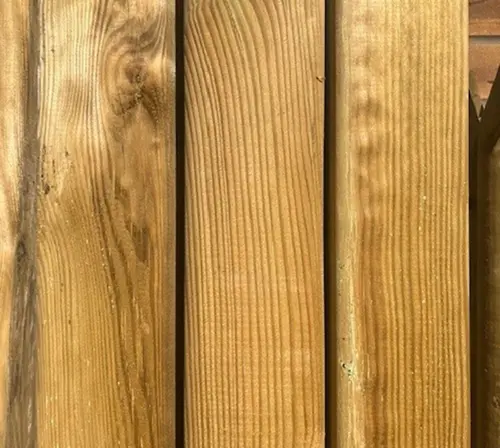
A tongue and groove gate is built from boards that interlock along their edges, creating a smooth, solid face with no gaps. That tight construction gives full privacy and a clean, contemporary finish, which is why tongue and groove suits a gate where you want to close off a view completely, such as a side passage gate alongside a house. We stock arched tongue and groove gates in the standard 0.9m by 1.8m size that fits most domestic openings.
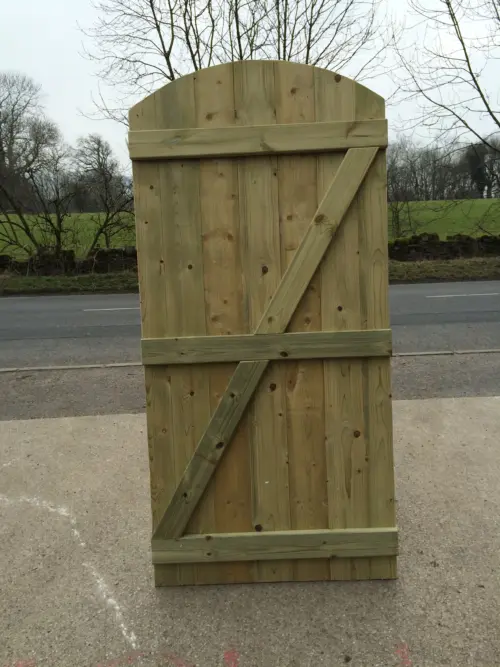
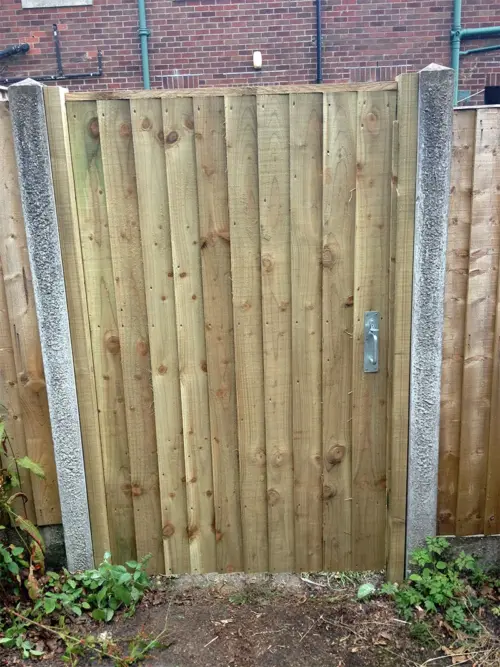
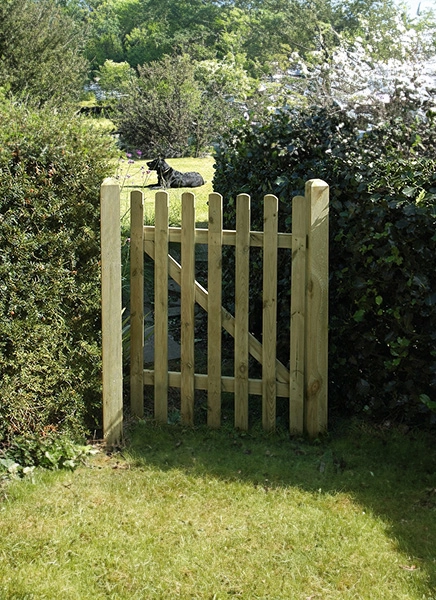
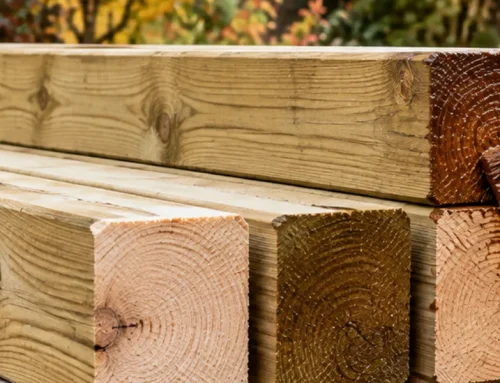
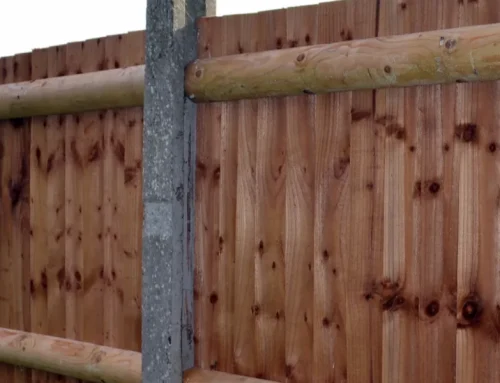
A feather edge gate is built from overlapping tapered boards fixed to a frame, the same construction principle as closeboard fencing. It is robust, traditional and very strong, and the overlapping boards give an attractive textured face. Feather edge is the classic rural and cottage choice, and it pairs naturally with feather edge fencing for a boundary that reads as one continuous run. Our arched feather edge gate comes in the same 0.9 by 1.8 metre size, so it slots straight into a standard opening.
How the Arch Changes the Job
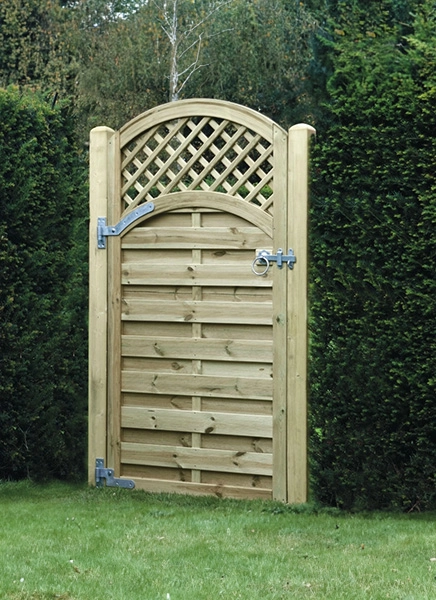
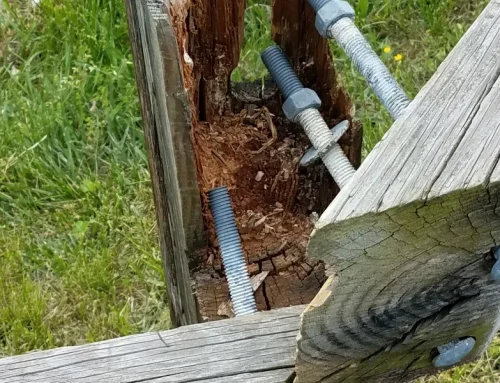
The arched top is more than decoration. It draws the eye upward and softens a hard boundary line, and it works especially well between stone gateposts or under a planted archway, both common features in the older properties around the valley. The thing to remember is that an arched gate, like any gate, lives or dies by how it is hung. The arch adds a little weight at the top, so quality hinges and a sound, plumb post are essential to stop the gate dropping over time.
Hanging an Arched Gate to Last
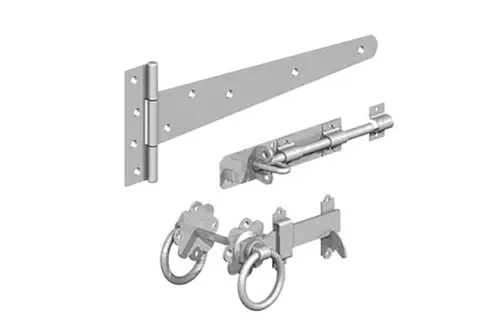
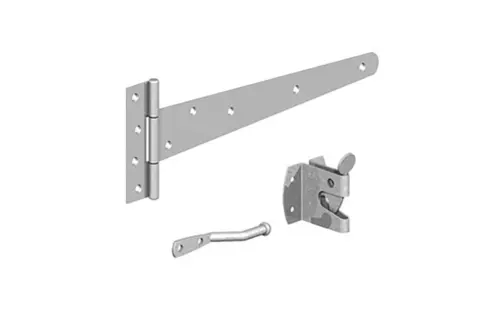
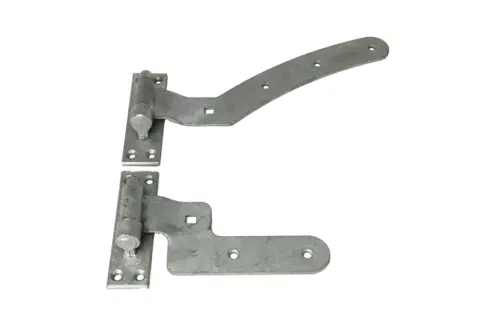
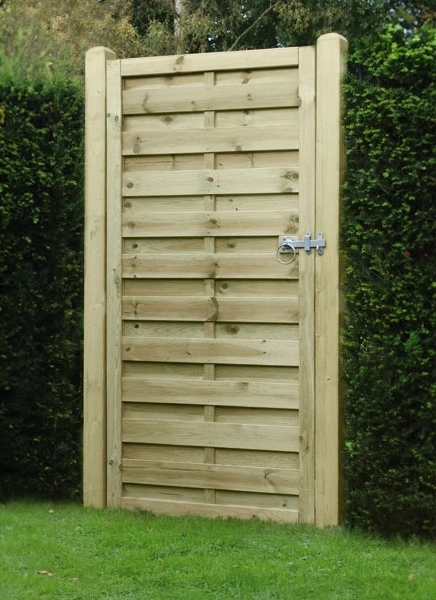
A gate takes more daily wear than any panel in a fence, opening and closing thousands of times a year, so the fittings are not the place to economise. We stock curved gate hinge sets, ring latch kits and auto gate catch kits to suit different gate styles, and matching the hinge to the gate weight is what keeps it swinging true. Our guides on how to fit a gate and how to look after your gates walk through measuring, hanging and maintaining a gate properly.
Matching the Gate to the Fence
The most cohesive boundaries match the gate construction to the fence. A feather edge gate beside feather edge panels, or a tongue and groove gate set into a solid run, reads as a deliberate, finished boundary rather than a gate bolted onto whatever was there. You can browse the full gate range on our traditional garden gates page, and our article on choosing the right garden gate for your property covers the wider decision.
Sizing an Arched Gate to the Opening
Getting the size right is where most gate orders succeed or fail. Our arched gates come in the standard 0.9 metre by 1.8 metre size that fits the majority of domestic openings, but the opening you measure is not the same as the gate width, because you need to allow clearance for the hinges on one side and the latch gap on the other. Measure between the faces of your gateposts, not the overall opening including the posts, and decide which way the gate will swing before you order, as that affects which side the hinges go. On the uneven ground common to older valley properties, also check that the arch will clear any overhanging stone or planting through its full swing. A few minutes measuring carefully saves the frustration of a gate that binds or leaves an awkward gap.
To check arched gate sizes and the right fittings for your opening, call 01200 449930. We deliver gates and fittings across Clitheroe and the BB postcode areas, with free delivery over £150.