

A timber deck transforms how a garden is used, turning an uneven or underused patch into a level outdoor room that comes into its own through the summer months. Planning a timber decking project properly, before a single board is bought, is what separates a deck that lasts and looks right from one that twists, sinks or simply ends up the wrong size. As a supplier of fencing and timber supplies in Clitheroe, we help Ribble Valley customers think their decking projects through from the ground up, because the gardens here bring particular challenges that a generic guide never accounts for.
Local conditions matter more than people expect. Ribble Valley plots are often sloped, the ground holds water through a wet season, and access for materials can be tight on rural lanes and through narrow side passages. Each of those shapes how you plan.
Working Through a Decking Project From the Ground Up
Every successful deck starts with an honest look at the ground. A flat, free-draining site is the easy case. A sloped or soft site, which is common across this area, needs a sub-frame designed to bring everything level and to keep the structure clear of wet ground. Getting the frame right is the part that determines whether the finished deck stays true, so it deserves the most planning time. Our timber decking range and the wider decking supplies we carry cover the boards, joists and components a project needs.
Measuring and Sizing the Deck
Decide what the deck is for before you size it. A deck built around a dining table and chairs needs enough clear space to pull seats out and walk around them, while a deck meant for a couple of loungers can be more modest. Measure the area, sketch it on paper, and mark where the table, seating or planters will go. It is far cheaper to resize on paper than to discover the finished deck is too tight once the furniture arrives.
Choosing Boards and Joists
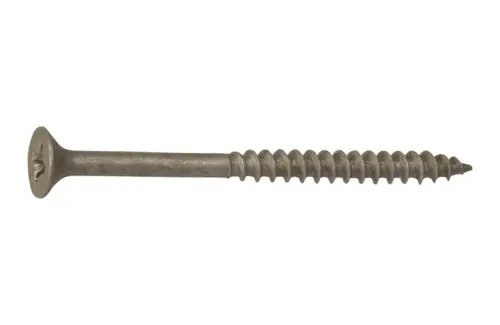
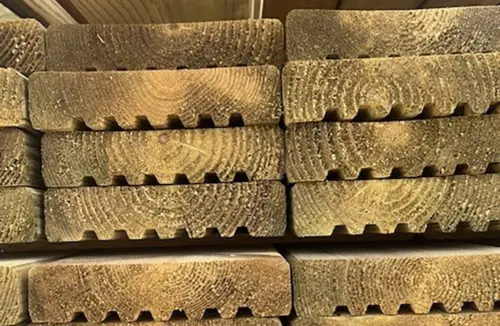
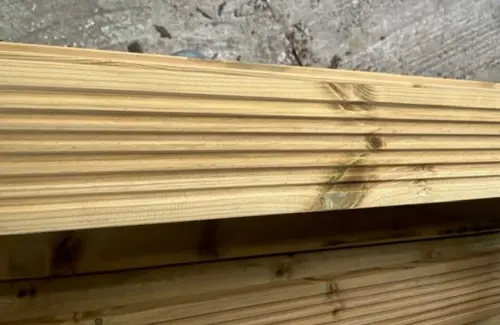
The boards are what you see and feel underfoot, while the joists beneath do the structural work. Both need to be specified for outdoor life, which means pressure-treated timber that resists the damp and rot a Lancashire garden delivers. Our decking boards are chosen for outdoor durability, and they sit on a joist frame spaced to keep the boards firm with no spring or sag. For the detail on selecting boards, joists and the fixings that hold them, our guide to choosing decking boards, joists and fixings walks through the choices.
Planning for Drainage and Airflow
A deck that traps water under it will not last. The frame should hold the boards clear of the ground with airflow beneath, and the boards should be laid with consistent gaps so rain drains straight through rather than pooling on the surface. On the heavier soils common around the Ribble Valley, this airflow is what keeps the underside of the deck dry between downpours and stops the structure staying permanently damp.
Ordering and Delivery on Rural Sites
Timber for a deck arrives as a sizeable load, so think about access and where it can be set down before you order. A clear, dry spot to stack the timber keeps it off wet ground while you work. Buying the full materials list in one go also avoids the frustration of running short mid-build. Our broader timber range covers the posts and boards a frame and finish call for, and for inspiration on getting the most from a finished deck, our piece on making the most of timber decking in a Lancashire garden is worth a read.
Setting Out and Marking the Area
Before any timber arrives, set the deck out on the ground with string lines and pegs so you can see the real footprint in place. This catches problems a paper plan hides, such as a drain cover that needs access, a downpipe in the way or a slope steeper than it looked. Living with the marked-out shape for a day or two, walking through it and imagining the furniture, is the cheapest design change you will ever make. Adjusting pegs costs nothing, while moving a built deck costs a great deal.
Allowing for the Sub-Frame Depth
One detail people overlook is how much height the frame adds. The boards sit on joists, which sit on bearers and posts, and all of that lifts the finished surface above the ground. Where a deck meets a door threshold or a step, that build-up has to be planned so the finished deck arrives at the right level rather than blocking a door or leaving an awkward trip. Working out the frame depth early, and checking it against doorways and steps, keeps the finished levels right.
Ordering With Access in Mind
Decking timber arrives as a substantial, heavy load, and rural Ribble Valley properties often have narrow lanes, gateways or side passages that a delivery has to negotiate. Thinking about where the timber can be set down, and keeping that spot clear and dry, makes the delivery smoother and protects the timber while you work. Stacking boards off the ground on bearers, under a cover that still lets air move, keeps them flat and dry until you are ready to lay them.
If you would like help drawing up a materials list for your decking project, call us on 01200 449930 and we will work through it with you. We offer free delivery on orders over £150 across all BB postcode areas, so a full deck order can reach your Ribble Valley garden without extra delivery cost.