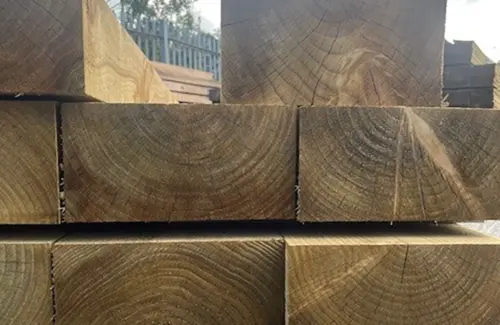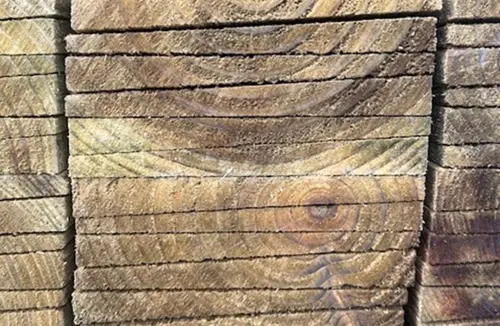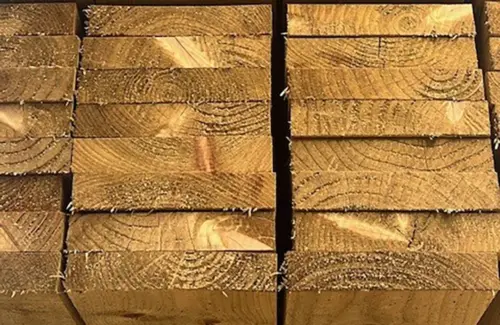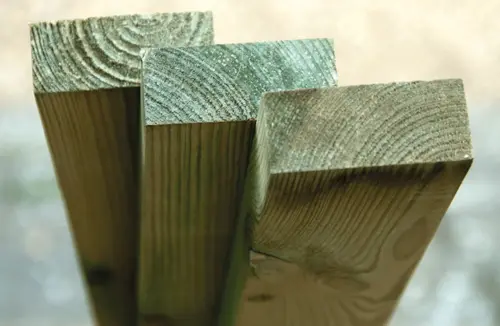

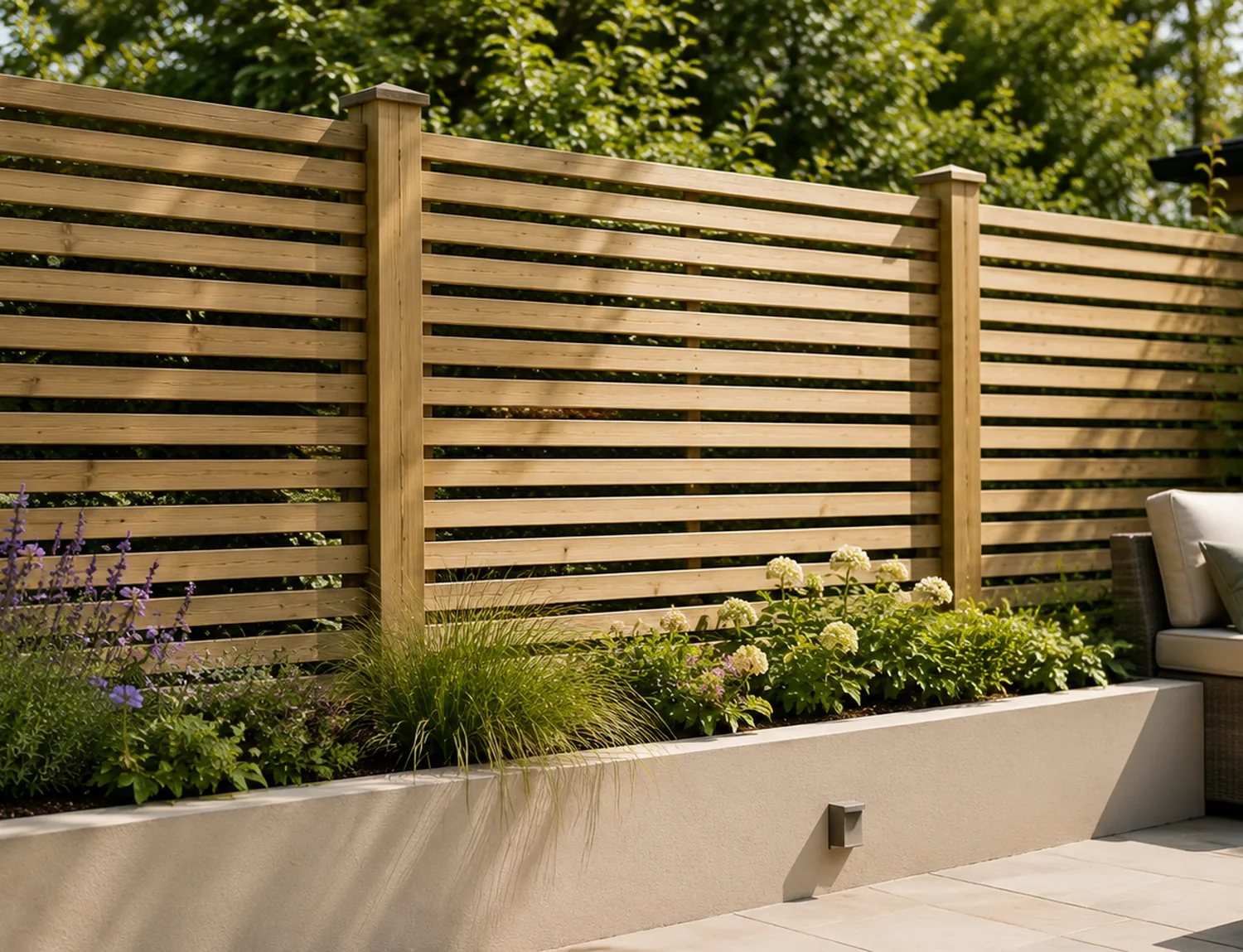
Slatted battens have gone from a specialist item to one of the most requested timber sections in the yard, and the reason is simply that horizontal slatted screening has become the default look for a contemporary garden. The appeal is obvious. It is clean, it is calm, it lets light and air through, and it makes a small garden feel deliberate rather than fenced in. What is less obvious is that building a slatted screen properly is a different exercise from putting up a fence, and getting the batten spacing and the framing right is what separates a screen that looks designed from one that looks homemade. We supply the sections as part of our fencing and timber supplies in Clitheroe.
Why slatted screening behaves differently from a solid panel
A solid fence panel presents a continuous face to the wind. A slatted screen does not. Air passes through the gaps, which means the loads on the posts are lower and the screen is less likely to act as a sail. That is a genuine advantage on exposed sites and one of the reasons slatted screens have done well on windy plots where solid panels kept coming down.
The other difference is light. A solid boundary casts a hard shadow that moves across a garden through the day and makes the strip behind it difficult to plant. A slatted screen throws a broken, moving shadow that plants tolerate far better. In a narrow town garden where the boundary is close to the planting, that difference is worth a great deal.
The trade is privacy. A slatted screen gives partial screening rather than full concealment, and how much depends entirely on the gap and on the viewing angle. Straight on, a wide-gapped screen conceals very little. At an angle it conceals almost everything, which is why a screen positioned across a sight line works better than one positioned square to it.
Getting the gap right
Gap width is the single decision that determines how the finished screen looks and works. A narrow gap gives strong privacy, a heavier appearance and more wind load. A wide gap gives a lighter, more open look, better airflow and considerably less privacy. There is no correct answer, only a correct answer for the position.
The most useful thing you can do is mock it up. Lay a few battens on the ground at the spacing you are considering, stand back at the distance you will normally view the screen from, and look at it. Ten minutes of that saves rebuilding a screen you are not happy with. Bear in mind that the gap you see on the ground will read differently once the screen is vertical and there is bright sky behind it.
Whatever gap you choose, keep it consistent. A spacing jig cut from an offcut, used for every gap along the run, is a two-minute job that guarantees the whole screen is even. Setting each gap by eye or by tape produces cumulative drift that becomes obvious across a long run.
The frame is what holds it up
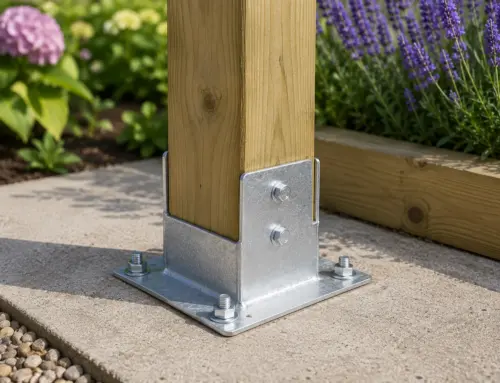
The battens are cladding. The frame and the posts carry the structure. A screen that flexes when you push it has a frame problem, and adding more battens will not help. Posts want to be a proper section, set properly, and spaced so the rails between them are not spanning unreasonable distances.
Rails behind the battens do the real work, and the number of rails should reflect the height of the screen. A tall screen on two rails will let the battens bow between fixings over time, especially the longer ones. Adding an extra rail is cheap at the build stage and impossible afterwards without taking the whole face off.
Fixing the battens
Two fixings per batten per rail rather than one, because a single fixing lets the batten rotate slightly and over a run of thirty battens the eye picks up every one that has moved. Pilot the ends to avoid splitting, particularly on the shorter sections where the fixing is close to the end grain.
Set out from a reference line rather than working off the ground, since the ground is rarely level and a screen that follows it will look wrong. Establish a true horizontal at the top, work down from it, and let the bottom of the screen deal with the fall.
Treatment and weathering
Treat every face of every batten before fixing, including the back and both ends. Once a batten is fixed against a rail, the back face is enclosed for good, and that face is the one that stays damp longest. This is not a step to skip on a slatted screen because there are so many hidden surfaces.
Expect the timber to move. Slatted battens are relatively slender sections with a lot of exposed surface area, so they respond quickly to a hot dry August and again to a wet October. Some movement is normal and not a defect. Fixing properly at the build stage is what stops normal movement turning into a visibly uneven face.
Ordering for a screen
Work out the height, decide the gap, and calculate the batten count from that rather than guessing. Add for waste and for the two or three you will lose to splits or bows. Order the frame timber and the fixings at the same time.
Customers building screens around Rawtenstall fencing and across towards Haslingden fencing generally take battens, rails, posts and fixings in one delivery so the timber is from the same stock and weathers consistently.
The battens sit within our timber range alongside the timber boards and timber posts sections, with everything needed to fix them in fixings and accessories.
If you are working out quantities for a screen, ring 01200 449930 with the dimensions and the gap you have in mind. Delivery is free on orders over £150 across all BB postcode areas.