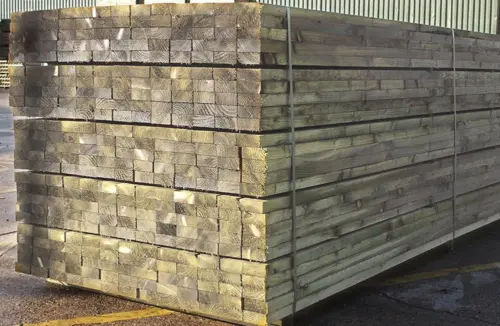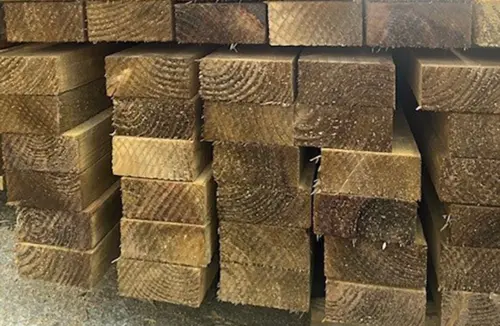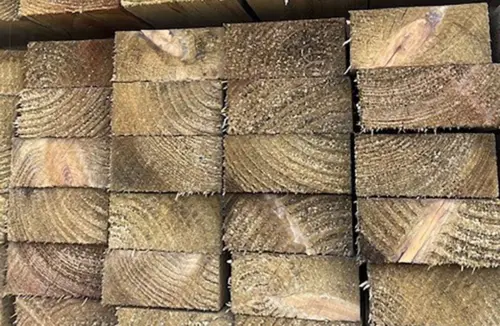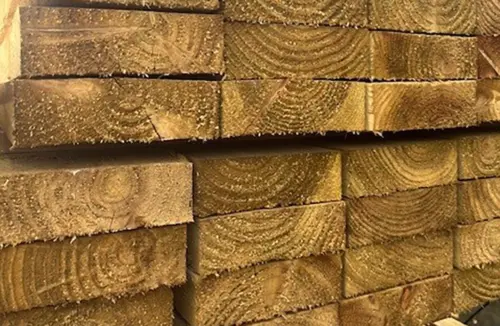

Treating cut ends of timber is a five-minute job that many DIY projects skip. Yet every saw cut exposes wood that the factory treatment never fully reached. As a supplier of fencing and timber supplies in Clitheroe, we see the results when it is missed. So here is why the ends matter and how to deal with them.
How Pressure Treatment Actually Works
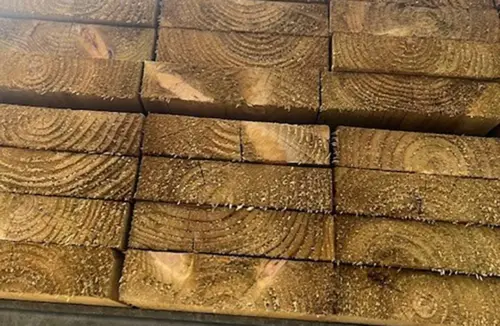
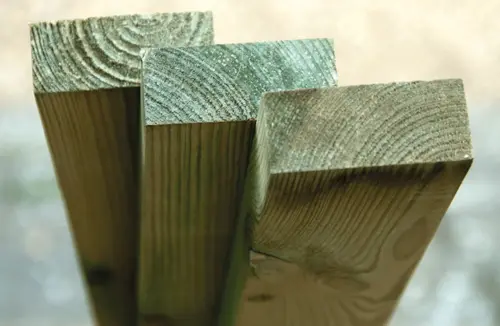
Our posts, rails, boards and sleepers are pressure-treated softwood. During treatment, preservative is forced into the timber under pressure. However, it does not soak evenly to the very centre. Instead, it penetrates the outer zone most deeply, leaving the heart less protected.
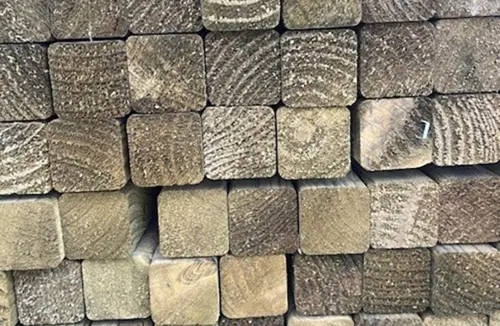
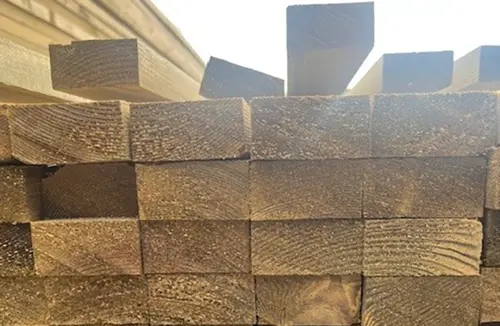
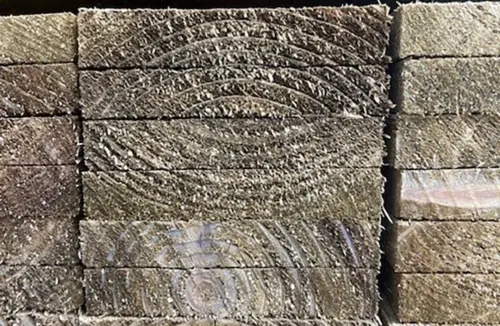
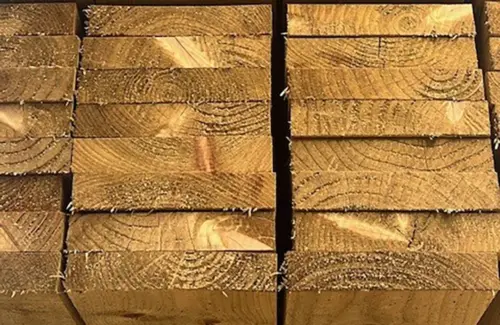
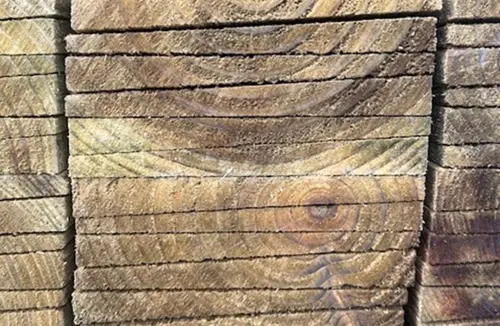
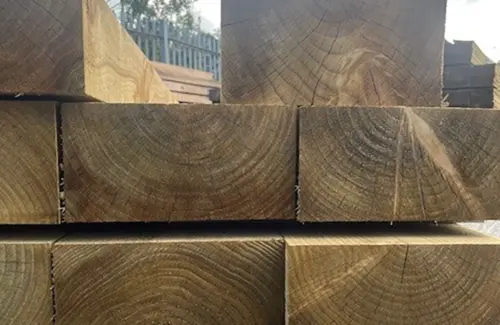
On an uncut length, that outer zone wraps the whole piece like a shell. As soon as you saw through it, though, you open a window into the core. Water then wicks straight into the end grain. That is where rot usually starts, and why treating cut ends of timber matters. Our guide on why pressure-treated timber lasts longer covers the process in more detail.
Why End Grain Drinks Water
Think of timber as a bundle of drinking straws. Along the sides, water struggles to get in. At the ends, however, it rushes straight up the open fibres. That is why a cut end can absorb many times more water than the face of a board.
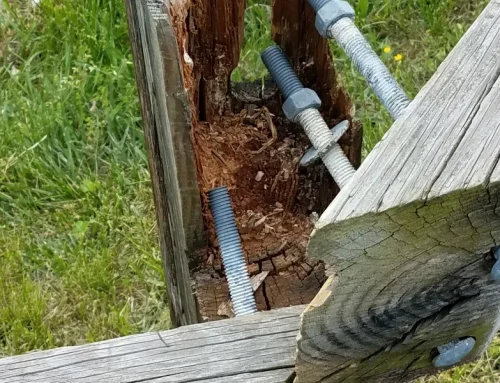
In a wet Lancashire autumn, that difference makes treating cut ends of timber essential. A fence rail cut short and left bare will stay damp for weeks. Meanwhile, the rest of the rail dries between showers. Over several seasons, the wet end softens, splits and loses its grip on the nails.
Treating Cut Ends of Timber Step by Step
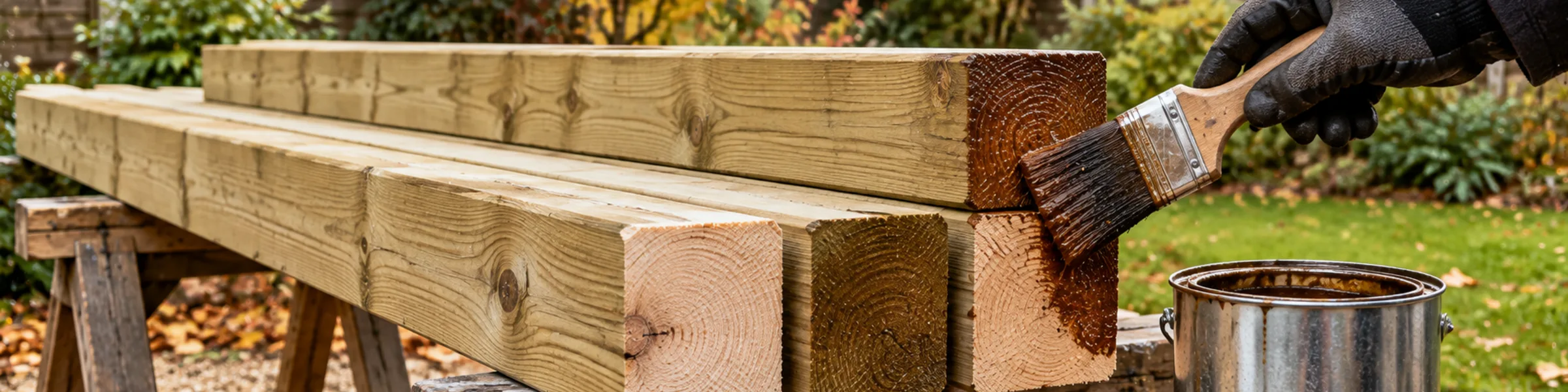
First, make your cut and brush off the sawdust. Next, apply a suitable end grain preservative with a small brush. Work it well into the fibres rather than painting a thin skin. Then let it soak in and apply a second coat once the first has dried.
Treating cut ends of timber works best on a dry day. Damp wood will not take preservative well. Also, treat the end before the piece goes into position. Once a post is concreted in or a board is fixed, you can rarely reach the cut face again.
Fence Posts and Post Tops
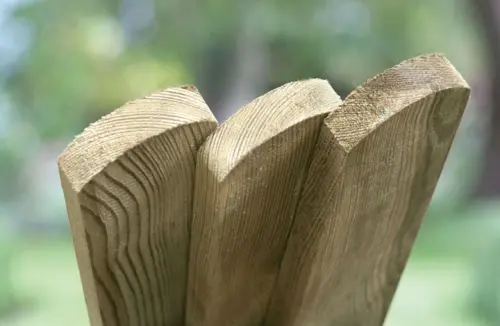
Fence posts are the most common pieces people cut. Our 75x75mm and 100x100mm rough sawn posts often need trimming to height. That fresh top is the part most exposed to rain. Therefore, treat it straight away and then cover it with a cap.
A timber post cap sheds water off the end grain and comes in three sizes. Our article on what causes fence posts to rot explains why the top and the ground line are the weak points. If you cut a post to go in the ground, never put the sawn end at the bottom.
Rails and Feather Edge Boards
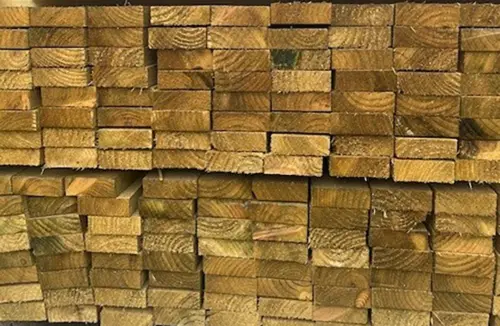
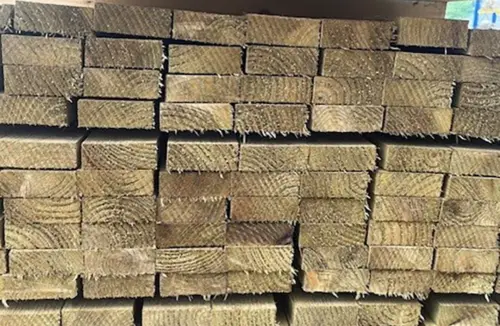
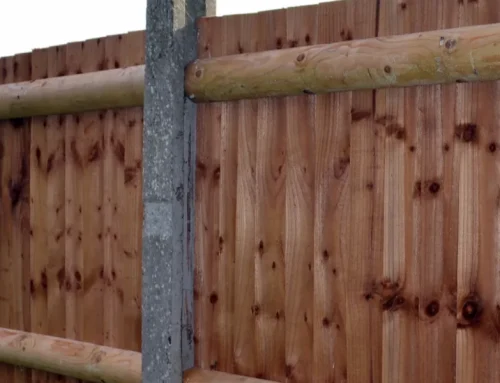
Rails are frequently cut to suit the gap between posts. Each cut end then sits tight against a post, where water collects. So treat both ends before you fix them. Our timber range includes rough sawn rails in 25mm, 32mm, 38mm and heavier sizes.
Feather edge boards are 125mm wide and 22mm thick, sold in 1.2m, 1.5m and 1.8m lengths. They are often trimmed along the top of a closeboard fence. Because every board has a cut top, a quick brush of preservative along the line pays off. A capping rail over the boards adds even more protection.
Sleepers With Ends in Soil
Sleepers used for raised beds or steps usually sit with their ends buried. If you cut a softwood sleeper to length, that face may end up in wet soil. Consequently, treating cut ends of timber is vital before a sleeper goes anywhere near the ground. Two or three generous coats are sensible here.
Our softwood sleepers measure 2.4m x 245 x 125mm, and mini sleepers 2.4m x 200 x 100mm. Browse the full range of timber sleepers to plan your cuts. Where possible, design the bed so factory ends face the soil and cut ends sit above it.
Treating Cut Ends of Timber Decking Boards
Decking boards are cut at every joist line where boards meet. Those butt joints trap rain and shade, so they rarely dry out. As a result, untreated ends quickly turn grey, then soft. Treat each end, and leave a small gap between boards so water can drain.
Our ridged decking boards come in 3.0m, 3.6m, 4.2m and 4.8m lengths. Choosing the right length reduces the number of cuts in the first place. Fewer joints mean less time treating cut ends of timber and fewer places for water to sit.
Knowing Your Timber Types
Rough sawn and planed timber need the same care when treating cut ends of timber. Planed timber has smoother faces, but the end grain is just as open. If you are unsure which suits your job, our timber types page explains the differences. Either way, the saw cut is always the weak spot.
Drilled holes count as cuts too. A bolt hole through a gate post or a screw hole in a rail opens the end grain inside the wood. So a dab of preservative in each hole before fixing is worthwhile. Likewise, notches cut for rails into posts need the same care. These small exposed faces are easy to forget, yet they hold water just as readily as a sawn end.
Local conditions add to the challenge. Gardens in Whalley sit low in the Calder valley and stay damp in winter. Meanwhile, homes around Waddington get the rain coming off the fells. Customers ordering Whalley fencing or Waddington fencing often ask about end treatment for exactly this reason.
For posts, rails, boards and sleepers to suit your project, call us on 01200 449930. We aim to deliver within 5 working days, with free delivery on orders over £150 across all BB postcode areas. Collection from our Clitheroe yard is also available.