
A firewood moisture meter is one of the cheapest tools a stove owner can buy, yet it is often used wrongly. Pressed against the bark or the sawn end, it can give a reading that means very little. As a Ready to Burn registered supplier of fencing and timber supplies in Clitheroe, we test logs regularly. So here is how to get an honest number.
What a Moisture Meter Measures
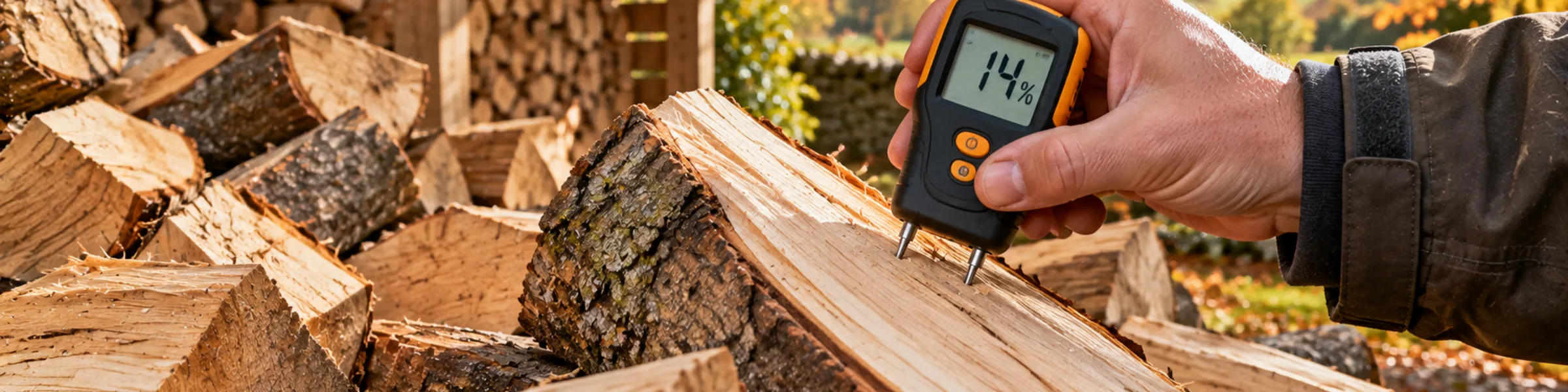
A firewood moisture meter usually has two metal pins. You push them into the wood and the meter passes a tiny current between them. Wet wood conducts more easily than dry wood. The meter converts that resistance into a moisture percentage.
Because the pins only reach a few millimetres deep, the meter reads the surface layer. That is why where you test matters so much. The outside of a log can be drier or wetter than its core. Therefore, you need to reach the middle of the log to get a true picture.
Why the Bark End Gives a False Reading
The sawn end of a log dries fastest because water leaves through the end grain. As a result, testing the end often shows a reading that is lower than the real figure. A log can read 15% at the end but 25% in the middle. That gap is the difference between a clean burn and a smoky one.
Bark is also a poor test surface. It is loose, uneven and may hold rainwater on the outside. Pins pushed into bark rarely make good contact. So keep your firewood moisture meter away from both the bark and the ends.
How to Use a Firewood Moisture Meter Correctly
First, pick a log from the middle of the pile rather than the top. Next, split it in half with an axe or a log splitter. Then test the freshly exposed face straight away, before it starts to dry. Push the pins of your firewood moisture meter in across the grain, not along it.
Take a reading near the centre of the split face. After that, take one or two more a little way from the middle. Finally, use the highest figure rather than the average. Repeat with two or three different logs for a fair result.
The Under 20% Target
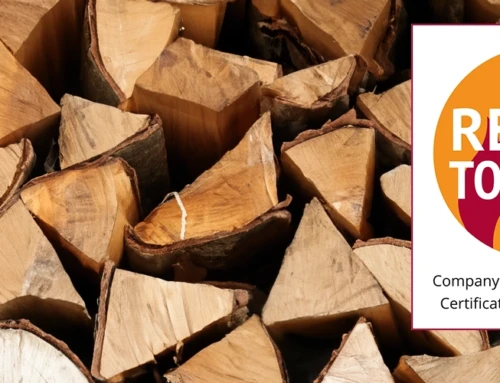
Ready to Burn certified wood must have a moisture content under 20%. That figure is the line between efficient burning and wasted heat. Above it, the fire spends its energy boiling water. Our article on why moisture content of logs matters explains the effect on your stove and chimney.
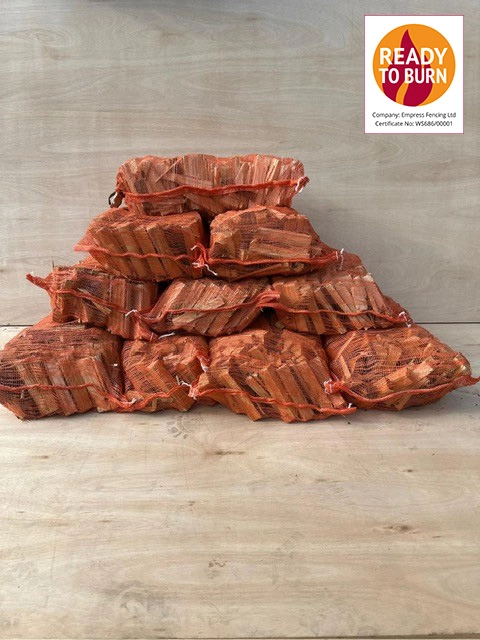
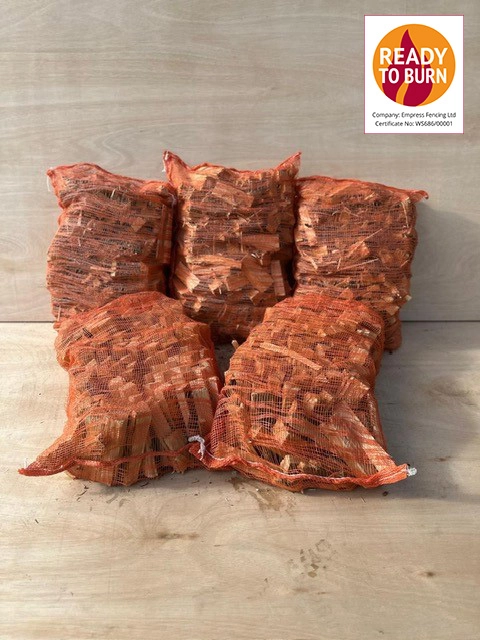
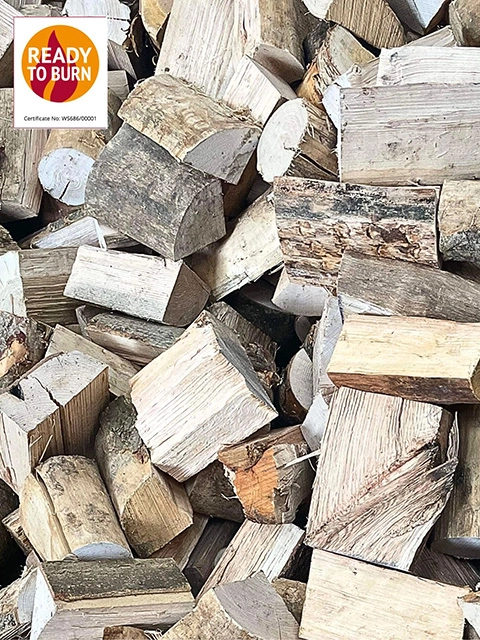
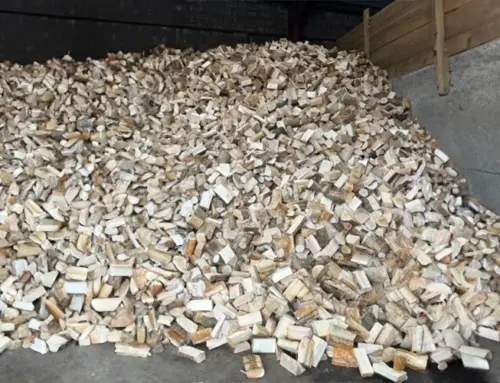
All the firewood we sell meets this standard. Our kiln dried logs delivered leave the yard dry and ready to use. They are cut on average to 8 inches long, with a maximum diameter of 6 inches. That size suits most domestic stoves.
Readings Vary by Species and Temperature
A firewood moisture meter is calibrated for a typical wood density. However, a mixed hardwood load may include oak, ash, beech, birch, sycamore, alder and hornbeam. Dense oak can read slightly differently from lighter birch at the same moisture. Some meters have a species setting, so check the instructions.
Temperature affects the reading too. Cold wood straight from an outdoor store in January may read a little lower than it really is. So bring a split log indoors for an hour before testing. Room temperature gives a more reliable number.
Softwood behaves differently again. Kiln-dried spruce and larch are lighter than most hardwoods, so they dry quickly and read low. That makes them ideal for lighting. Even so, test them the same way, by splitting first and reading the fresh face.
Checking a Delivery That Has Sat Outside
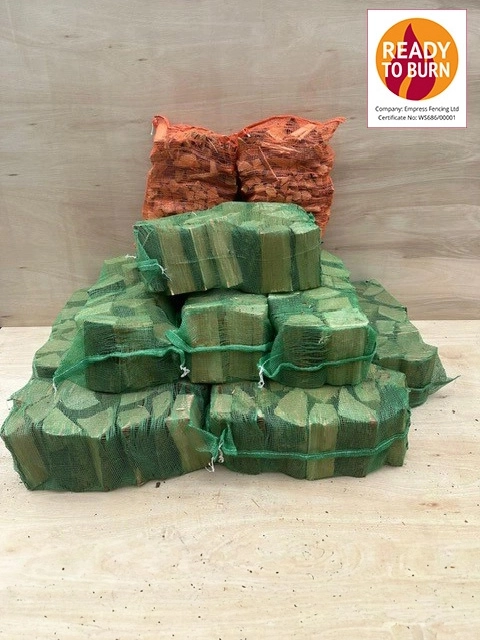
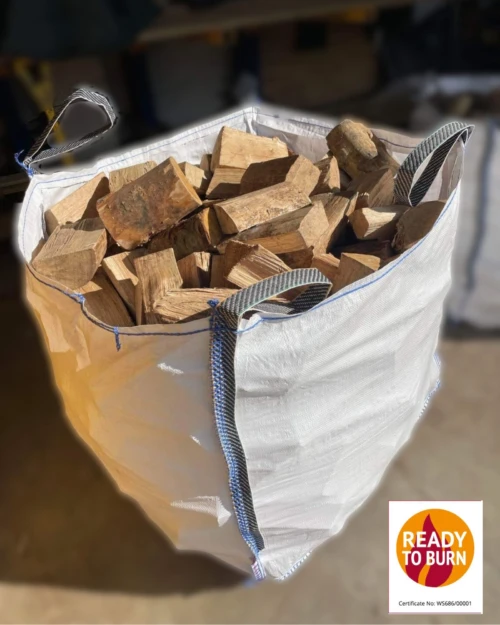
Logs arrive dry, but they do not stay that way by themselves. Our builders bag of logs measures roughly 85cm on each side. If it sits uncovered on the drive through a wet week, the outer logs will absorb rain. A firewood moisture meter is the quickest way to see how far the water has got.
Test a log from the top and one from deeper in the bag. If the top reads high but the middle is fine, the damage is only on the surface. Move the logs under cover and let them breathe for a few dry days. Our guide to covering a log pile shows how to keep rain off without trapping damp.
Storing Logs So the Meter Stays Happy
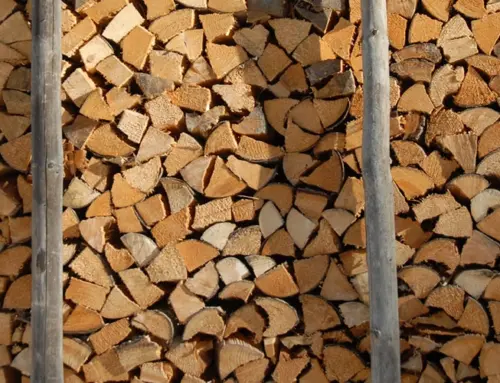
Good storage keeps readings low all winter. Logs need a roof, open sides for airflow and a base off the ground. A stack against a house wall with no gap will stay damp at the back. Browse our log storage solutions if your current setup is just a tarpaulin.
Terraced homes in Colne and Trawden often have small yards, so space is tight. Many customers there order smaller loads more often to keep stock dry. We regularly deliver logs for sale Colne to steep streets with narrow access. Likewise, homes up the valley order logs for sale Trawden before the hill roads turn icy.
Common Firewood Moisture Meter Mistakes
Do not test wood that is wet on the surface from rain. The water on the outside will push the reading up. Also, avoid testing straight after splitting a frozen log, as ice gives odd results. Lastly, check the meter battery, because a weak battery can drift.
Remember that a firewood moisture meter is a guide, not a guarantee. Use it alongside your eyes and ears. Dry logs feel lighter, sound hollow when knocked together and show cracks at the ends. If all three agree with a low reading, you are ready to burn.
Please note that the driver tips logs on your drive and cannot stack them in your store. So have a dry place ready before delivery day. Add any access notes in the order comments box.
For dry, certified logs that pass the meter test, call us on 01200 449930. We offer free delivery on orders over £150 across all BB postcode areas, and collection from our Clitheroe yard is also available.