
Smoke control area logs cause more confusion than almost any other firewood topic. Many people assume certified logs alone keep them within the rules, but the appliance matters too. As a Ready to Burn registered supplier of fencing and timber supplies in Clitheroe, we get this question from town households every week. So here is a plain guide to what applies.
What a Smoke Control Area Means
A smoke control area is a zone set by the local council to limit smoke from homes. Inside one, you cannot let smoke out of a chimney unless you use an approved fuel or an exempt appliance. Wood is not an approved fuel in its own right. Therefore, burning smoke control area logs depends on the stove you own.
Many town areas across East Lancashire are covered by smoke control orders. These were often introduced decades ago, when coal smoke hung over the mill towns. The orders still apply today. However, the exact boundaries differ from one council to the next.
Why You Need a Defra-Exempt Appliance
To burn wood legally in a smoke control area, you need a Defra-exempt appliance. These are stoves tested to burn wood without producing too much smoke. An ordinary open fire is not exempt. Likewise, an older stove that has never been approved will not qualify.
Your stove manual or the installer’s paperwork should say whether the model is exempt. If you are unsure, check with the manufacturer or a qualified installer. Do not guess, because the rules on smoke control area logs are about the appliance, not just the fuel. Our FAQs cover some of the common questions we hear about burning at home.
Smoke Control Area Logs Still Need to Be Dry
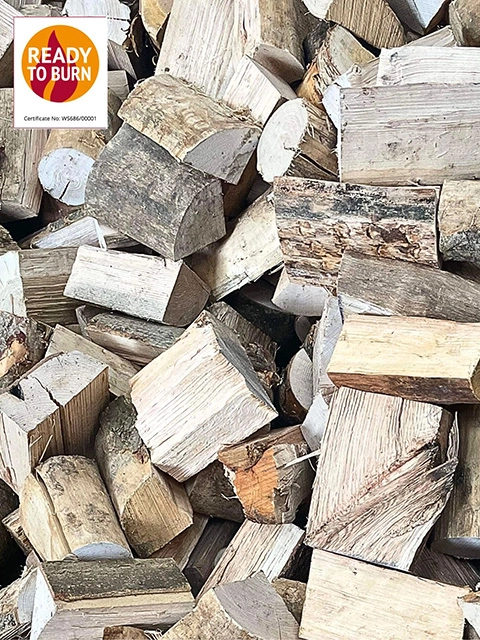
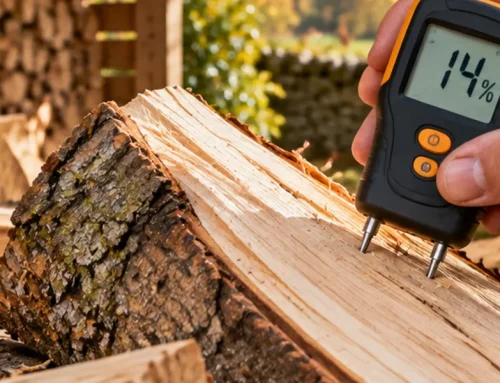
An exempt stove is designed to burn dry wood cleanly. Feed it wet logs, and it will smoke like any other fire. As a result, the dryness of your fuel matters just as much inside a smoke control area. For smoke control area logs, Ready to Burn certified wood with moisture under 20% is the sensible choice.
Exempt appliances usually come with conditions from the maker. These often include using only dry wood and keeping air controls set correctly. So a damp log can undo the benefit of an approved stove. Our guide to wood fuel regulations explained sets out how the Ready to Burn scheme fits in.
Check Your Own Council’s Smoke Control Map
The only reliable way to know if your home is covered is to check your council’s website. Most councils publish a smoke control area map or a list of streets. Search the site for “smoke control area” and enter your address. If in doubt, phone the council’s environmental health team.
Do not rely on a neighbour’s view or an old leaflet. Orders can cover one side of a road and not the other. Equally, a new estate may fall inside an older order. Checking takes a few minutes and removes all doubt.
It is also worth checking again if you move house. A home two miles away may sit under a different order, or under none at all. Likewise, if you replace your stove, confirm the new model is exempt before you buy it. That one check saves a costly mistake later.
Rural Villages and the Towns Compared
Many rural villages sit outside smoke control areas. Farmhouses below Pendle Hill and cottages in the Bowland villages are often uncovered. However, that is a general pattern, not a rule. Some village areas may be included, so always check rather than assume.
Even outside a smoke control area, dry fuel still matters for your stove, your chimney and your neighbours. That is why every log we sell is Ready to Burn certified. In other words, the fuel side is covered wherever you live. The appliance side is the part you must confirm yourself.
Choosing Smoke Control Area Logs for an Exempt Stove
Kiln-dried hardwood gives the steady, clean burn exempt stoves are built for. Our 1m3 hardwood logs may include oak, ash, beech, birch, sycamore, alder and hornbeam. They are cut on average to 8 inches long, with a maximum 6 inch diameter. That makes them practical smoke control area logs for most domestic stoves.
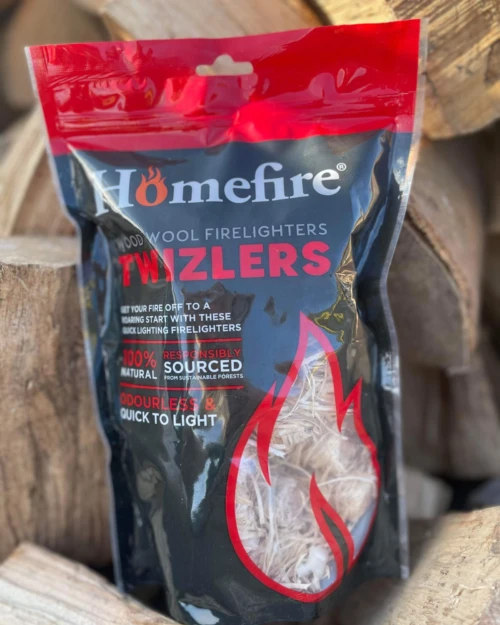
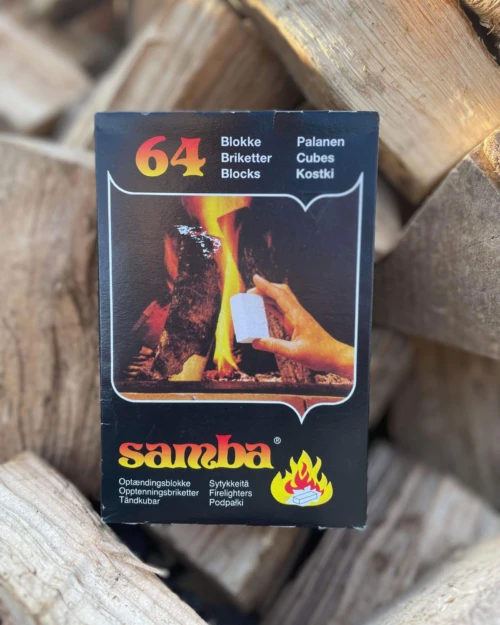
For lighting, kiln-dried softwood kindling gets the firebox hot quickly. A hot start means less smoke in those first minutes. The 10 nets of kindling option lasts a long while, since one net lights around 10 to 12 fires. Pair it with natural firelighters for a clean start.
Deliveries to Terraced Town Streets
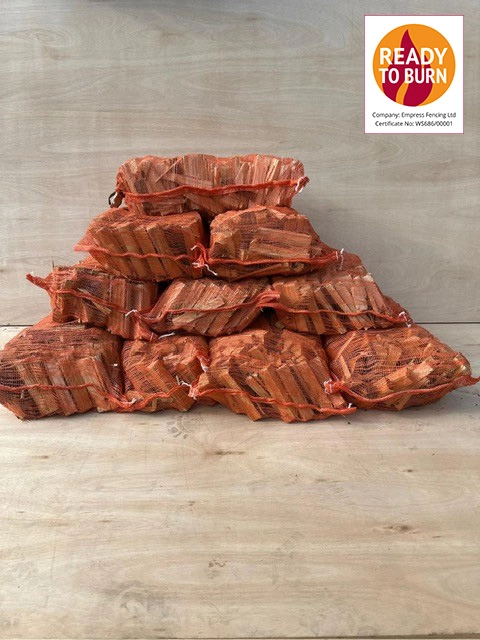
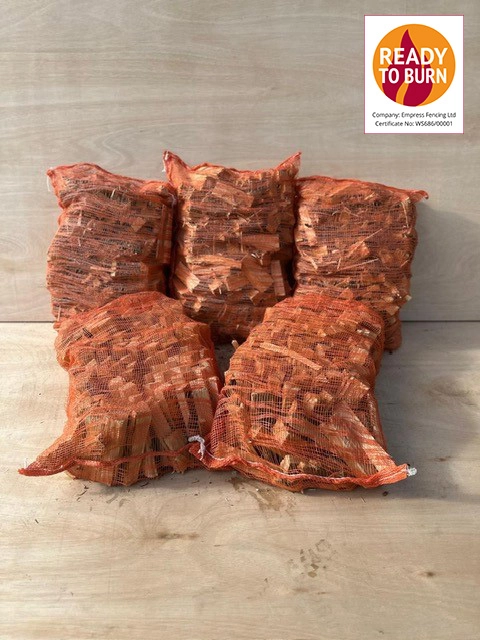
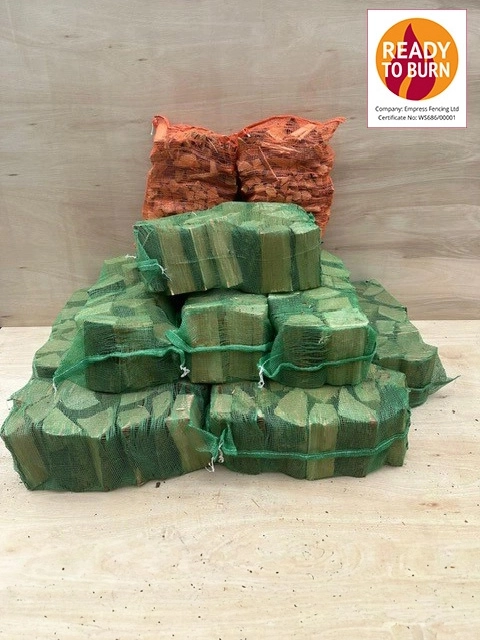
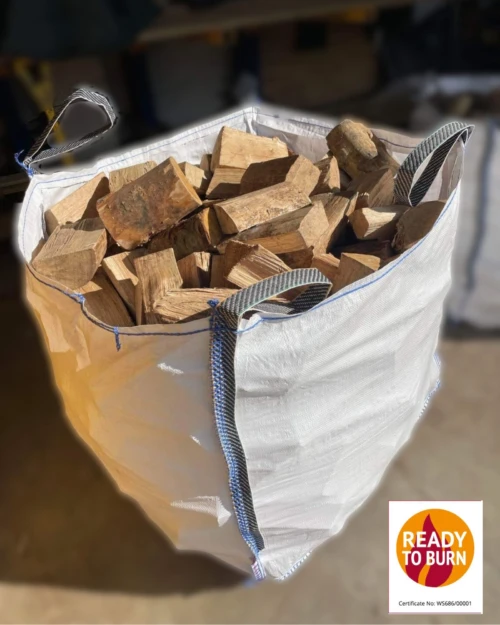
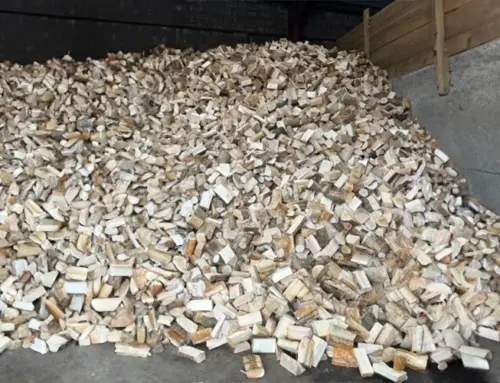
Plenty of smoke control areas cover tight terraced streets with back yards. Our 1m3 load is tipped loose, so you need somewhere for it to land. The driver cannot lift logs over walls or carry them into a building. So many town customers order their smoke control area logs as a bagged load instead.
We deliver logs for sale Nelson to rows where the front step meets the pavement. Similarly, logs for sale Brierfield often go to homes with ginnel access only. Customers ordering logs for sale Accrington also leave notes about parking. Add those details in the order comments box so the driver can plan.
Keeping Fuel Dry in a Small Yard
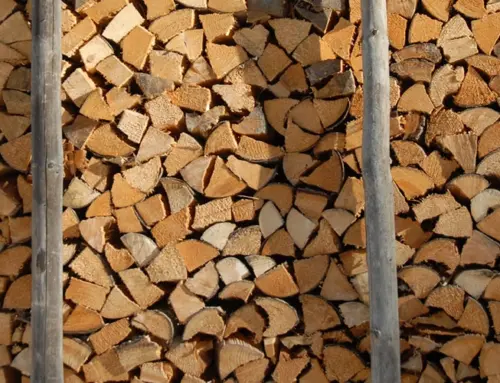
Once delivered, smoke control area logs are dry, and keeping them dry is your job. A compact store with a roof and slatted sides is ideal for a yard. Keep it off the flags so air moves underneath. That way, your fuel stays under 20% and your exempt stove burns as intended.
Also, avoid storing logs inside the house for long periods. A small basket by the stove is fine for a day or two. However, bringing in a week of logs at once can lead to insects and damp patches. Instead, top up the basket little and often from the outdoor store.
For certified dry logs and kindling, call us on 01200 449930. We offer free delivery on orders over £150 across all BB postcode areas. Collection from our Clitheroe yard is also available if you prefer to load your own car.