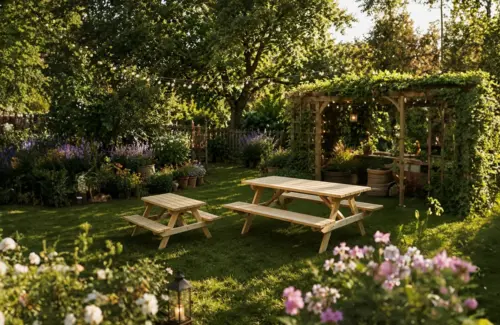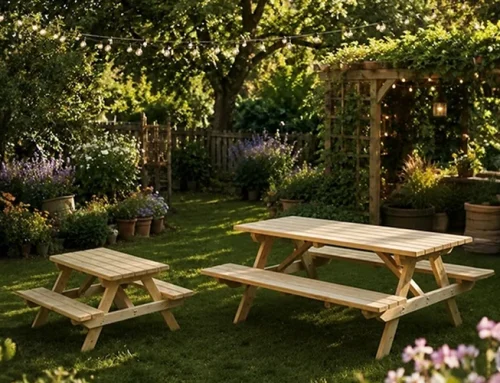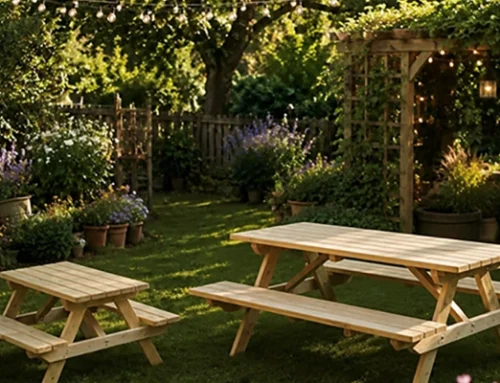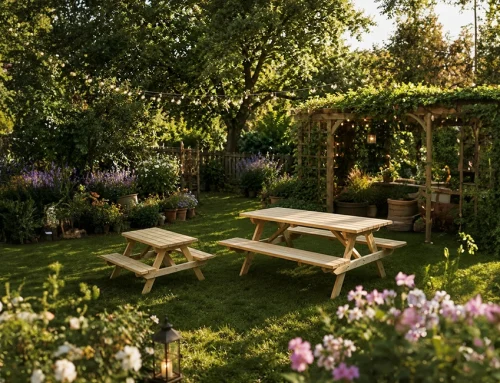

Picnic bench winter storage is simple, yet it makes a big difference to how long the timber lasts. A bench left on a soggy lawn from October to April takes far more punishment than one moved and covered. As a supplier of fencing and timber supplies in Clitheroe, we see both outcomes each spring. So here is how to give your bench an easier winter.
Why Winter Is Hard on Outdoor Timber
Our benches are made from pressure-treated softwood. That treatment protects the timber well in normal use. However, months of standing water, frost and shade test any wood. The feet and the underside of the seat suffer most.
In a wet Lancashire winter, a lawn can stay waterlogged for weeks. The bench legs then sit in damp grass and wick moisture up through the end grain. Meanwhile, frost opens tiny cracks on the surface. Without proper picnic bench winter storage, that combination softens the feet and loosens the joints.
Know Your Bench Sizes
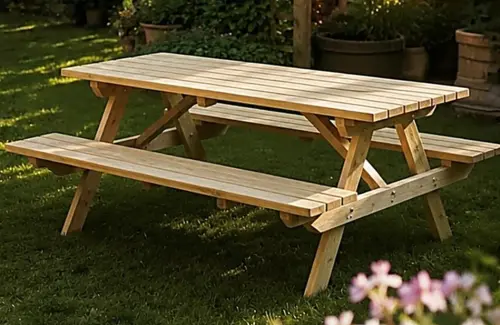
Before moving anything, it helps to know what you are handling. Our standard picnic bench measures 1800mm long, 1340mm wide and 730mm high. It is an A-frame design, so it is heavy and best moved by two people. Lift rather than drag, as dragging strains the frame joints.
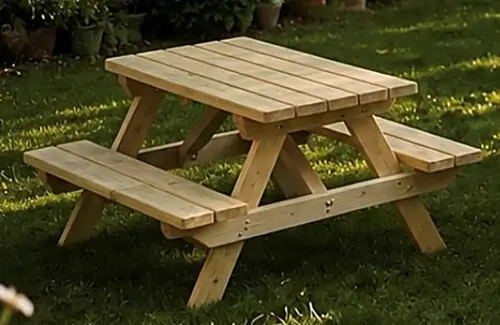
The children’s picnic bench is 1100mm long, 1020mm wide and 500mm high. It is light enough for one adult to carry. That makes it easy to move into a shed or garage for the winter. If you have the space, indoor picnic bench winter storage is the best option of all.
Picnic Bench Winter Storage Starts Off the Lawn
The single most useful step is getting the feet off wet grass. A patio, path or gravel area drains far better than turf. If you have no hard standing, place the bench on timber bearers instead. Two lengths of treated timber under each side lift the feet clear of the wet.
A level base also stops the frame twisting. Our guide to preparing a picnic bench base explains how to set one up properly. A good base suits both picnic bench winter storage and summer use. As a bonus, the lawn under the bench gets a chance to recover.
Tilt the Bench to Shed Water
Flat seats and tabletops collect rainwater in the gaps between boards. That water then sits on the timber for hours. To avoid this, tilt the bench slightly by raising one end on a block. Rain will then run off rather than pool.
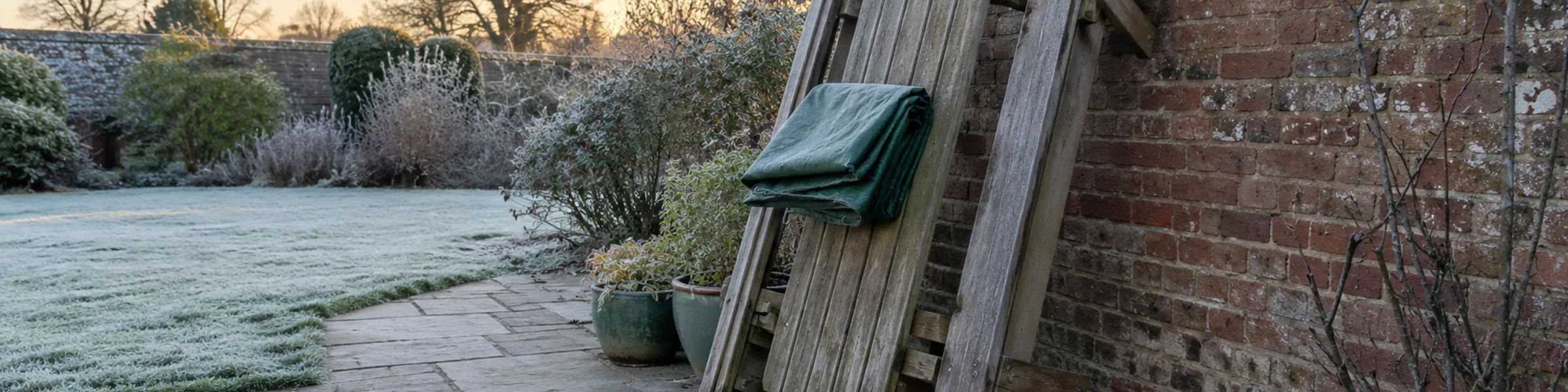
Alternatively, tip a smaller bench onto its side against a wall, leaving an air gap behind it. Do not lean it tight against fencing, as damp gets trapped between the two. Either way, the aim is the same. Water should run away rather than soak in.
Leaves cause problems too. In autumn, they blow under the bench and pile up against the legs. Wet leaf litter holds moisture right where the timber is weakest. So sweep around the bench every couple of weeks until the trees are bare.
Picnic Bench Winter Storage Covers That Breathe
For picnic bench winter storage, a cover helps, but only the right kind. A plastic sheet tied tightly around the bench traps condensation underneath. Before long, the timber stays wet and mould grows. Therefore, choose a breathable furniture cover instead.
Leave the bottom of the cover loose so air can circulate. Also, make sure it does not touch the ground, where it can wick water upwards. On a windy site, weigh the edges down rather than lashing them tight. Remove the cover on a dry, breezy day to let everything air.
Pubs, Schools and Stacking Benches
Pubs, cafés, schools and village halls often have several benches to store. Stacking makes picnic bench winter storage easier, but it needs care. Lay timber spacers between each bench so air moves through the stack. Never stack benches directly onto wet grass.
Commercial customers buying in volume can find out more on our wholesale page. Many beer gardens in the Ribble Valley close part of their outdoor seating over winter. Stored well, those benches come back into service in spring with little fuss.
Check Bolts Before and After Winter
Timber swells in the wet and shrinks when it dries. As a result, the bolts holding the frame can work loose over the seasons. Before picnic bench winter storage begins, check every bolt and nut. Tighten any that have slackened, but do not crush the timber.
Check again when you bring the bench back out. A loose frame will rock and wear faster. If a bolt has rusted, replace it with a galvanised one of the same size. That small job keeps the bench solid for years.
While you are checking, look closely at the underside of the seat boards. Small splits along the grain are normal in outdoor timber. However, soft or spongy patches suggest water has been sitting there. Let those areas dry out fully before treating them in spring.
Spring Re-Treatment
Once the weather turns dry and mild, give the bench a light clean. A soft brush and water removes green algae and grime. Let it dry thoroughly for a few days. Then apply a suitable exterior wood treatment to refresh the surface.
Pay extra attention to the feet and any cut ends. These are where water gets in first. A coat at the start of each season keeps the timber in good shape. Browse our full range of picnic benches if you need an extra one for summer.
Local Gardens and Delivery
Gardens in Clitheroe and the surrounding villages vary hugely in drainage. Lawns below Pendle Hill can stay wet well into spring. Customers looking for Clitheroe fencing often pick up a bench at the same time. Likewise, we deliver Sabden fencing and benches together along the valley road.
To order a bench or timber for bearers, call us on 01200 449930. We aim to deliver within 5 working days, with free delivery on orders over £150 across all BB postcode areas. Collection from our Clitheroe yard is also available.