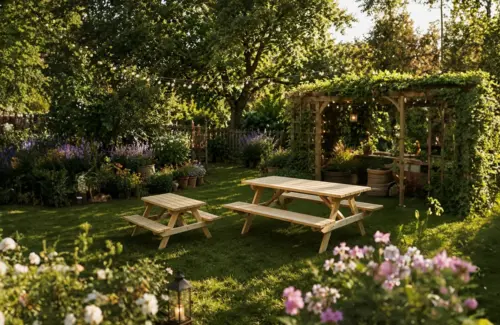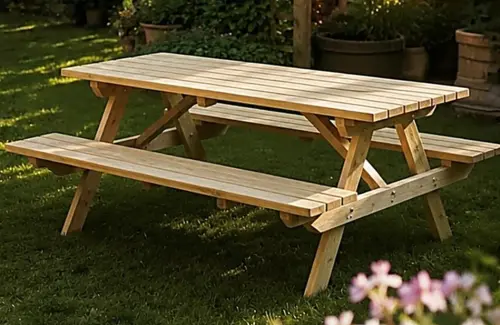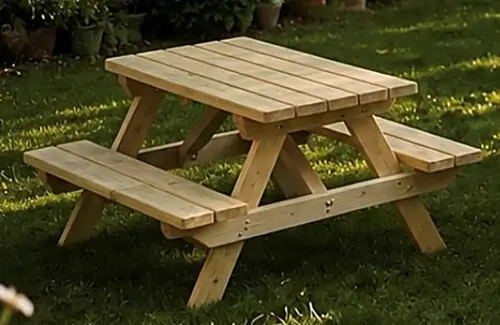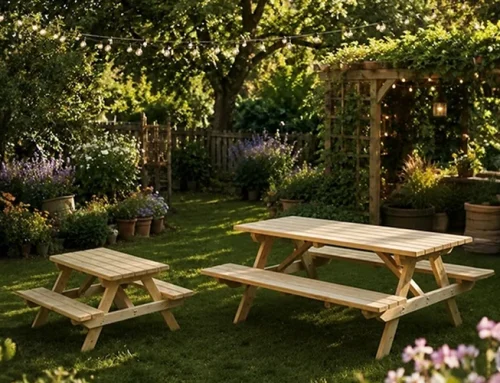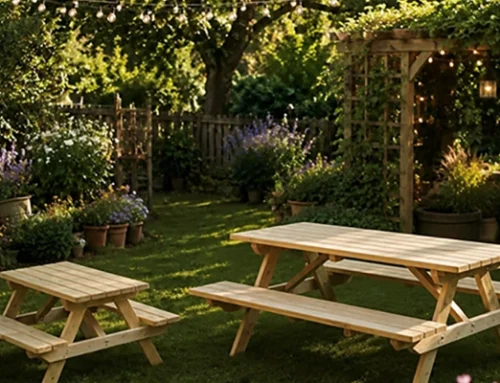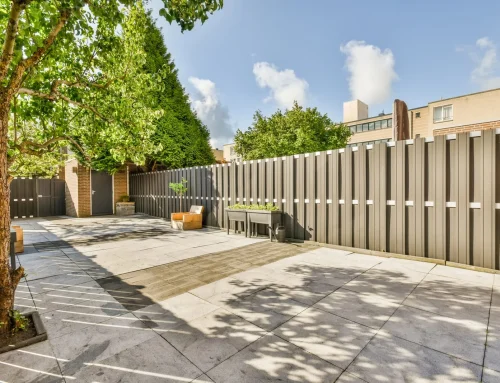

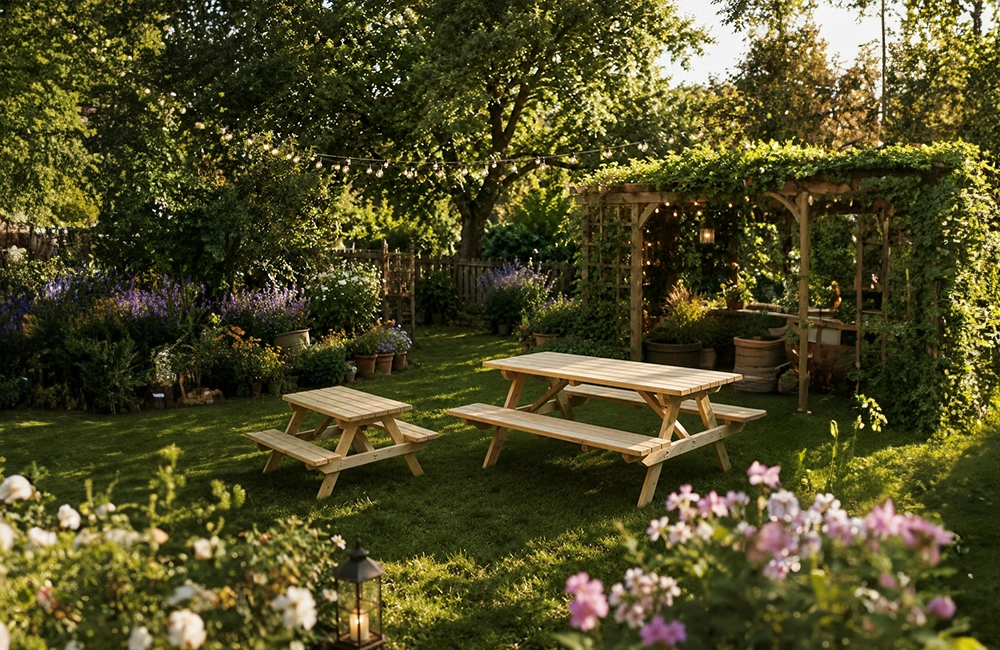
Where you put a picnic bench shapes how often you actually use it, and the question of garden picnic bench placement deserves more thought than most people give it. As a supplier of fencing and timber supplies in Clitheroe, we hear from plenty of customers who love their bench but rarely sit on it, and almost always the reason is position rather than the bench itself. A few minutes thinking about base, light and shelter before you set it down makes a bench you reach for all summer instead of one you walk past.
The ideal spot balances three things, a firm and level surface underfoot, the right mix of sun and shade through the day, and enough shelter that a breeze does not drive you indoors. Get those right and the bench becomes the natural gathering point of the garden.
Choosing the Right Base and Aspect
The single most important factor is the ground the bench stands on. A picnic bench left on soft lawn all season sinks unevenly at the legs, rocks when people sit down, and leaves bare patches in the grass beneath it. A firm, free-draining base solves all of that at once. A patio, a paved area or a timber deck gives a stable footing and keeps the bench legs out of the standing water that rots end grain first.
Pairing the Bench With a Deck or Patio
If you are building or refreshing a seating area this summer, plan the bench position into it from the start. A bench sited on timber decking sits level, drains well and reads as a deliberate part of the garden rather than an afterthought parked on the lawn. The deck or patio also defines the space, giving the bench a room of its own and a clear route to and from the house.
Following the Sun
Watch where the sun falls on your garden across a day before you commit. A spot that is gloriously sunny at breakfast can be in deep shade by the time you want to eat in the evening, and a bench positioned for midday sun may bake anyone sitting there in July. Many households find a position that catches late-afternoon and early-evening light suits how they actually use the garden, since that is when meals and drinks tend to move outdoors. One advantage of an A-frame bench is that it lifts and shifts in one piece, so you are not locked into a single choice.
Shelter and Privacy
A bench tucked against a fence or screen is far more inviting than one stranded in the open. The boundary takes the edge off the breeze and gives a sense of enclosure that makes people linger. If your boundary is tired, refreshing it is worth doing alongside, and our picnic benches sit naturally against a freshly treated fence line. Positioning the bench with its back to the prevailing wind, rather than side-on to it, keeps plates and napkins where they belong.
Access and Clearance
Leave room to get in and out. People need space to swing their legs over the bench seats, and you want a clear path to carry food and drink without weaving around borders. A bench crammed against a wall with no swing room looks fine empty but frustrates everyone who tries to use it. The same thinking applies across our outdoor furniture range, as clearance and circulation make an outdoor space feel generous rather than awkward.
Reading How the Garden Is Used
The best position is the one that fits how your household actually lives outdoors, not the one that looks tidiest on a plan. If most of your garden time is morning coffee, a spot that catches early light wins, while a household that eats outside in the evening wants the bench where the late sun falls. Watch where children play, where the washing line runs and where the path to the back door goes, and place the bench so it sits with the flow of the garden rather than across it. A bench in the natural gathering spot gets used daily, while one in a technically perfect but inconvenient corner sits empty.
Protecting the Ground Beneath
Wherever the bench stands, the surface beneath it takes a beating from feet and weight. On grass, the wear shows quickly as bare, compacted patches that turn to mud after rain. A firm base of paving, gravel or a small timber deck both protects the lawn and gives the bench a stable footing that will not sink unevenly. If you would rather keep the bench on grass, moving it a little each time you mow spreads the wear and lets the turf recover, though a permanent hard base is the more lasting answer.
Living With the Seasons
A position that is perfect in July can be exposed and uninviting in a windy spell, so think across the season rather than for a single sunny day. A spot with some shelter behind it stays usable on more days of the year, and the ability to lift an A-frame bench and reposition it means you are never fully committed to one choice. Many households settle on a main summer position near the house and shift the bench to a sunnier, more sheltered corner as the weather turns, getting the most use from it across the whole season.
If you would like advice on pairing a picnic bench with a new patio or deck, or choosing the right size for your spot, call us on 01200 449930. We deliver free on orders over £150 across all BB postcode areas, so a bench and the materials for its base can arrive together.