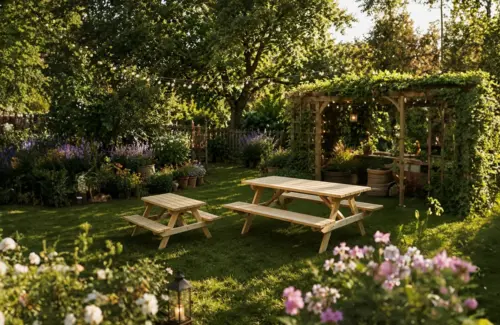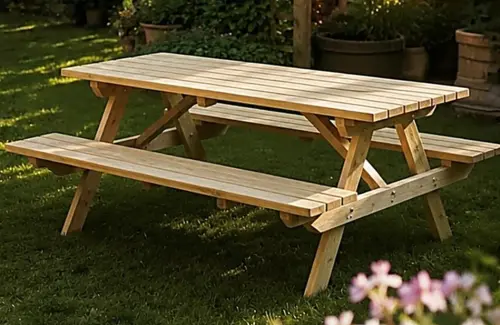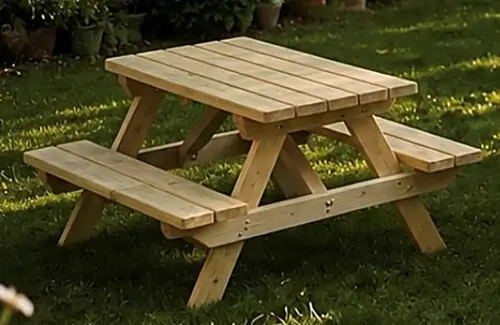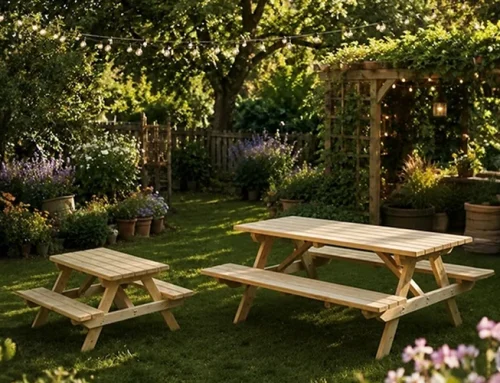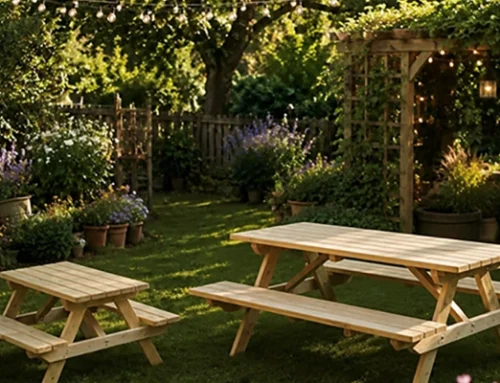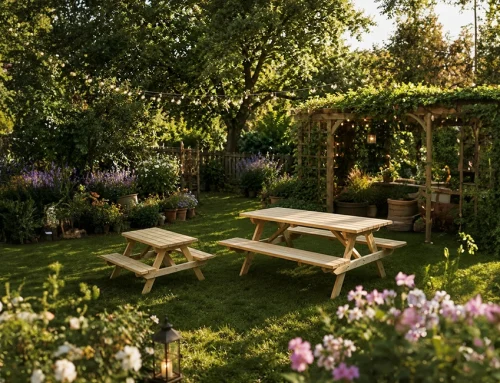

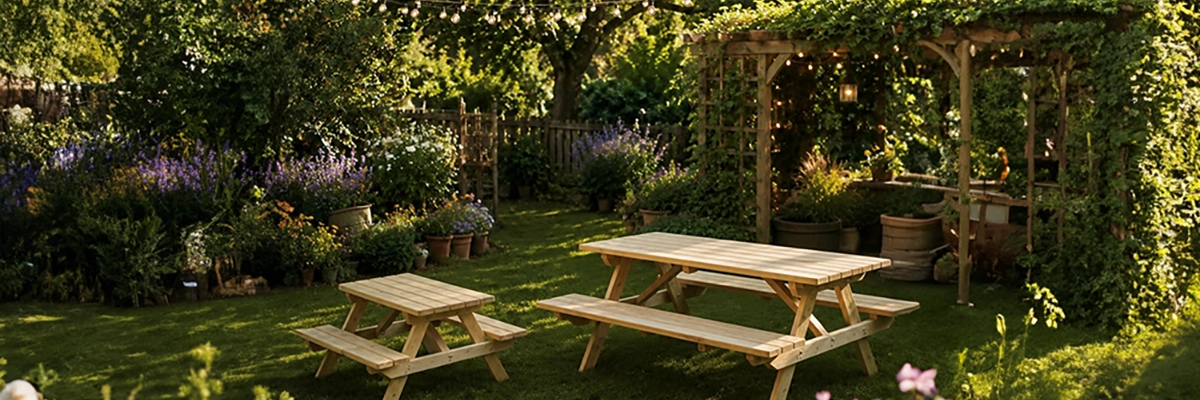
A timber picnic bench is one of those purchases that pays you back for years if you give it a little attention, and almost none if you forget about it. Good timber picnic bench care is straightforward, seasonal and well within reach of anyone, and it makes the difference between a bench that still looks inviting in five summers and one that turns grey and splintery by its second. As a supplier of fencing and timber supplies in Clitheroe, we are often asked what an outdoor bench actually needs, and the honest answer is far less than people fear, provided it is done at the right moments.
The enemy is not the sun on its own or the rain on its own, but the repeated cycle of wetting and drying that a Lancashire summer delivers in abundance. Each cycle opens and closes the grain a fraction, and over time that movement is what lifts surface coatings and works fixings loose.
A Simple Seasonal Routine That Actually Works
Start the season with a clean. Brush off the loose debris, then wash the bench down with warm water and a stiff brush to lift the green film and grime that builds up over winter. Let it dry fully before you do anything else, because timber needs to be dry for any treatment to soak in properly. This first clean tells you a great deal, as a surface that drinks water straight in is overdue a re-treat, while one that beads water is still protected.
Re-Treating the Timber
Most pressure-treated softwood benches come with the preservative already driven into the timber, which protects against rot from the inside. What that base treatment does not do is keep the surface looking fresh or guard against the bleaching effect of strong summer light. A coat of a suitable exterior wood treatment, oil or stain restores colour and adds a water-shedding layer on top. The natural greying you see on untreated outdoor timber is a surface process rather than decay, and our explanation of the natural weathering process of timber sets out why it happens and what slows it down.
Checking the Joints and Fixings
An A-frame bench takes a real load when six adults sit down to eat, and the bolts that hold the legs and seats together can ease off slightly as the timber moves. Twice a season, run a spanner over every bolt and nut and nip up anything that has loosened. This five-minute job prevents the wobble that, left alone, puts strain on the joints and shortens the life of the whole frame. If a fixing has corroded, replace it from our fixings and accessories range rather than leaving a weak point in the structure.
Standing and Storage
Where a bench stands matters as much as how it is treated. Keep it on a firm, free-draining base so the feet are not sitting in a puddle after every shower, because end grain at the base of the legs soaks up standing water fastest of all. If you have the space to move the bench under cover for the worst of the winter, it will reward you, but a bench that is well treated and properly drained will happily live outdoors year round. The same care principles apply across our wider outdoor furniture range and to the picnic benches themselves.
Dealing With Splinters and Rough Patches
By late summer a well-used bench can develop the odd rough patch where the grain has raised. A light sanding with medium then fine paper, followed by a fresh coat of treatment, takes the surface back to smooth and seals the area you have just exposed. Always treat straight after sanding, as bare timber left open is the spot where moisture gets back in.
Reading the Timber Through the Season
A bench tells you what it needs if you look. Surface that has turned silvery-grey has lost its protective coat but is not necessarily damaged beneath, while dark patches that stay damp long after rain point to areas holding water that want attention. Raised grain that feels rough underhand has been through enough wet-and-dry cycles to lift the fibres, and that is the moment for a light sand and a fresh coat. Catching these signs early, rather than waiting for a split or a soft spot, keeps the maintenance to minutes rather than turning it into a repair.
Why End Grain Needs Extra Care
The most vulnerable part of any timber bench is the end grain at the foot of each leg, where the cut exposes the open structure of the wood directly to the ground. This is where water wicks up fastest and where rot, if it ever starts, tends to begin. Giving the leg ends an extra coat of treatment, and keeping the bench on a firm, free-draining base rather than soft ground, protects the part that fails first. A simple paving slab or gravel pad under each foot lifts the end grain clear of standing water and adds years to the frame.
Storing for Winter Without a Garage
Not everyone has the space to bring a bench indoors, and a well-treated bench does not strictly need it. If you can tip the bench up against a wall under the eaves, or throw a breathable cover over it for the worst months, you reduce the standing water it sits through over winter. A cover that traps moisture is worse than none, so airflow matters more than a tight wrap. Either way, the start-of-season clean and re-treat is what truly resets the bench, so even one left out all winter comes back to its best with a morning’s work.
If you are not sure which treatment suits your bench or you need replacement fixings to firm up a frame, call us on 01200 449930 and we will point you to the right products. With free delivery on orders over £150 across all BB postcode areas, it is easy to combine treatment and fixings into one order ready for the season ahead.