
Covering a log pile sounds like the simplest job in the garden, and it is the one we get asked about most often once the weather turns. Get it right and a stack of firewood will hold its condition from September through to March. Get it wrong and you can take perfectly good kiln dried logs and have them unusable by Christmas. As suppliers of fencing and timber supplies in Clitheroe we deliver a great deal of firewood into gardens with nowhere ideal to put it, so this comes up constantly.
The Mistake Almost Everybody Makes
The instinct is to wrap the pile. A tarpaulin over the top, pulled down all four sides, weighted at the bottom with bricks or blocks. It looks tidy, it feels thorough, and it is the single most reliable way to spoil a stack of logs.
Wrapped firewood cannot breathe. Every log carries moisture, and even at under twenty per cent that moisture continues to move as temperatures rise and fall. Under a sealed sheet it evaporates during the day, hits the cold underside of the tarpaulin overnight, condenses, and runs straight back down onto the wood. You have built a rain shelter that manufactures its own rain. Add a warm autumn week and you get mould across the top courses within a fortnight.
Cover the Top, Leave the Sides Open
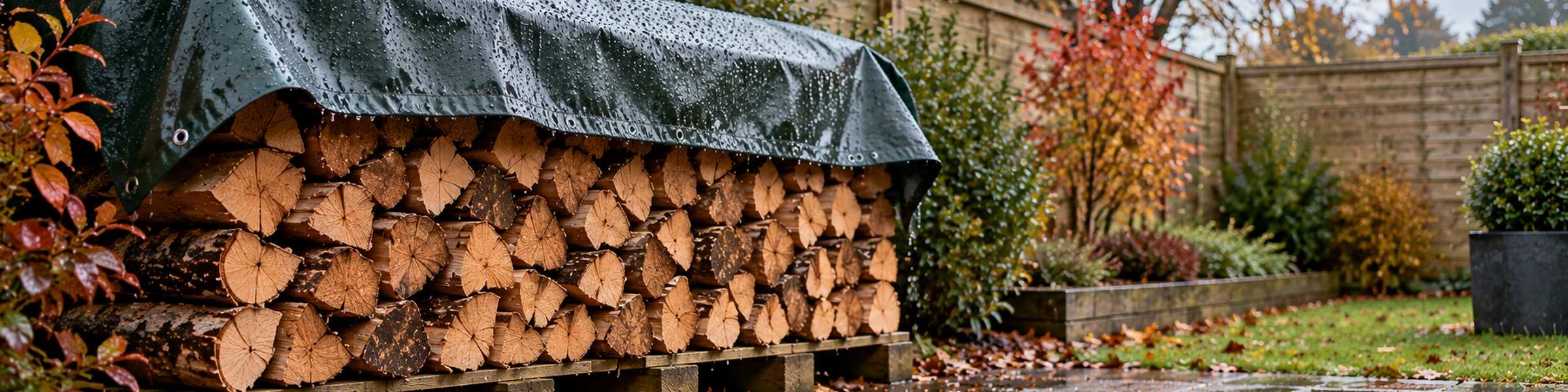
The rule is simple enough to remember. Water comes from above, so cover from above. Air has to move through the stack, so leave the sides alone.
A sheet across the top with a generous overhang at the front and back, secured so wind cannot lift it, does everything you need. It keeps direct rainfall off the end grain, which is where logs absorb water fastest, while leaving both long faces of the stack open to the wind. In practice that means the sheet should cover roughly the top third of the pile and no more.
Getting the Fall Right
A flat sheet holds puddles, and a puddle will find its way through any small tear or seam within a few weeks. Whatever you use as a cover needs a fall on it so water runs off rather than pooling. Stacking the back of the pile a course or two higher than the front creates that fall naturally, and it costs nothing.
The overhang matters as well. A sheet that stops flush with the face of the stack sheds water directly onto the logs below it. Two hundred millimetres of overhang front and back throws the run-off clear.
What to Use
Heavy duty tarpaulin works, provided it is rated for outdoor use and has proper eyelets. Lightweight builders sheeting tears at the fixings within one windy month and then flaps itself to pieces. Corrugated sheeting laid over a simple timber frame is better still, because it will not flog in the wind and lasts several seasons.
Some customers use weed control fabric as a top cover, which is a reasonable choice for a temporary stack because it is permeable enough to let vapour out while shedding most direct rain. It is not a substitute for a proper roof over a full winter supply, but for a working pile near the back door it does a decent job.
Do Not Forget What Is Underneath
Covering the top achieves very little if the bottom course is sitting in wet grass. Ground moisture wicks upwards through the stack and the lowest logs go first. Bearers, a pallet, or a simple frame lifts everything clear and lets air pass beneath, which is at least as important as anything happening above.
On a sloping garden, and there are plenty across the valley, position the stack so surface water runs past rather than through it. A pile at the bottom of a slope collects everything the lawn sheds.
When Sheeting Stops Being Worth It
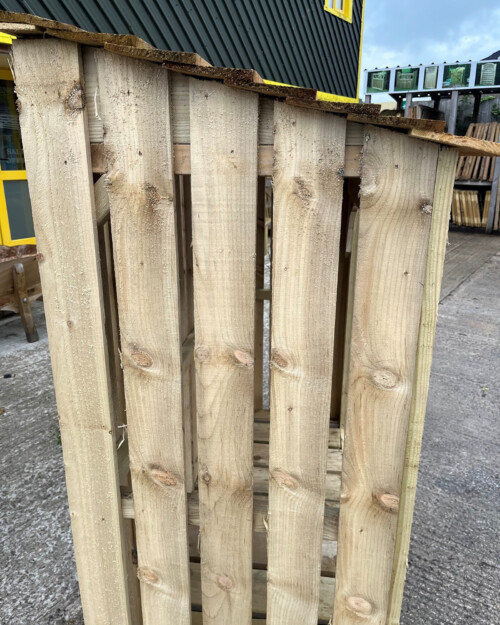
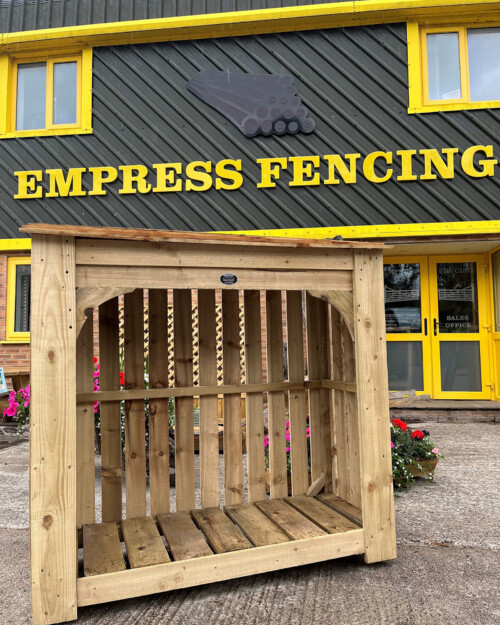
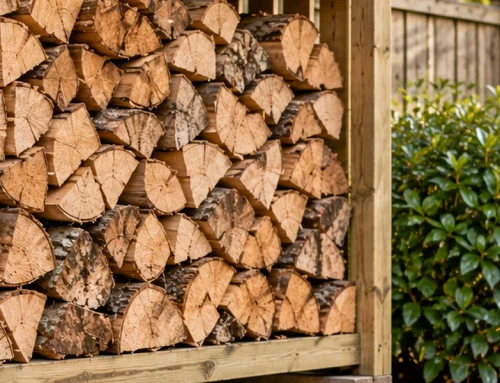
There comes a point where the annual cost and annoyance of tarpaulins outweighs the cost of a proper store. Sheets tear, weights slip, wind gets underneath, and every gale means going out in the dark to sort it out. A fixed store with a roof and open sides does the job permanently and holds its shape.
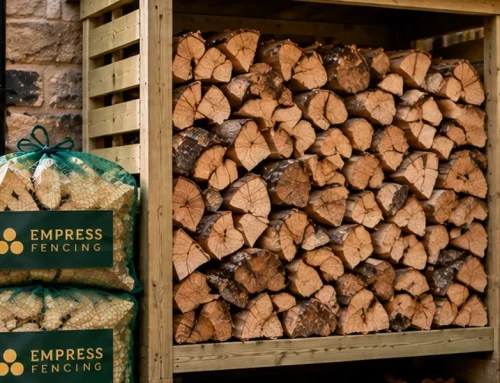
Our log store 3×5 suits a household burning a few evenings a week, while larger burners tend to want more capacity or a second store filled at the same time. Either way, one purchase replaces years of sheeting.
How Much Cover You Actually Need
The quantity of firewood you are protecting shapes the answer. A single builders bag of logs stood on a hard standing needs very little beyond a top sheet, because the bag itself keeps the base off the ground and the volume is small enough to burn through quickly.
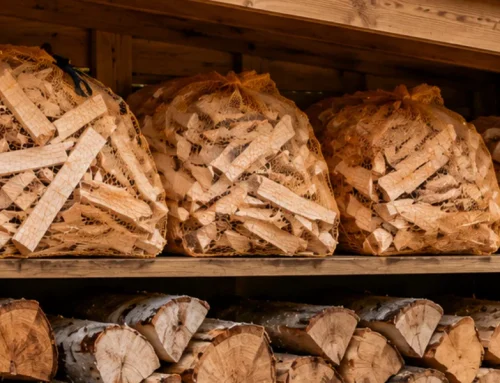
A bulk order tipped loose is a different proposition. It has a much larger surface area, it will sit for months rather than weeks, and it deserves proper treatment from the day it arrives. If you are ordering logs for sale Whalley or logs for sale Sabden in that sort of quantity, it is worth having the covering sorted before the delivery arrives rather than afterwards.
A Quick Test Through the Winter
Pull a log from the middle of the stack every few weeks and knock two together. Dry firewood gives a sharp crack. Damp firewood gives a dull thud. If the sound has changed since delivery, air is not moving through the pile and the covering arrangement needs opening up rather than tightening.
For advice on quantities, storage or delivery ahead of the heating season, call us on 01200 449930. We supply certified Ready to Burn firewood from Clitheroe with free delivery on orders over £150 across all BB postcode areas.