
Log store rotation is the simple habit of burning your oldest logs first and filling the store in a sensible order. It sounds obvious, yet many households bury last year’s logs under every new delivery. At Empress Fencing, we supply fencing and timber supplies in Clitheroe, including log stores and kiln dried firewood. This guide explains how to rotate your stock so every log reaches the stove in good condition.
Why the Order of Your Log Store Matters
Kiln dried logs arrive at under 20% moisture. However, they do not stay perfect forever if they sit in the wrong place. Log store rotation keeps the whole store moving, so nothing lingers at the back for years.
Log Store Rotation Means First In, First Out
The principle is the same as stock rotation in a shop. The logs that arrived first should be burned first. As a result, no log sits in the store long enough to pick up damp, dust or insects.
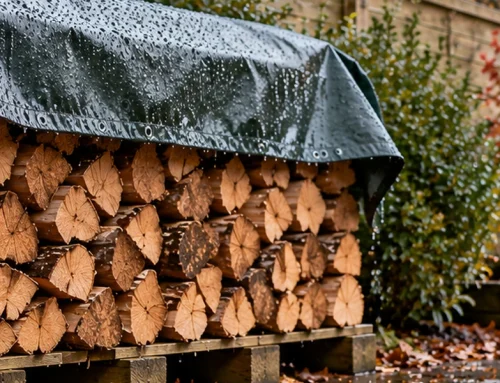
This matters more in a damp climate. Even a well-built store lets some moist air through during a wet Lancashire autumn. Therefore, logs stored for two or three winters can slowly lose their edge.
Never Stack a Fresh Delivery on Top of Old Logs
The most common mistake is piling new logs straight on top of the old ones. It seems quickest on delivery day. However, it traps the older logs at the bottom, where airflow is poorest.
Instead, good log store rotation means burning down the old stock first or moving it to the front before restocking. Then fill the empty space behind with the new delivery. That way, the oldest logs always sit where you reach first.
Remember that the driver cannot stack logs in your store. So, you control the order every time. Our guide to moving firewood from delivery to store has tips for a quicker restock.
Using the 3×5 and 5×5 Stores in Sections
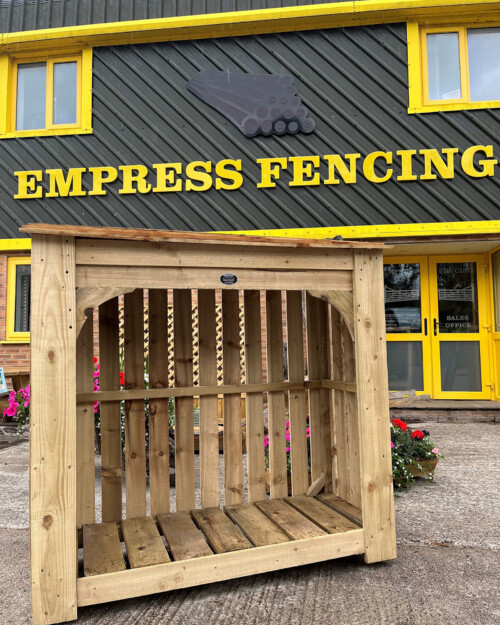
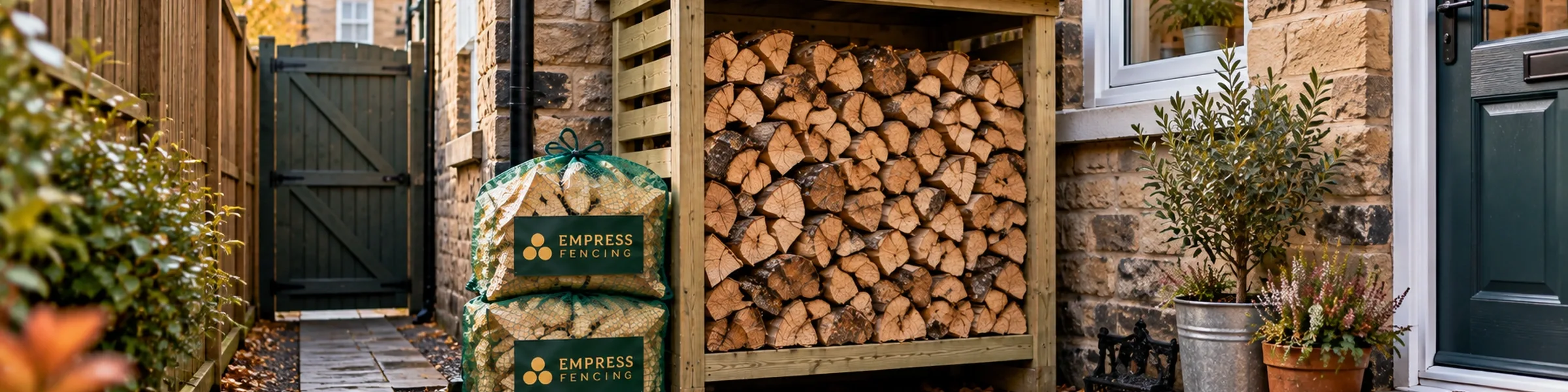
Our log stores make rotation easy if you think of them in sections. The log store 3×5 is 3ft wide and 5ft high. It suits a single column of logs that you work through from one side.
The log store 5×5 is 5ft wide and 5ft high. Many customers treat it as two bays, left and right. They burn from one bay while the other holds the newer delivery.
When the first bay is empty, it becomes the space for the next order. Consequently, the two halves swap roles each time. This simple pattern makes log store rotation almost automatic.
Leaving Airflow Gaps Between Logs
Both stores have slatted backs and sides for airflow. However, that only helps if air can move between the logs. So, avoid ramming them in so tightly that nothing can pass through.
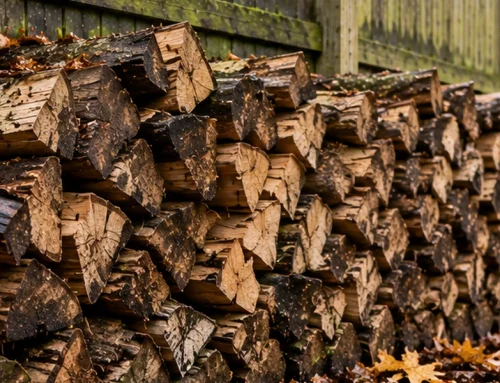
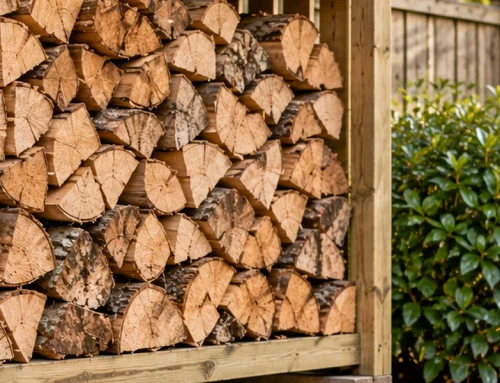
Stack logs loosely with the cut ends facing outwards. Our logs are cut on average to 8 inches long, so they sit neatly in rows. Furthermore, leave a small gap at the back between the logs and the slats.
Placement matters too. Stand the store a little away from walls and fences, so air can circulate behind it. Our guide to storing logs against a fence explains why this gap matters.
A Kindling Shelf at the Top
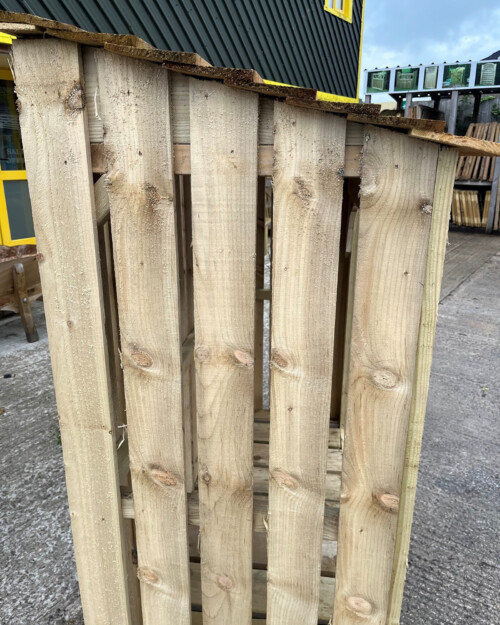
Kindling soaks up damp air far faster than logs do. Therefore, it deserves the driest spot in the store. The top of the store, just under the sloping feather edge board roof, is ideal.
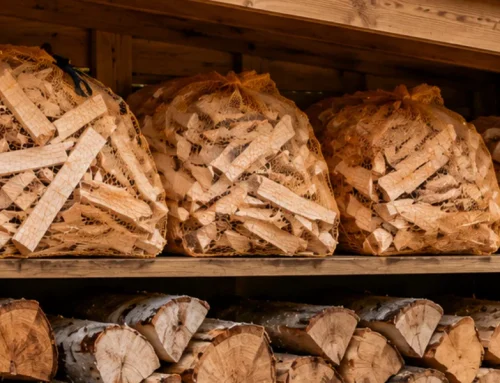
Keep a net or two up there, well clear of the ground. In addition, keep your firelighters in a sealed box nearby. That way, everything you need to light the fire sits together and stays dry.
Log Store Rotation Through the Season
Rotation is easiest when you plan your orders around the season. Most households in the Ribble Valley start burning in October. By early December, the store is often half empty.
That is the best time to top up. Order before Christmas, while the store still has older logs at the front. Then fill the empty bay behind them with the new delivery.
Waiting until the store is completely empty is risky. A cold snap can arrive suddenly, and demand rises quickly. Our guide to kiln dried logs delivered explains what to expect when ordering.
Keeping the Base Clean Between Deliveries
Each time a bay empties during log store rotation, take a moment to clear the floor. Bark, leaves and small offcuts collect at the bottom over the winter. If they stay, they hold moisture against the next load.
A quick sweep keeps the base dry and discourages insects. Moreover, it lets you check the floor slats for soft or damaged timber. A sound base keeps logs off the ground and protects the whole store.
Also check that the store is still level. A leaning store lets rain blow in on one side. In that case, pack the low corner with a paving slab or a short length of timber.
Choosing the Right Logs to Restock
For most stoves, our 1m3 hardwood logs load is a good fit for a 5×5 store. It arrives tipped loose on your drive, ready to barrow into the empty bay. Alternatively, a builders bag suits smaller stores and narrower access.
All of our firewood is Ready to Burn certified and kiln dried to under 20% moisture. As a result, every new delivery is ready to use straight away. Log store rotation simply keeps it that way until you burn it.
Ordering in Clitheroe and Whalley
Clitheroe gardens range from terraced yards to larger plots near the castle. A 3×5 store often suits the smaller spaces. Our page on logs for sale Clitheroe covers deliveries across the town.
In Whalley, many homes have room for a 5×5 store and a full cubic metre. See our logs for sale Whalley page for local detail.
Ready to set up proper log store rotation this winter? Call Empress Fencing on 01200 449930 to order a log store, logs or both. Delivery is free on orders over £150 across all BB postcode areas, and we aim to deliver within 5 working days.