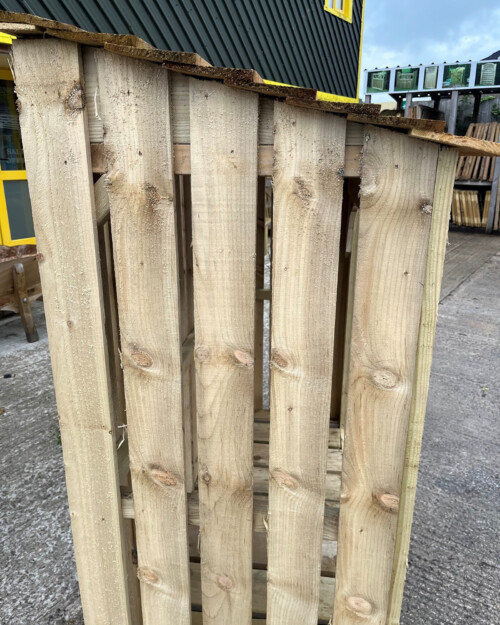

Storing logs against a fence is one of the most common things we see when customers send us photographs of a boundary that has failed early, and it is almost always the last thing anyone suspects. As a supplier of fencing and timber supplies in Clitheroe that also sells firewood, we sit in an unusual position, because we see both sides of the problem. The fence panel that rotted through in four years and the neat stack of logs that sat against it for three winters are, more often than not, the same story.
What Actually Happens Behind a Log Stack
A timber fence panel survives because it dries. Rain soaks it, wind and sun take the moisture back out, and the pressure treatment holds off decay for the periods in between. That cycle is the whole basis of a fence lasting fifteen years rather than five. Stack a metre of firewood against the back of it and you interrupt the drying half of that cycle permanently.
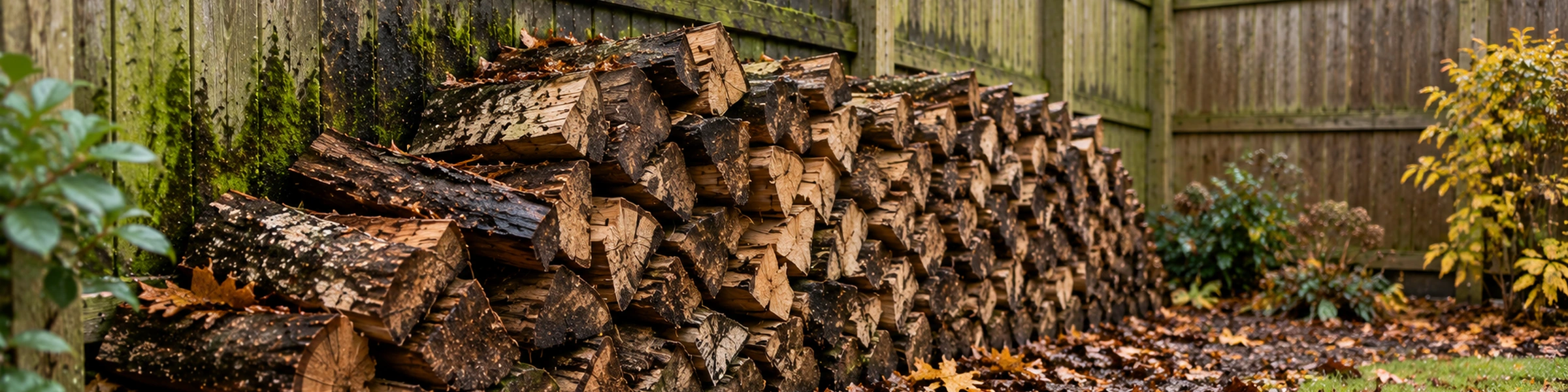
The face of the panel behind the logs stays damp for months at a time. Air cannot move across it, sunlight never reaches it, and any water running down the stack is delivered straight onto the timber and held there. In a Ribble Valley winter, where we can go weeks without a properly dry day, that section of panel is effectively submerged. The wood softens, the treatment leaches out, and fungal decay takes hold in the exact spot nobody ever looks at.
Why the Damage Is Always Found Too Late
The frustrating part is how well hidden it is. The visible face of the panel, the side facing your garden, often looks perfectly sound. The rot is working from the back forwards, so the first sign is usually a panel that gives way in a gale, or a homeowner who moves the log pile in spring and finds the boards behind it soft enough to push a thumb through.
The same applies to posts. A 100mm x 100mm rough sawn timber post has plenty of section to lose before it fails, but if it is buried in the middle of a log stack it is losing that section from all four sides at once, and it will go long before the posts either side of it.
Firewood Suffers From the Arrangement Too
This is not a one-way problem. Logs stacked hard against a solid panel dry badly themselves. Kiln dried logs leave us at under twenty per cent moisture content, which is the threshold that matters for clean, efficient burning, but they will happily reabsorb moisture from damp air if they are stored somewhere with no airflow. A stack pressed against a fence, with no gap behind it and no cover above it, is close to the worst storage arrangement available. Customers who tell us their logs spit, hiss or refuse to catch have very often stored good firewood badly rather than bought poor firewood.
The Gap That Solves Most of It
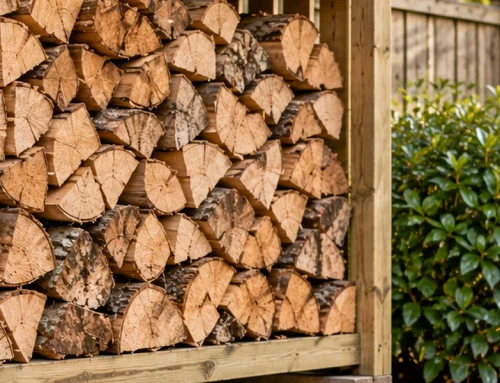
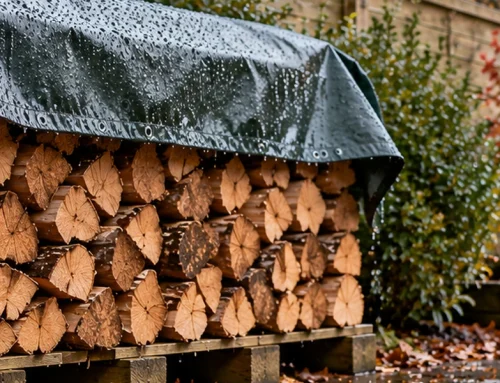
If the fence is the only place a stack will fit, the single most useful change is an air gap. Around 100mm between the back of the stack and the panel is enough for air to move, which lets both the timber and the firewood dry between wettings. Battens laid vertically against the fence, or a row of pallets stood on edge, will hold that gap without any real effort.
Getting the stack off the ground matters just as much. Firewood sitting directly on soil or grass wicks moisture up through the bottom two courses, and those are the logs that end up mouldy and unusable by February. A base of bearers, a pallet, or a course of timber sleepers lifts the whole stack clear and keeps air moving underneath.
Why a Proper Store Is the Better Answer
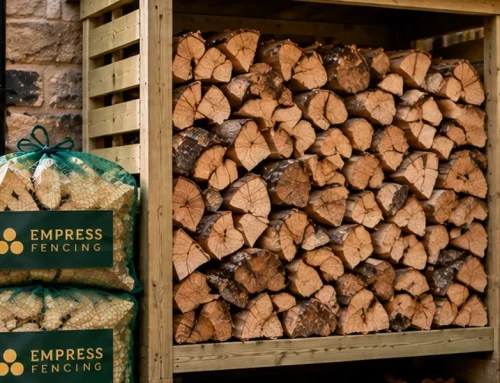
An air gap is a workaround. A purpose built store solves the problem properly, because it is designed to do the two things a fence cannot do at once, which is shed water off the top while letting air through the sides. Our log storage solutions are built for exactly this, and siting one against a wall rather than a fence removes the risk entirely. A house wall or garage wall does not rot, does not blow over, and does not cost several hundred pounds to replace.
If the store has to go near a boundary, leave a working gap behind it. You will want to get behind it eventually to treat the fence or clear leaves, and a store pushed hard against a panel makes that impossible.
Local Conditions Make This Worse Than It Sounds
Gardens across the Ribble Valley tend to run to the wetter end of things. Rainfall is high, exposure is often significant on the western and northern sides of a plot, and many older properties have boundaries that back onto hedging or banking where drainage is already poor. Customers ordering logs for sale Clitheroe or logs for sale Waddington are frequently working with north facing corners where nothing dries out properly between October and March. Those are precisely the spots where a log pile against a fence causes the most damage, and precisely where people put them, because it is the corner nobody uses for anything else.
Checking a Fence That Has Had Logs Against It
If a stack has been in place for a season or more, it is worth checking the timber when you move it. Press a screwdriver into the back face of the panel low down, where water collects. Sound timber resists. Softened timber takes the point easily, and if it goes in more than a few millimetres the board is on its way out. Check the base of any post within the footprint of the stack in the same way.
Where individual boards have gone but the frame is sound, replacements are straightforward. A feather edge board can be swapped out without dismantling the run, which is a far cheaper repair than a full panel and posts. Catching it at that stage is the difference between an afternoon and a project.
If you are planning your firewood storage before the season starts and want advice on siting a store or on which timber will stand up to a damp corner, call us on 01200 449930. We are based in Clitheroe and deliver across the Ribble Valley and wider Lancashire, with free delivery on orders over £150 across all BB postcode areas.