
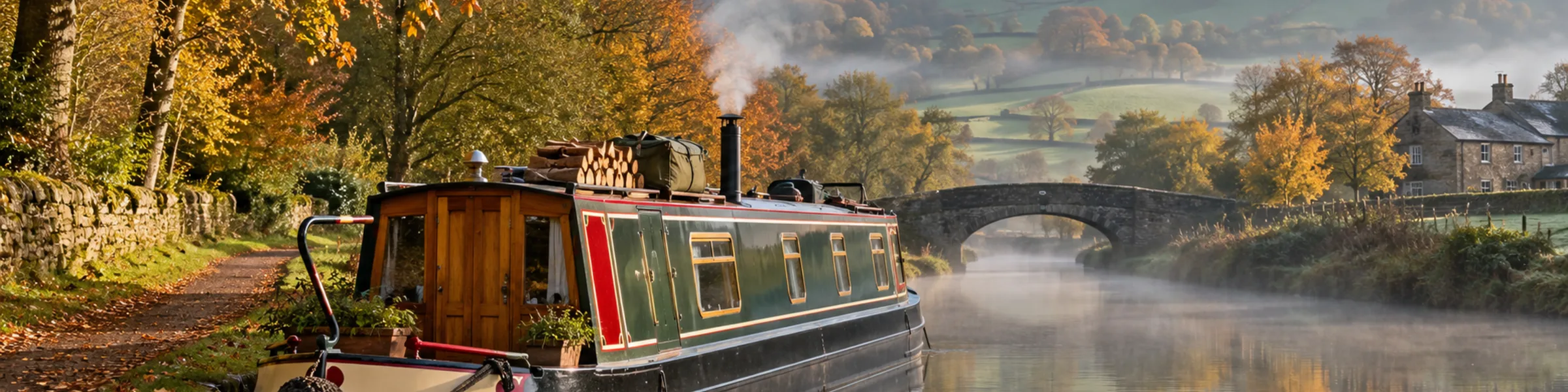
Logs for a narrowboat stove need to be short, dry and easy to stow, because space on board is always tight. The Leeds and Liverpool Canal winds through several BB postcode towns, and many boaters moor here through the winter. Empress Fencing supplies fencing and timber supplies in Clitheroe, including kiln dried firewood. This guide explains which logs suit a small boat stove and how to get them aboard.
Choosing Firewood for Life Afloat
A narrowboat stove is small, and the cabin heats up quickly. Consequently, choosing logs for a narrowboat stove is about size, dryness and storage rather than sheer volume. Getting those three things right makes winter on the cut far more comfortable.
Why Size Matters With Logs for a Narrowboat Stove
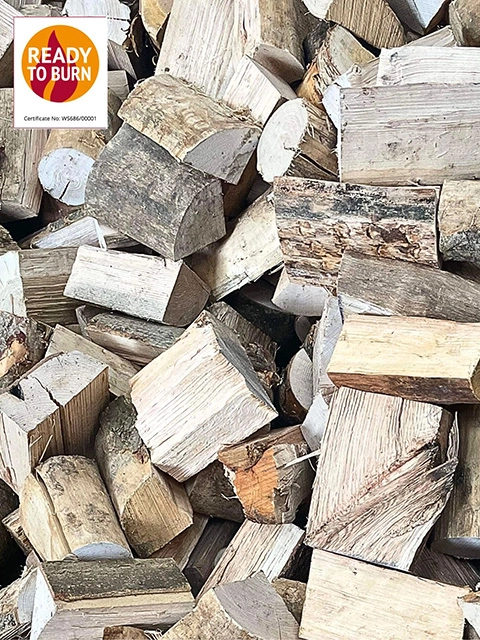
Most narrowboat stoves have compact fireboxes. Long logs simply will not fit through the door. Our logs are cut on average to 8 inches long, with a maximum diameter of 6 inches.
That size suits many boat stoves well. However, some very small stoves have shallower fireboxes still. So, measure the inside of your firebox before ordering. Our guide to log length for a stove explains how to measure properly.
Why Dry Logs Matter on the Water
Damp air on the canal makes dry logs for a narrowboat stove even more important. Wet logs smoke, tar the flue and leave the cabin cold. Furthermore, smoke from a boat chimney drifts straight across the towpath and neighbouring boats.
All of our firewood is kiln dried to under 20% moisture and Ready to Burn certified. As a result, it lights quickly and burns cleanly in a small stove. Our guide on what happens if you burn wet logs explains the risks of damp fuel.
Nets or a Builders Bag for a Boat
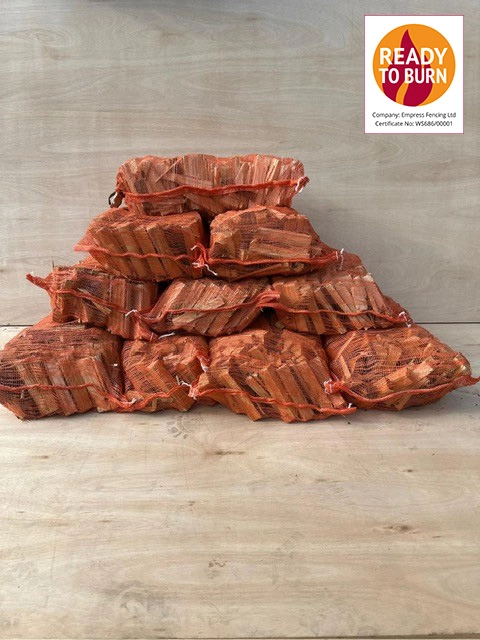
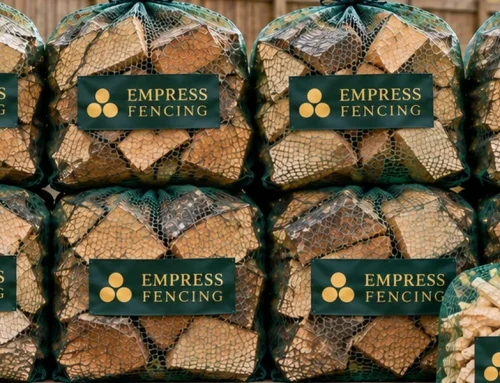
Nets are often the most practical way to buy logs for a narrowboat stove. Each net is easy to carry along a towpath and stow in a locker. Our 10 nets of softwood logs and 2 nets of kindling bundle is kiln dried Norwegian Spruce and Larch. Softwood catches fast, which suits short evening burns in a small cabin.
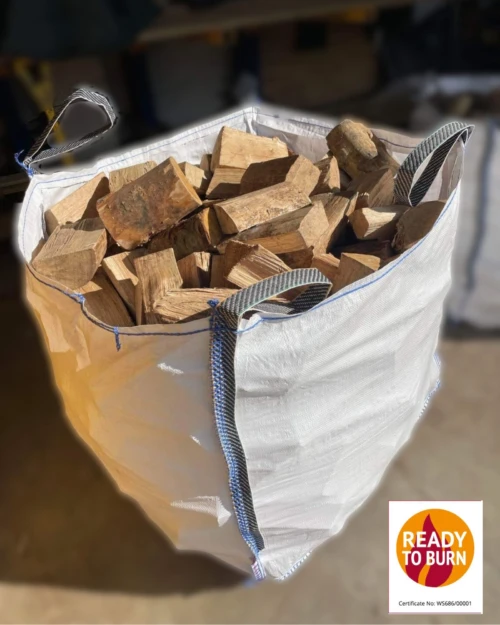
Alternatively, a builders bag holds around 0.6 cubic metres of mixed hardwood. Each bag measures roughly 85cm by 85cm by 85cm. However, it is far too big to carry aboard in one go. Therefore, it only suits boaters with a shore-side store or a friendly mooring owner.
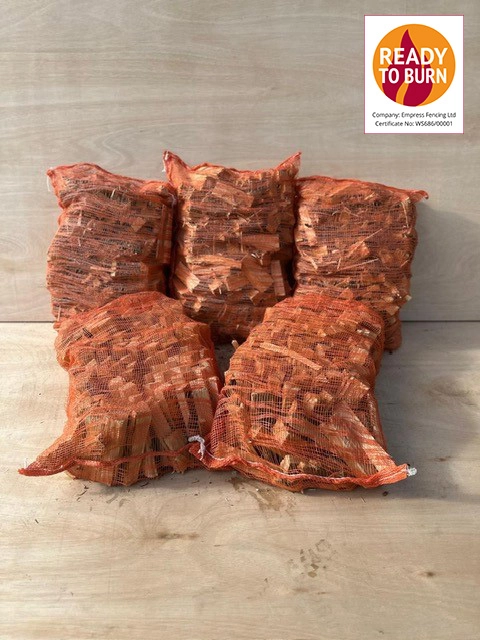
Kindling is easy to forget, but you will need plenty. One net lights roughly 10 to 12 fires. For a winter afloat, the 5 nets of kindling makes a sensible top-up.
Storing Logs Aboard and on the Roof
Space is the biggest challenge when storing logs for a narrowboat stove. Many boaters keep a few days of logs inside and the rest on the roof. However, the roof is fully exposed to Lancashire rain.
So, keep roof logs in a sealed box or under a fitted cover. Lift them off the steel roof slightly so water can drain underneath. Otherwise, condensation and puddles will soak the bottom layer.
Inside, store a day or two of logs near the stove but not touching it. Lockers and the well deck work well too. Moreover, keep kindling in a sealed bag, because it soaks up damp air fast.
Getting Logs for a Narrowboat Stove Delivered
We deliver to BB postcode addresses only, and the van needs road access. That means we cannot deliver to a towpath or a mooring without a road. Instead, choose a nearby address, such as a marina, boatyard or friend’s house.
The driver slides logs or bags off the back of the van. They cannot lift them over walls or carry them along the towpath. So, plan how you will move the logs from the drop point to the boat. A sack truck or a folding trolley helps a great deal.
Alternatively, you can collect from our Clitheroe yard in your own vehicle. Collection has no geographic limit, so it suits boaters passing through from outside BB postcodes.
How Much Firewood a Boat Gets Through
Usage varies a great deal between boats. A liveaboard heating the cabin every day uses far more than a weekend boater. Equally, a well-insulated boat holds its heat much longer.
As a guide, many boaters burn a few nets a week in the coldest months. However, it is best to track your own use for a fortnight first. Then you can order the right amount without overfilling your lockers.
Many boaters also mix hardwood and softwood. Softwood nets give quick heat when you first light up. Meanwhile, a few denser hardwood logs keep the stove ticking over through the evening.
Keeping the Flue Clean on a Boat Stove
Boat chimneys are short, and they cool quickly in the wind. As a result, tar and soot can build up faster than on a house flue. Dry, kiln dried logs reduce that build-up considerably.
Check the chimney and collar regularly through the winter. Moreover, keep a working carbon monoxide alarm in the cabin at all times. A clean, dry fuel supply is the simplest way to keep the stove safe and efficient.
Mooring in Foulridge, Barnoldswick and Burnley
Foulridge sits at the summit of the canal, close to the famous tunnel. Many boaters moor near the wharf through winter. See our logs for sale Foulridge page for local deliveries.
Barnoldswick has moorings along a quiet stretch with good road access nearby. Our logs for sale Barnoldswick page covers the town. Meanwhile, the canal runs right through Burnley along the embankment. Our logs for sale Burnley page has more detail.
Blackburn also has moorings within BB postcodes. Wherever you moor, add clear access notes in the order comments box.
Need logs for a narrowboat stove this winter? Call Empress Fencing on 01200 449930 to talk through nets, kindling and a sensible drop point. Delivery is free on orders over £150 across all BB postcode areas, and collection from our Clitheroe yard is also available.