
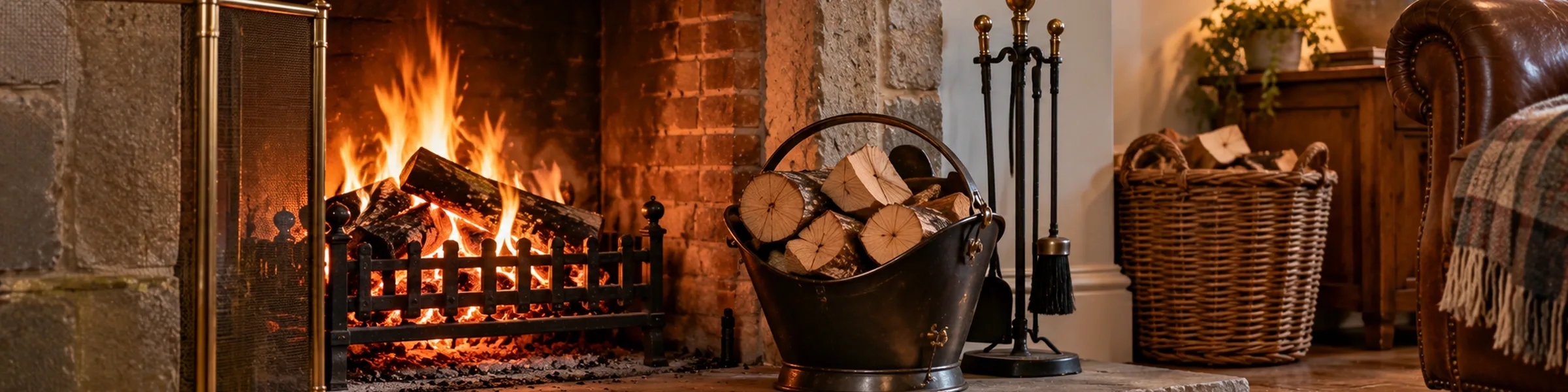
Knowing why logs spit and crackle helps you tell a cheerful fire from a fuel problem. Some popping is normal, but steady hissing usually means the wood is too wet. As a Ready to Burn registered supplier of fencing and timber supplies in Clitheroe, we hear this question every autumn. So here is what the noises actually mean.
What Is Happening Inside a Burning Log
Wood is made of long fibres with tiny cells and channels running through them. Even dry logs hold a little water and, in some species, pockets of resin, which is why logs spit and crackle. When the fire heats those pockets, they turn to gas and expand. Eventually the pressure breaks through the wood, and you hear a crack.
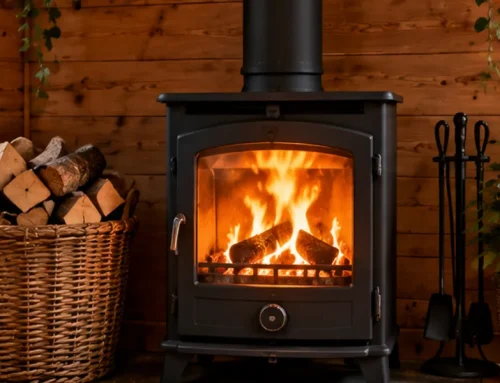
That small explosion can also throw out a spark or a fleck of glowing ember. In a closed stove, the glass stops it. On an open fire, however, it can land on the hearth rug. That is why the type of wood and the type of fireplace both matter.
Resin Explains Why Logs Spit and Crackle in Softwood
Softwoods such as spruce and larch carry more resin than most hardwoods. Our softwood logs are kiln-dried Norwegian Spruce and Larch, so they are dry but still resinous. As a result, they light quickly and pop more than hardwood does. So in softwood, resin is why logs spit and crackle, not water.
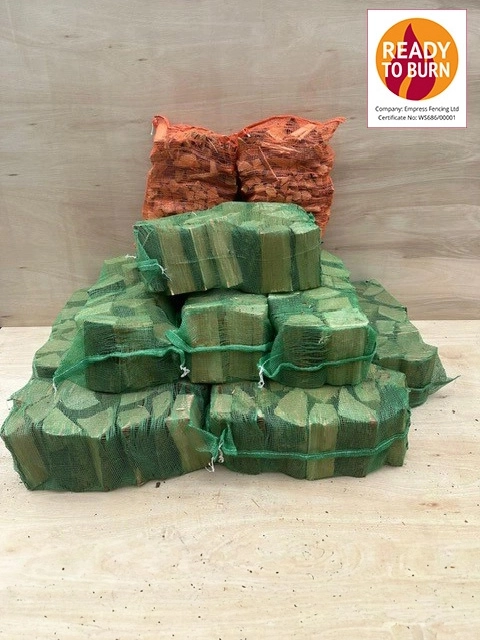
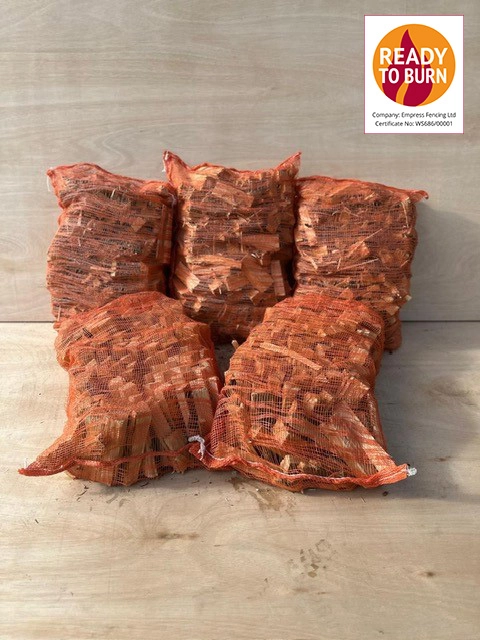
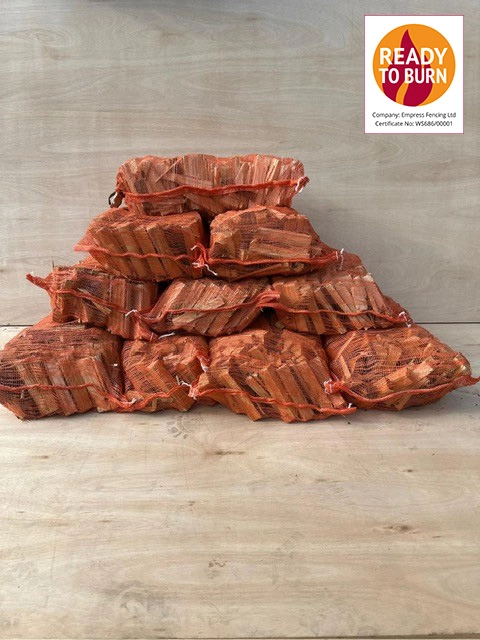
This is exactly why softwood works so well for lighting. It catches fast and gets the firebox hot. Then, once you have a bed of embers, hardwood takes over for a steadier burn. The 10 nets of softwood logs and 2 nets of kindling bundle is built around that job.
Why Hardwood Is Usually Quieter
Hardwood is denser and generally lower in resin. Our mixed hardwood loads may include silver birch, oak, ash, sycamore, beech, alder and hornbeam. Birch can give the odd snap from its bark, but most of these burn with a calm, low roar. So if a hardwood fire is constantly loud, it deserves a closer look.
Why Logs Spit and Crackle When They Are Wet
Wet wood makes a different sound altogether. Instead of the occasional sharp pop, you hear a continuous hiss or a whistle. Sometimes you will see steam or bubbling sap at the cut ends. That is water boiling out of the log before the wood can burn properly.
When water is why logs spit and crackle, that is the real warning sign. Energy that should heat your room is being spent boiling water instead. Meanwhile, the fire runs cooler, smokes more and coats the flue with deposits. Our guide to what happens if you burn wet logs explains the knock-on effects for your chimney.
The Under 20% Moisture Standard
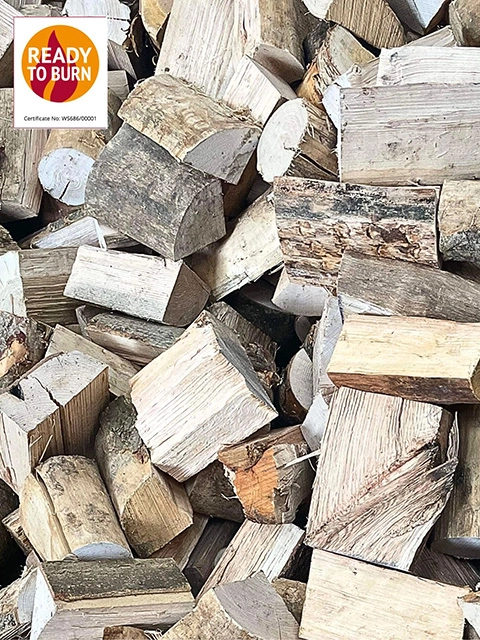
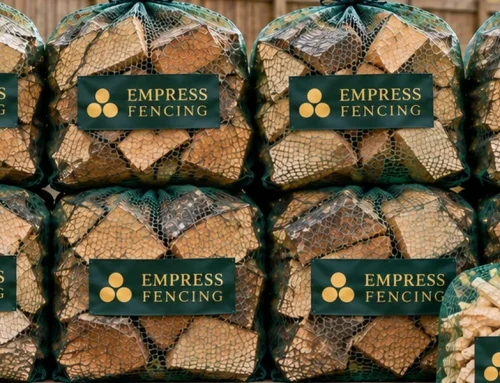
Every log we sell is Ready to Burn certified, which means a moisture content under 20%. At that level, the wood burns hot and clean, with only natural popping. Above it, the hissing starts and the glass soon blackens. You can read more about the scheme on our Ready to Burn certified logs page.
Dry logs can still pick up water after delivery, though. A pile left uncovered through a wet Lancashire October will soak up rain at the ends. So if you wonder why logs spit and crackle when they once burned quietly, check where they have been stored. In most cases, the store is the culprit rather than the wood.
Open Fires Need a Proper Guard
With a closed stove, sparks stay inside the firebox. An open fire is different, because nothing stops a popping ember. Therefore, always use a mesh spark guard in front of an open grate. Keep rugs, log baskets and newspapers well back from the hearth too.
Also, avoid loading an open fire with lots of softwood at once. A few pieces to get going are fine. After that, switch to hardwood, which spits far less. This one habit cuts down scorch marks on carpets and hearth rugs.
Other Sounds Worth Noticing
Not every noise comes from the logs themselves. A ticking sound while a stove heats up is usually the metal expanding. Likewise, a soft roar after you open the air control is just extra oxygen feeding the flames. Neither has anything to do with why logs spit and crackle.
By contrast, a hiss paired with smoke curling from the door, or a fire that keeps dying back, points to wet wood. In that case, test a log with a moisture meter or simply switch to fresh, dry stock. Kiln-dried logs remove the guesswork completely.
It also helps to listen during the first ten minutes after loading. A little popping as fresh logs catch is expected. However, if the hissing carries on once the logs are fully alight, the moisture is deep inside. That log will never burn as well as a properly dried one.
Getting Dry Logs to Your Door
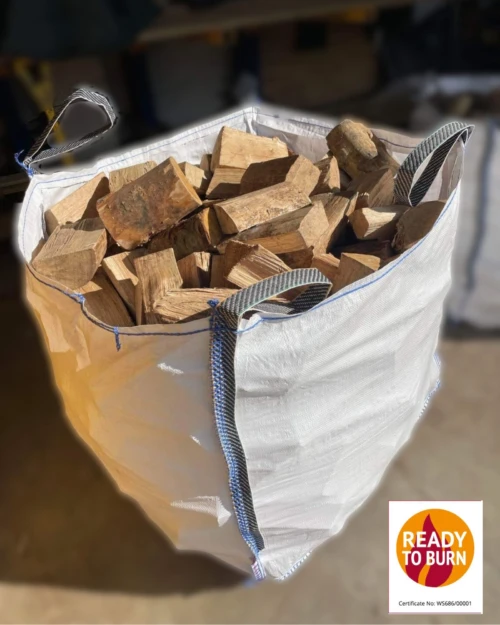
Our 1m3 hardwood logs are cut on average to 8 inches long, with a maximum diameter of 6 inches. They arrive as a loose load tipped on your drive. The driver cannot lift logs over walls or stack them in your store. So plan a dry spot nearby before the van arrives.
We deliver across East Lancashire, including steep terraced streets where access is tight. Customers often order logs for sale Darwen for homes with small back yards. Likewise, many households in Oswaldtwistle choose logs for sale Oswaldtwistle ahead of the first cold week. In both towns, adding a note about parking or access in the order comments helps the driver.
Once the logs are down, they are dry, and keeping them dry is up to you. Move them under cover the same day if rain is forecast. Stack them off the ground with air around the sides. Do that, and the only crackle you hear will be the good kind.
If your fire is hissing rather than crackling, it is time for drier fuel. Order online or call us on 01200 449930 for advice on the right logs for your stove or open fire. We offer free delivery on orders over £150 across all BB postcode areas, and collection from our Clitheroe yard is also available.