
Fence panel delivery is the stage of a fencing project people think about least and the one most likely to cause a bad morning. Panels are large, awkward, surprisingly heavy in quantity, and cannot be posted through a letterbox or left behind a bin. A delivery that arrives to a prepared site takes minutes. A delivery that arrives to a locked gate, a blocked drive and nobody in takes considerably longer and sometimes cannot be completed at all. We deliver fencing and timber supplies in Clitheroe and right across the surrounding area every week, and a few minutes of preparation makes the whole thing straightforward.
What actually turns up and how much space it takes
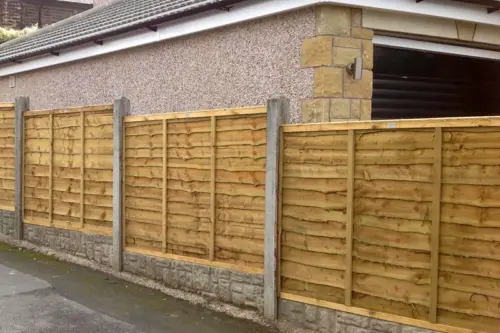
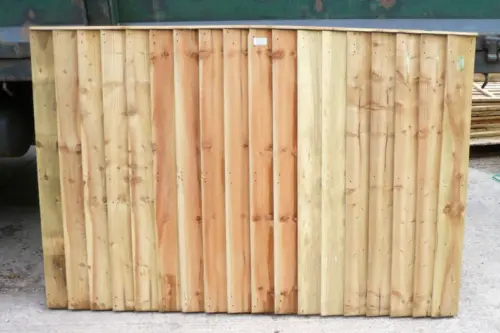
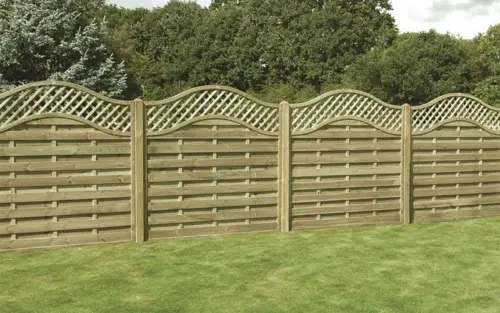
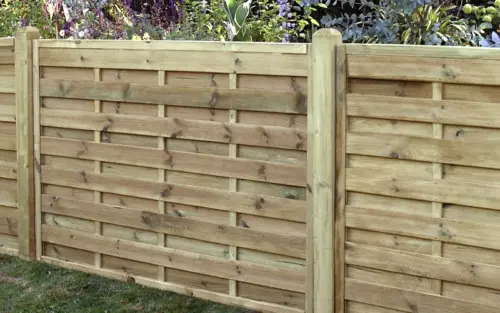
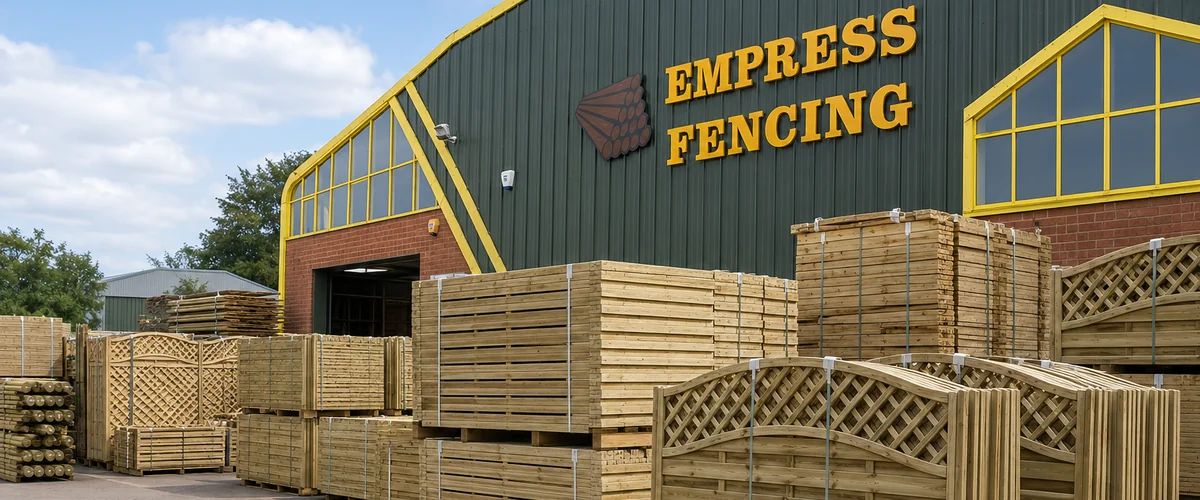
The first thing worth adjusting is the mental picture. People imagine a fence order as a neat stack. In practice a full boundary means panels, posts, gravel boards, fixings and often mix, and posts alone for a decent run are a substantial and heavy bundle. A run of panels takes up more floor area than most people allow for, and it needs somewhere sensible to go.
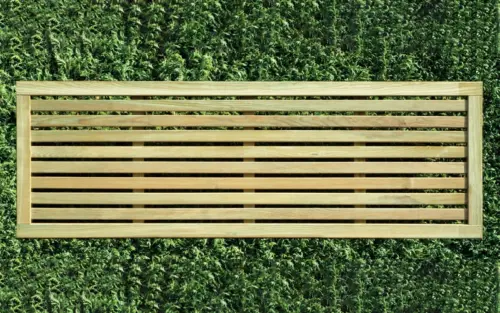
The panels themselves are wide and rigid. They do not go round tight corners easily, they do not fit through a standard side gate flat, and they are unwieldy in any wind, which matters more than it sounds on a breezy day. Anyone who has tried to carry a six-foot panel down an alley in a gust will recognise the problem.
Access is the thing worth checking first
Ask yourself honestly how the load gets from a vehicle on the road to where it needs to sit. If the answer involves a narrow ginnel, a flight of steps, a gate that has to be lifted off its hinges or a route through the house, say so when you order rather than discovering it on the day.
Parked cars are the most common obstacle. A tight terraced street where both sides are parked, or a rural lane with passing places and no obvious spot to pull in, will need planning. On the narrower lanes around the Ribble Valley villages, and in the older terraced streets across Pendle and Burnley, this is worth ten seconds of thought at the point of ordering.
Overhead obstructions catch people out too. Low branches over a drive, a carport, an archway. Anything that limits vehicle height affects what can get to your door.
Where the load is going to sit
Decide before the delivery arrives, and pick somewhere that works for the whole job rather than the first flat space you see. Ideally that is close to where the fence is going, out of the way of the front door and any route you use daily, and not blocking a car in.
Do not put panels straight onto grass or bare soil if you can avoid it. Timber sitting on damp ground takes up moisture from the bottom up, and a stack left on a lawn for a fortnight will mark the grass badly and may draw moisture into the bottom panel. Bearers, pallets, a couple of offcuts, anything that lifts the stack clear of the ground and lets air move underneath is worth the effort.
Storing panels before they go up
Very few people fit an entire fence on the day it arrives, so the stack sits for a while. Store panels flat and fully supported rather than leaning against a wall. A panel leaned up for two weeks in August sun will take a permanent bow, and once it has, it will not sit square in a run.
Cover the stack if it is going to sit for any length of time, but cover it loosely so air can move. A sheet wrapped tightly round a stack of timber traps moisture and does more harm than leaving it uncovered. Weight the cover so it does not blow off overnight.
Keep the stack somewhere you can see it. Panels stacked in an accessible front garden are portable, and it is worth thinking about where they are for the days before they go up.
Timing the order around the work
The temptation is to order everything at once and get it out of the way, but there is a case for thinking about sequence. If the old fence is coming out first, you need somewhere for the old panels to go as well as the new ones, and two full sets of panels take up a lot of space in a small garden.
Equally, ordering in two deliveries to spread the storage problem often costs more and risks a mismatch between batches. On balance, one delivery to a prepared space is nearly always the better answer. Just make sure the space is genuinely clear before the day rather than something you intend to sort out that morning.
Being there and checking the load
Be present if you possibly can. Check the count against the order while the load is being unloaded rather than three days later, and look over the panels as they come off. Timber is a natural material and some variation in colour and grain is entirely normal, but anything genuinely damaged is far easier to sort out at the point of delivery.
We deliver across the whole area, including out to Barnoldswick fencing, Earby fencing and Gisburn fencing where access varies considerably from one property to the next.
Full details are on our delivery charges page, and the 6ft fence panels and fence posts sections cover what most boundaries need.
If you have a tight access situation or are not sure what a particular order will involve, ring 01200 449930 before you place it and we will talk it through. Delivery is free on orders over £150 across all BB postcode areas.