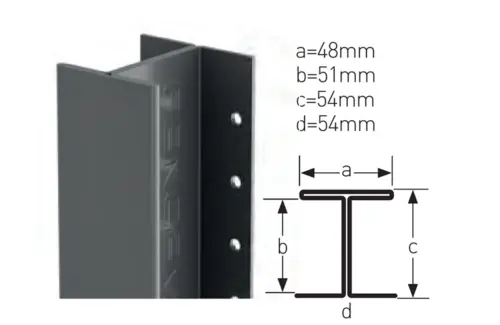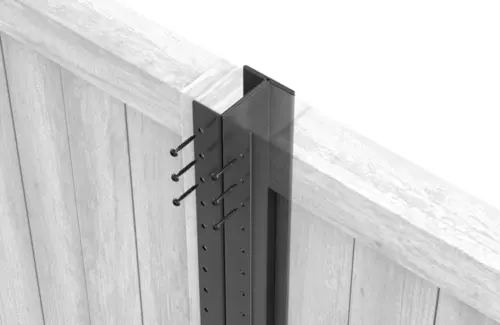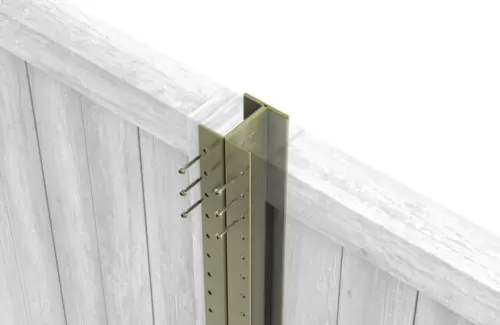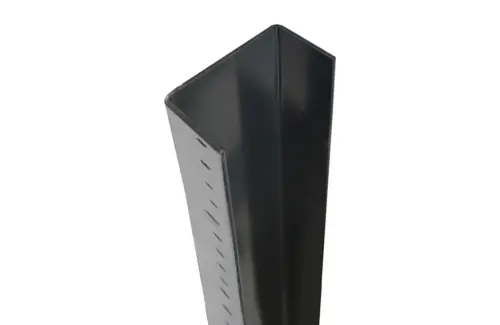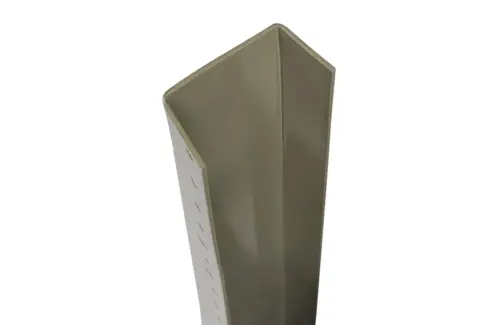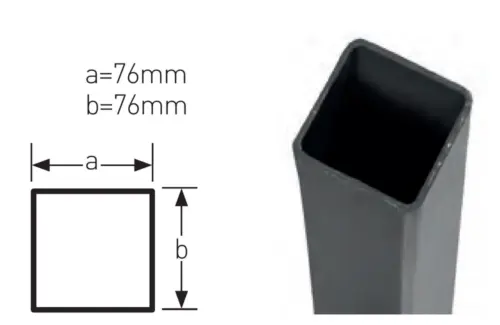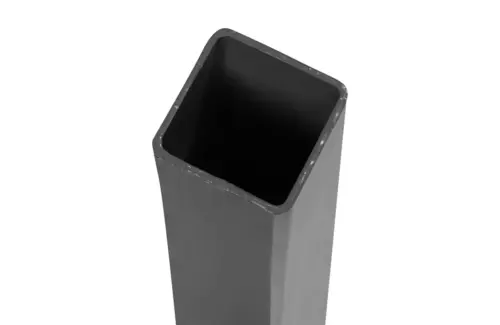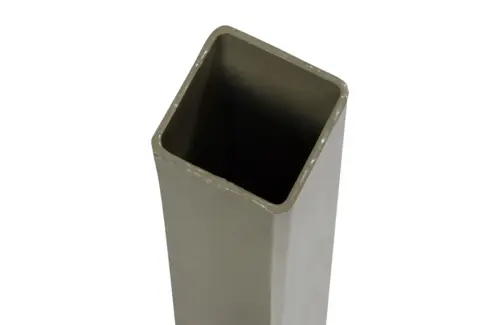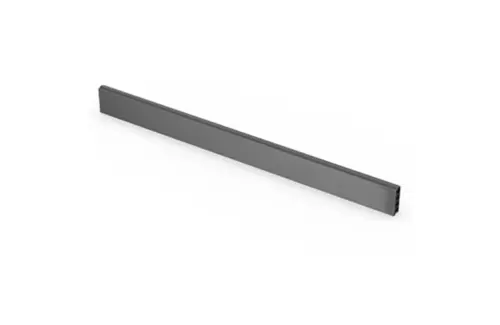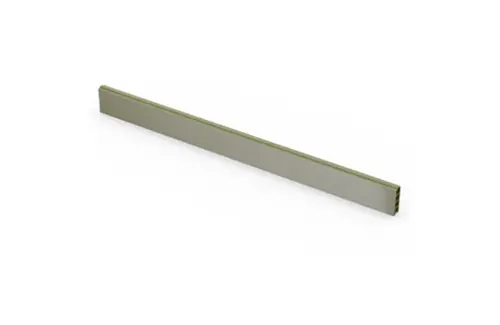

Durapost colours are a genuine decision rather than a detail, because unlike a timber post, a steel post is not going to weather into something different. A timber fence changes character over its life, silvering down and softening in tone. A steel post stays exactly the colour you chose for as long as it is in the ground. That makes the choice between anthracite and olive grey worth five minutes of thought rather than a quick pick from a screen. We stock both across the full component range as part of our fencing and timber supplies in Clitheroe.
Why the colour choice matters more with steel than timber
Timber arrives one colour and ends up another. Fresh pressure treated timber has a green cast that fades over the first year, then it moves through honey tones and eventually to grey. Anyone unhappy with the colour of a new fence generally finds the problem resolves itself in eighteen months.
A coated steel post does not do that. It is manufactured to a colour and it holds it. That is one of the main attractions of the system, since it means the boundary looks consistent for years without treatment. It also means the decision is effectively permanent, and it needs to sit comfortably with what is around it.
The second reason it matters is that the colour has to work with the panels between the posts, and those panels will change. A colour that looks right against fresh timber may read very differently against the same timber three years later when it has silvered.
Anthracite and where it works
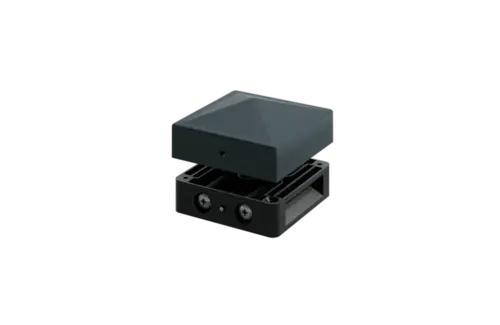
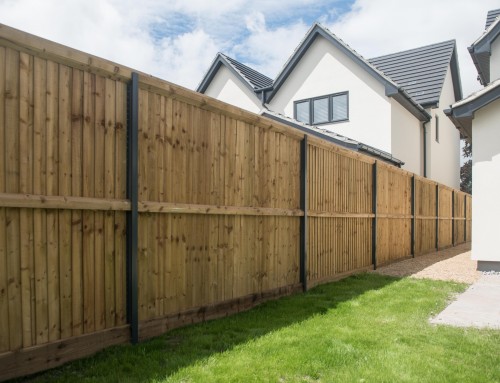
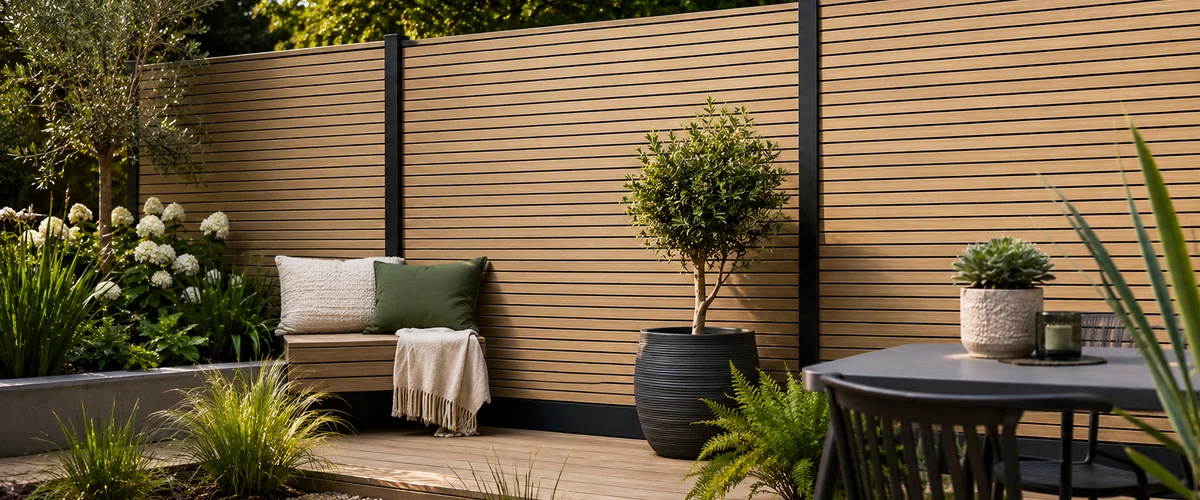
Anthracite is the darker option, a deep charcoal grey. It is the more contemporary of the two and it has become the default for modern properties, new builds and gardens with a defined design intent.
It works well because it recedes. A dark post reads as a shadow line rather than as an object, so the eye takes in the panels as a continuous boundary rather than a series of separate bays. In a small garden that is a real advantage, since a boundary that reads as one surface feels less enclosing than one broken into segments.
It also coordinates with the anthracite window frames, doors, gutters and rainwater goods that are now standard on a great many newer properties. Where a house already has anthracite detailing, matching the fence posts to it is an easy way to make the whole thing look considered.
The one thing to be aware of is contrast. Against a very light timber panel, anthracite is a strong contrast, and the posts will be a defined visual rhythm along the boundary. Some people want exactly that. Others find it busier than they expected.
Olive grey and where it works
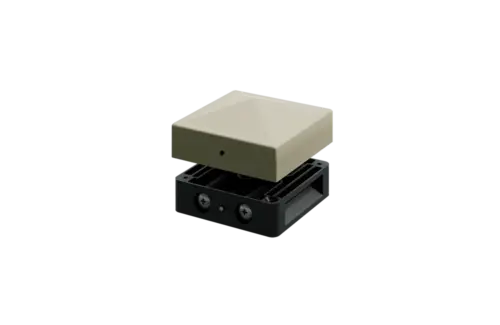
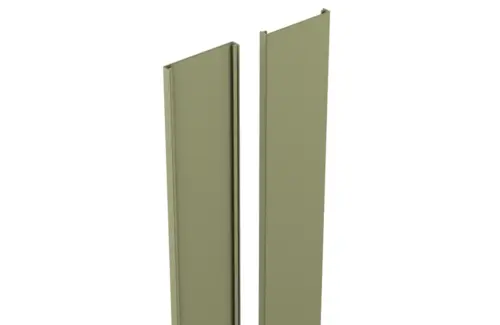
Olive grey is the softer, warmer option, a mid grey with a green undertone. It is the more traditional-looking of the two and it tends to suit older properties, rural settings and gardens where the boundary should not announce itself.
Its advantage is how it sits against weathered timber. As a fence panel silvers over the years, it moves towards exactly the sort of soft grey that olive grey sits alongside comfortably. A boundary that starts with a moderate contrast between post and panel tends to settle into a very harmonious one.
It also disappears better against planting and against stone. In a garden with a lot of green, or against the local stone you find throughout the Ribble Valley, the warmer grey blends where a dark charcoal would stand out.
Matching across the whole system
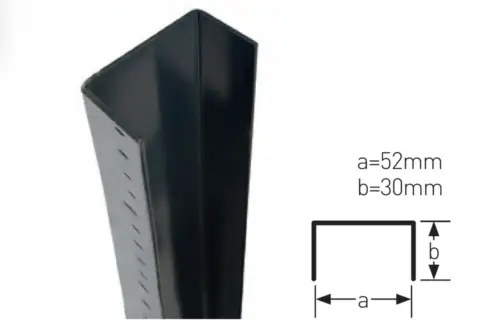
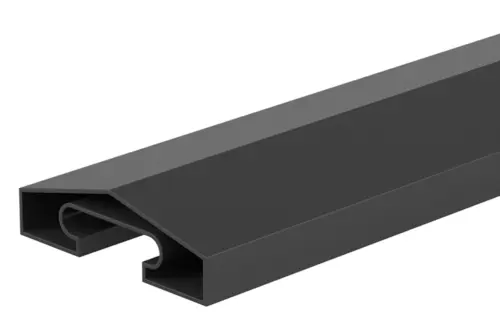
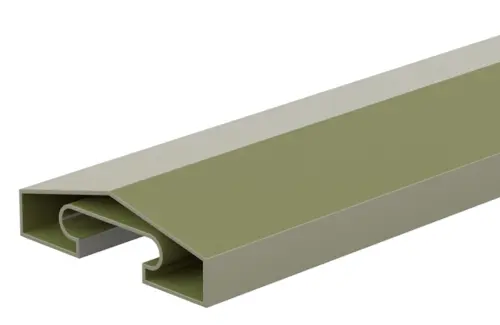
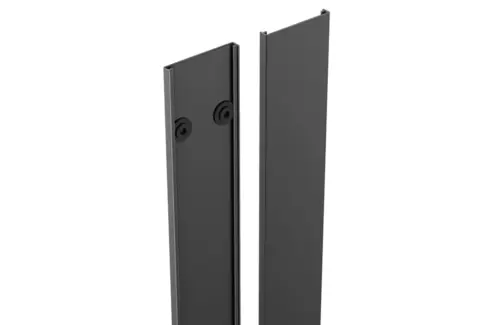
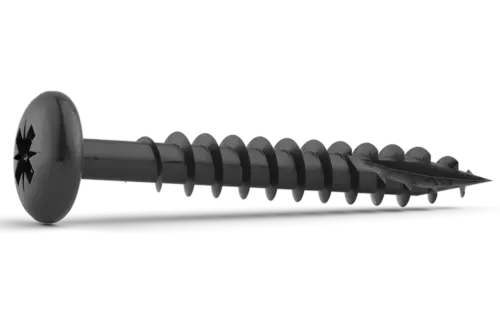
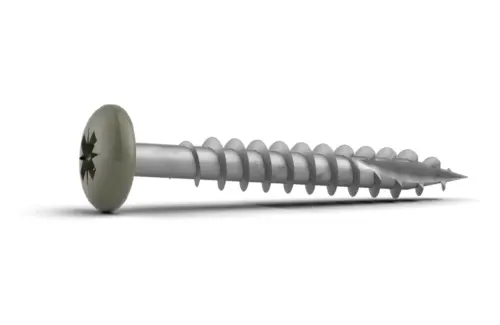
The point worth understanding is that this is a system rather than a post. The intermediate posts, the end and corner posts, the U channel, the gravel boards, the capping rails, the post caps, the cover strips and even the pan head screws are all available in both colours.
That is a genuine advantage and a genuine trap. The advantage is that a boundary can be completed properly in one colour with nothing mismatched. The trap is that it is easy to order the posts in one colour and then pick up a component in the other without noticing, and a single olive grey capping rail on an anthracite run is very obvious.
Check every line of the order against the colour before confirming it. It is the single most common ordering error with this system.
How the two read in different light
Worth remembering that neither colour looks the same all day. Anthracite reads almost black in bright summer sun with strong shadows, and softens to a mid grey under the flat overcast light that dominates much of the Lancashire year. Olive grey does the opposite, showing its green undertone most clearly on dull damp days and looking considerably more neutral in strong sunlight.
If you are deciding between them, look at samples outdoors in daylight rather than indoors under artificial light, and if you can, look at them on both a bright day and a grey one. The grey day is the more useful test, because that is the light the fence will be seen in most often.
Extending an existing run
If you already have some in the ground and are extending, match what is there rather than starting again. That means identifying which colour you actually have, which is not always obvious from memory. Take a photograph in daylight, or better, look at the components against a known reference before ordering.
Customers extending boundaries around Mellor fencing and near Billington fencing frequently add sections a year or two after the original run, and matching the existing colour is what keeps it looking like one boundary.
The full range sits in our Durapost fencing and Durapost sections, and the panels that go between the posts are in the 6ft fence panels range.
If you are unsure which colour suits your property, ring 01200 449930 and describe the house and the setting. Delivery is free on orders over £150 across all BB postcode areas.