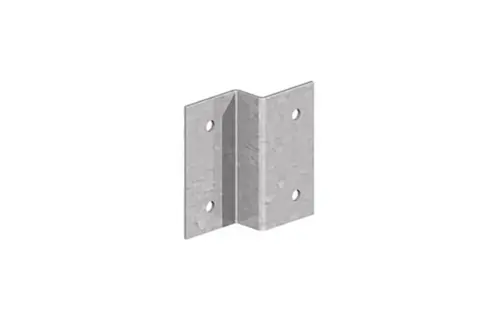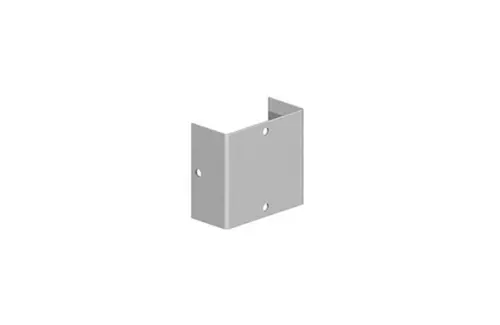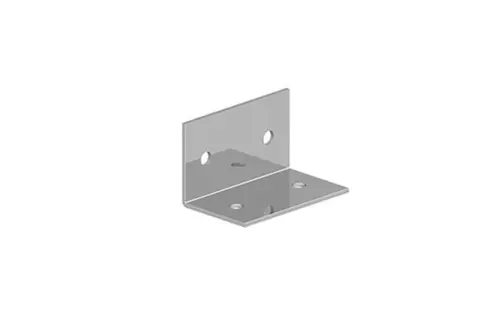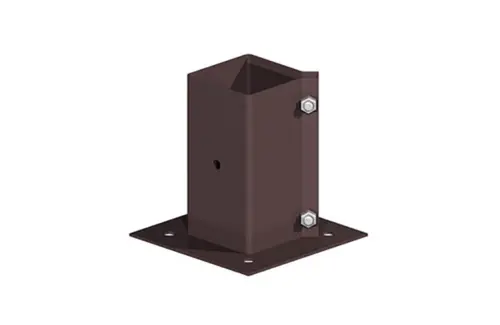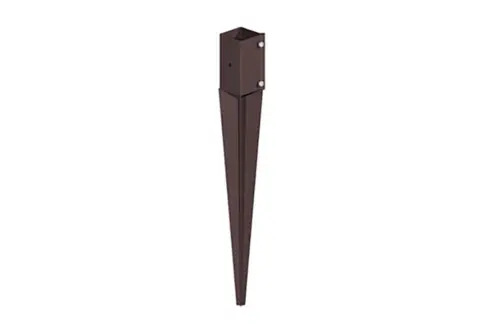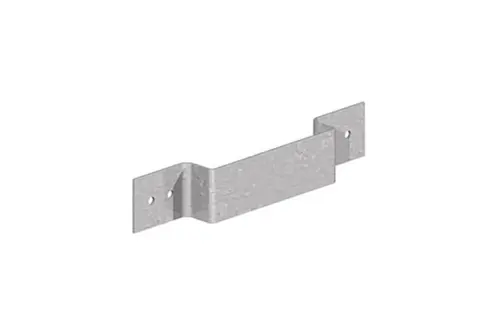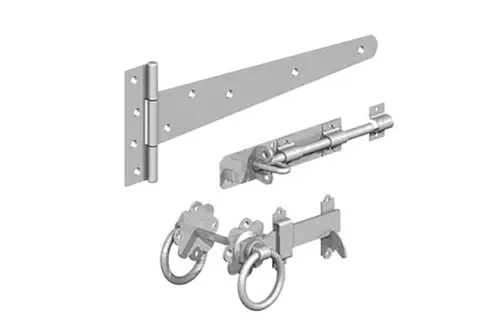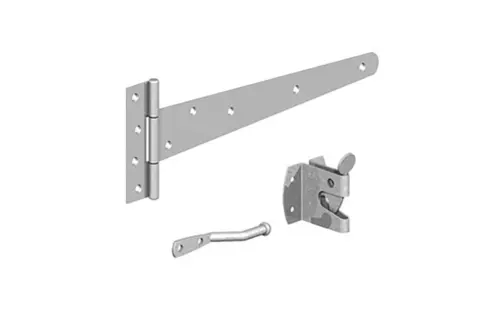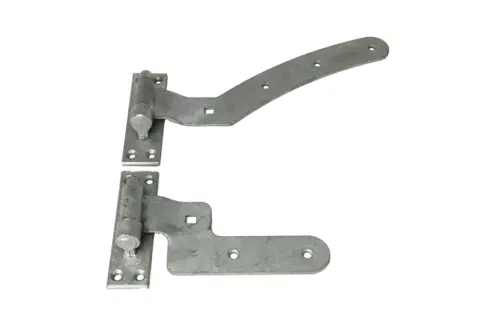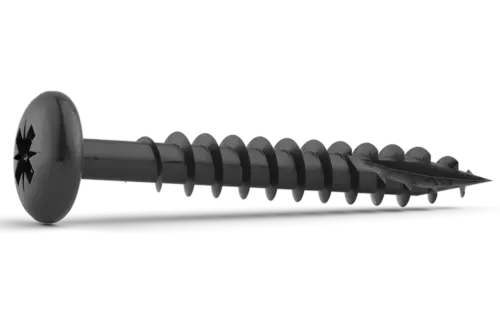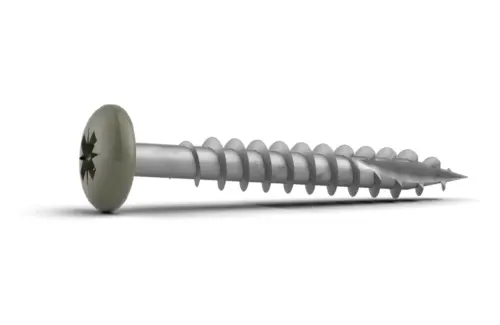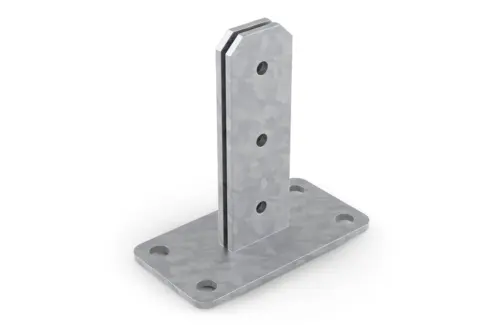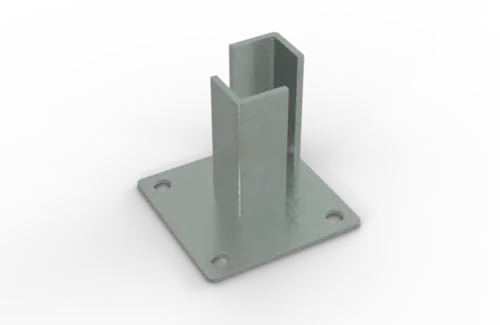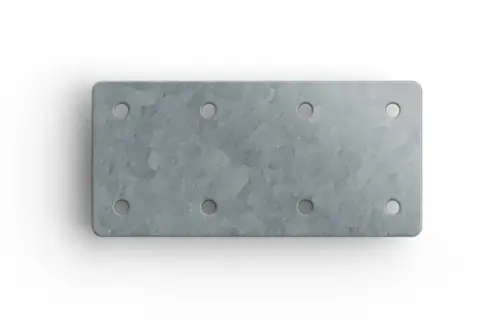

Fence panel security brackets solve a problem most people do not know they have until a neighbour mentions it. A conventional fence panel sits in a slot or on clips and is held in place mainly by its own weight and the panel above and below it. That is fine for wind. It is considerably less fine for anyone who fancies a free panel, and it is no obstacle at all to somebody who wants to get into a garden quietly without touching a gate. We supply them alongside the rest of our fencing and timber supplies in Clitheroe, and they are one of the cheapest genuine security improvements available for a boundary.
How a standard panel is actually held in place
In a slotted concrete post system, the panel drops down a channel and is held by gravity. In a timber post system, the panel is usually held by clips, brackets or a few nails through the frame. Both arrangements are designed for one thing above all, which is easy replacement. That is a genuine advantage when a panel breaks. It is a weakness the rest of the time, because the same feature that lets you lift a damaged panel out in thirty seconds lets anyone else do the same.
Most people assume a fence is secure because it is tall. Height stops somebody climbing casually. It does nothing about somebody lifting a panel out, walking through the gap and dropping it back in behind them, which leaves no sign at all that anything happened.
The two problems worth taking seriously
The first is straightforward theft of the panels themselves. Fence panels have a resale value, they are easy to carry, and a run of them along an unlit side or rear boundary that backs onto a lane, a field or a path is exposed. It happens more than people realise and it happens most often to properties where the boundary is not overlooked.
The second is access. A removable panel is an unmonitored door into a garden. Where a garden contains a shed, tools, bikes, garden machinery or anything else portable, the boundary is the first line and a lift-out panel undermines it entirely. This matters most on rural and edge-of-village properties where the rear boundary runs onto open ground, which describes a great many plots across the Ribble Valley.
What a security bracket does
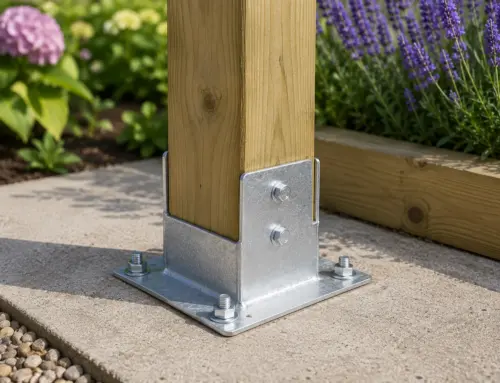
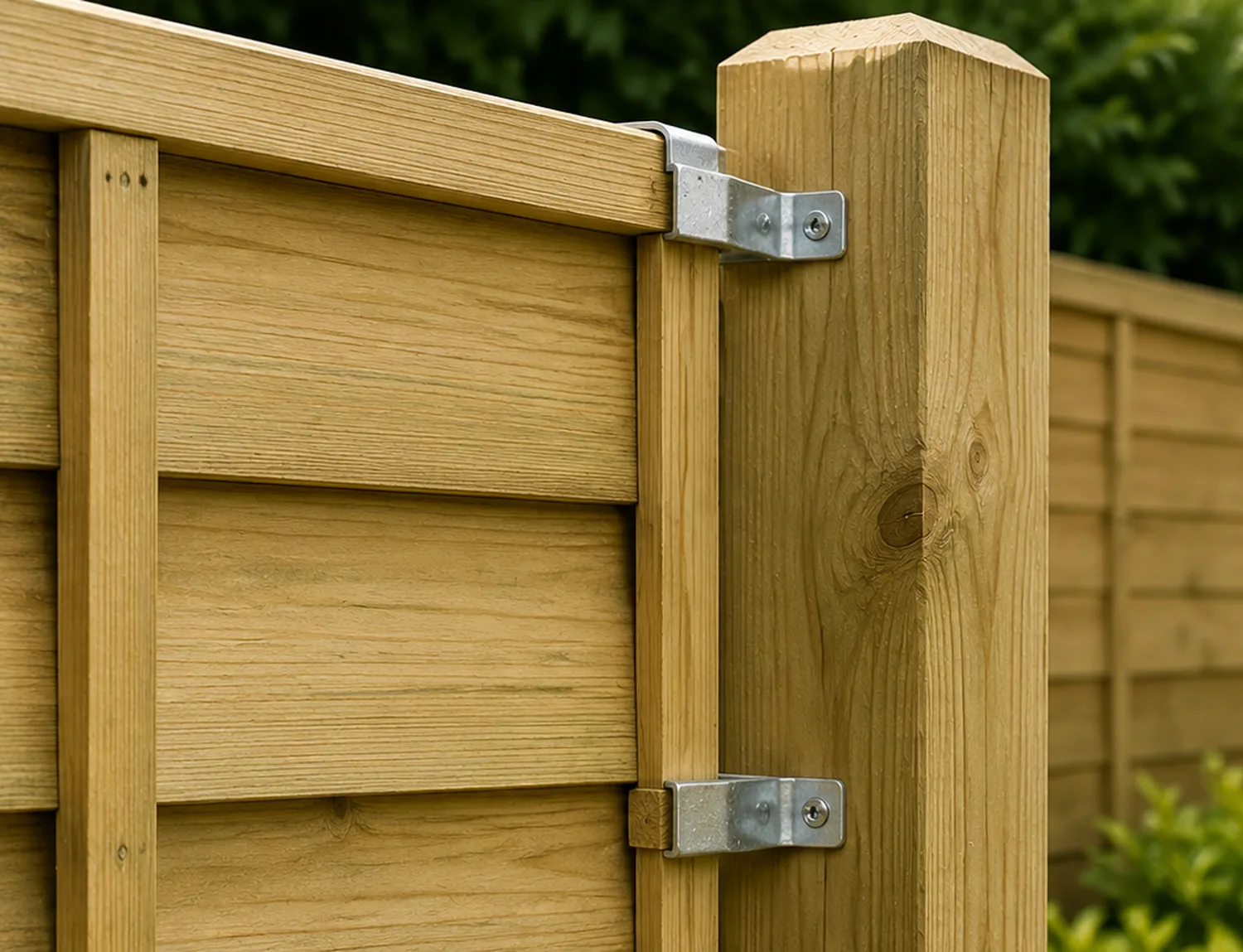
The bracket fixes the panel positively to the post so it cannot simply be lifted clear. Instead of relying on weight or a friction fit, the panel is mechanically held, and removing it becomes a job that requires tools, time and noise rather than a quiet lift. That is the whole principle behind most physical security. You are not making something impossible, you are making it slow, awkward and conspicuous.
The secondary benefit is that a positively fixed panel moves less in wind. Panels that rattle in a gale are panels working loose at their fixings, and a bracket that holds the panel firmly reduces that movement and the wear it causes. On an exposed boundary you may find the brackets earn their place on wind alone.
Where to fit them and where not to bother
There is no need to treat every panel identically. Concentrate on the ones that are worth taking and easy to take. Panels along a rear or side boundary backing onto open ground, a lane, a footpath or an unlit area are the priority. So are panels that cannot be seen from the house or from a neighbour, and any panel next to a gate, since that is the obvious point of interest.
A panel in the middle of a front boundary overlooked by a road and by neighbours is a much lower risk. If budget is the constraint, do the exposed runs properly rather than doing every panel half-heartedly.
Fitting and practical points
Fit them from the garden side where possible, so the fixings are not accessible from outside. That sounds obvious and is regularly overlooked. Use fixings suited to outdoor use, and make sure they engage properly into the post rather than only into the panel frame, since a bracket fixed only to the panel achieves nothing.
Bear in mind you are giving up some of the convenience the clip system was designed for. Replacing a bracketed panel takes longer than lifting one out. That is the trade and it is a reasonable one, but it is worth knowing before you fit them to a boundary where panels get damaged frequently.
Combining them with other measures
Brackets work best as part of a boundary that is difficult overall rather than as a single measure. A well-fixed gravel board makes the base of the fence harder to lift and disturb. A gate with a proper latch and a decent hinge set is worth more than a taller fence. Planting a boundary with something thorny along the base is old advice and still effective.
Customers upgrading rear boundaries around Nelson fencing and across towards Colne fencing often add brackets when they are replacing panels anyway, which is the cheapest time to do it since the panels are already off.
They sit in our fixings and accessories range alongside the clips and supports, and pair with the 6ft fence panels and fence posts sections.
If you are working out how many you need for a particular boundary, ring 01200 449930 with the panel count and we will help. Delivery is free on orders over £150 across all BB postcode areas.