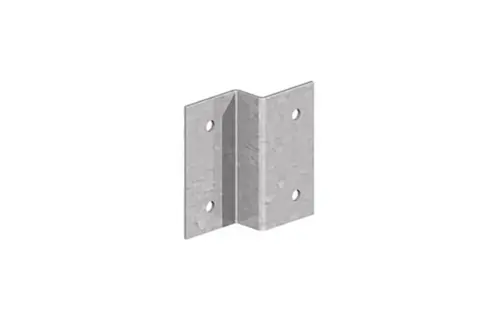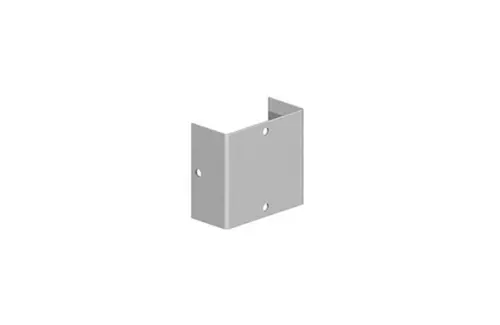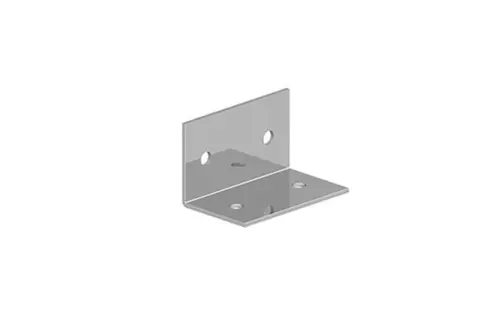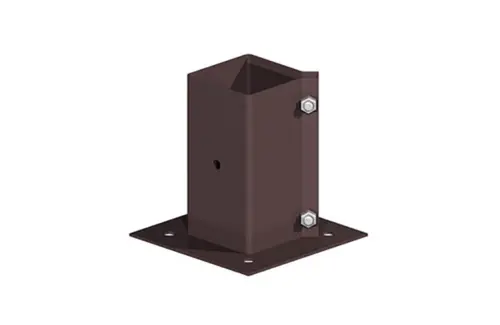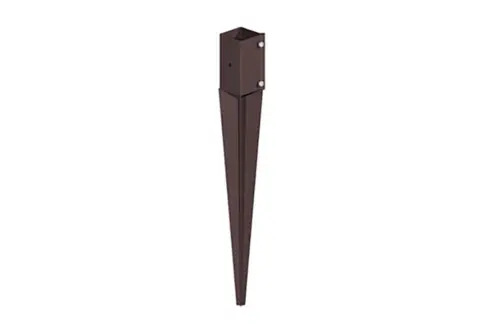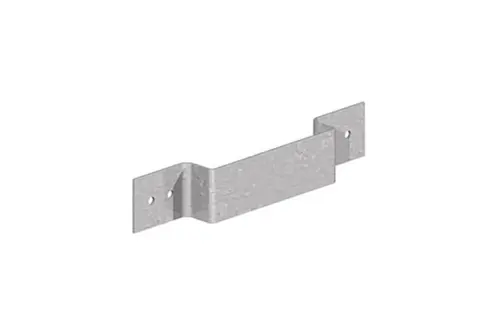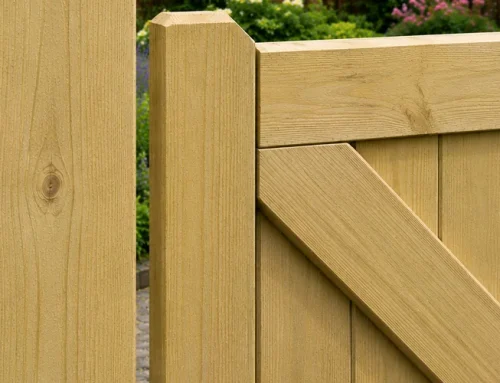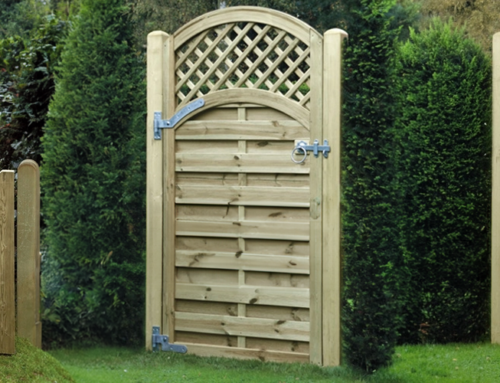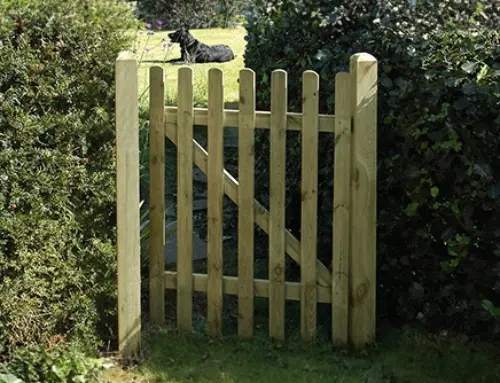

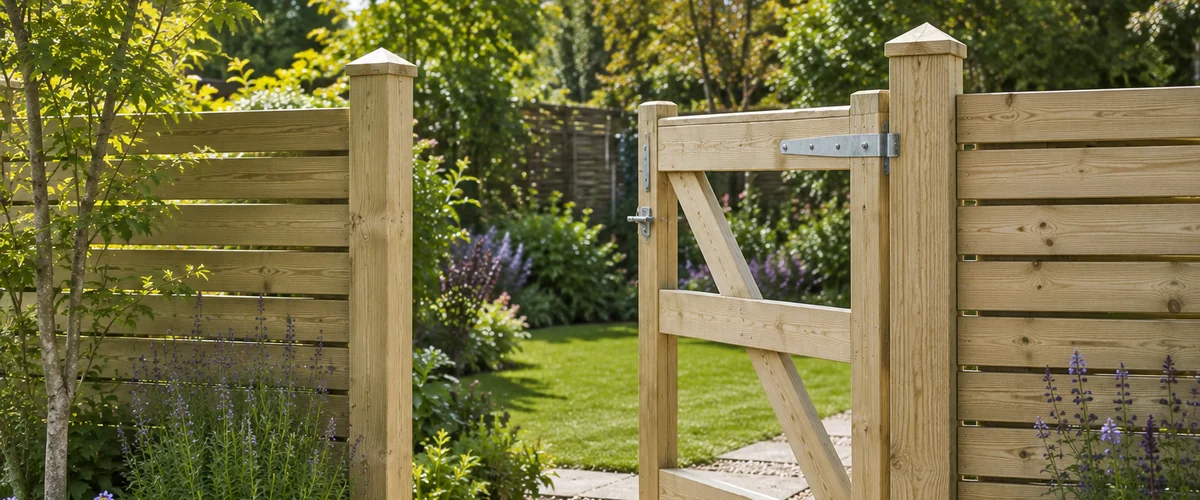
Gate posts are the most heavily loaded timber on any boundary and the most frequently under-specified. The logic that leads people astray is understandable enough. The gate is roughly the same height as the fence, it sits in the same line, so the same post should do. It should not, and the difference is not marginal. A gate post carries loads a run post never experiences, in a direction nothing opposes, thousands of times a year. We supply them in the heavier sections as part of our fencing and timber supplies in Clitheroe.
What a gate post is actually resisting
A fence post in the middle of a run has a panel on each side. The loads largely cancel out, and what remains is wind pressure, which alternates direction. The post spends its life in rough balance.
A hinge post has a gate hanging off one side and nothing on the other. That produces a constant sideways pull at the top, a constant downward load, and a twisting force as the gate swings. None of it is balanced and none of it goes away.
Then add use. Every time the gate is opened, the post takes the movement. Every time it is allowed to swing shut, the post absorbs the impact. Over twenty years that is an enormous number of load cycles on one point.
The latch post has an easier time but not an easy one. It takes the impact of the gate closing and the force of anyone pushing or pulling against a closed gate.
Section size and why bigger is genuinely better here
The stiffness of a post rises very sharply with its dimensions, far faster than the cost does. Going up a section size on a gate post is one of the best value decisions on a fencing order, because a relatively small increase in price buys a disproportionate increase in resistance to bending.
For a standard domestic side gate, step up from whatever the run posts are. For a wide gate, a heavy gate, or a driveway or field gate, step up considerably further. Width of gate matters more than weight, because the wider the gate the greater the leverage on the hinge post.
Where a gate is being hung between two posts in an otherwise fenced run, it is perfectly acceptable for those two posts to be visibly heavier than the rest. It looks deliberate and it works.
Depth, and why it matters more than section
A post resists being pulled over by the ground around it. The deeper it is set, the more ground is working against the movement, and depth is generally more effective than section at stopping a lean.
Set gate posts deeper than run posts as a matter of course. Where the ground is soft, sandy, made up or has been dug before, go deeper still. The general principle is that the proportion of the post below ground should be higher on a gate post than on a run post.
Hole width matters too, though less than depth. A wider foot at the base of the hole gives more resistance to the post rotating, which is exactly the failure mode you are guarding against.
Setting them properly
Set both posts before hanging anything. Trying to hang a gate while a post is still curing is how gates end up permanently out of square.
Plumb them carefully in both directions and brace them until they are fully set. A gate post that is a degree off vertical will cause the gate to swing open or closed on its own, which is irritating on a garden gate and a genuine problem where a gate needs to stay shut.
Get the spacing right before setting the second post. Measure the gate, allow the clearance the fittings need, and account for seasonal movement. A gap set tight in a dry August will bind in a wet January.
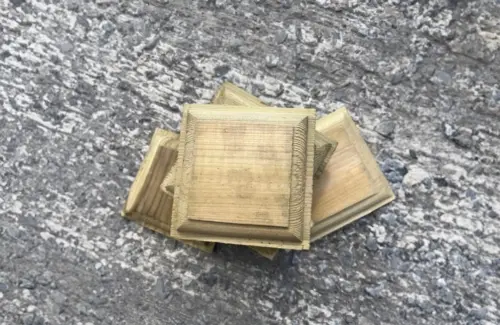
Cap the tops. A gate post is the most expensive post on the boundary and the most disruptive to replace, so protecting the end grain is worth the small cost.
Bracing and second thoughts on wide openings
Where an opening is genuinely wide, consider whether a single gate is the right answer at all. Two leaves meeting in the middle halve the width each post has to carry, and the reduction in leverage on the hinge posts is substantial. It is often the difference between a gate that stays true for decades and one that needs adjusting every year.
Where a single wide gate is unavoidable, the hinge post wants to be as heavy and as deeply set as the situation allows, and it benefits from being tied back into the fence line rather than standing alone.
Warning signs on an existing gate
If a gate has started catching, look at the post before blaming the gate. Stand back and sight down the post against a vertical reference such as a house corner. A post leaning even slightly towards the gate will show up immediately.
Check for movement at ground level by pushing the post firmly. Any rock at the base means the post is loose in the ground, and no adjustment to the hinges will fix that for long.
Customers replacing gate posts around Oswaldtwistle fencing and near Brierfield fencing frequently find the post rather than the gate was the original problem.
Our fence posts and timber posts ranges cover the heavier sections, with the ironmongery in gate fittings and guidance on our how to fit a gate page.
If you want help sizing posts for a particular gate, ring 01200 449930 with the width and the type of gate. Delivery is free on orders over £150 across all BB postcode areas.