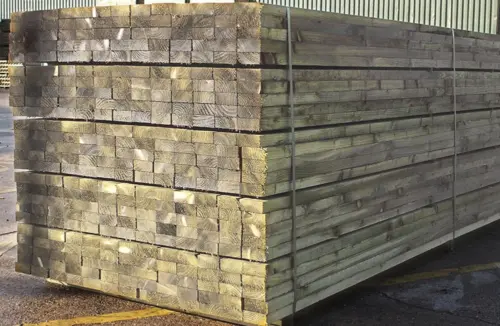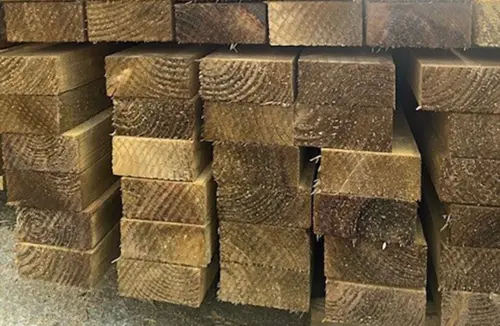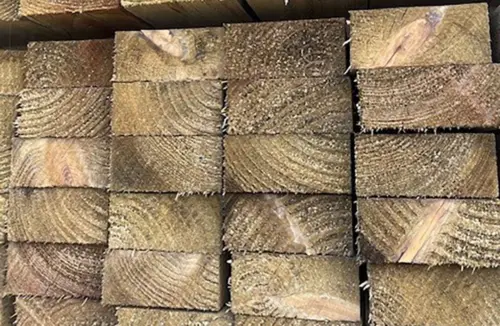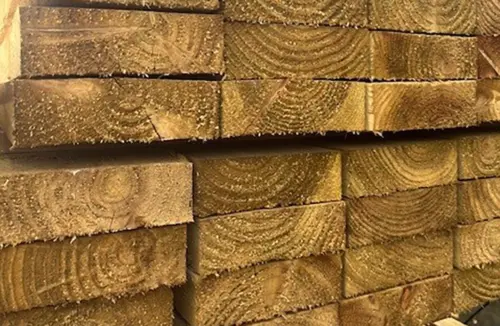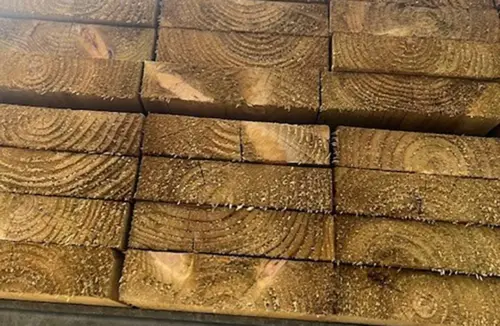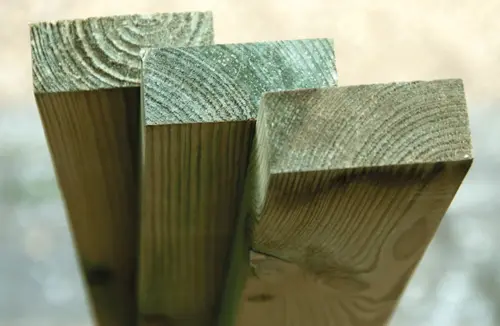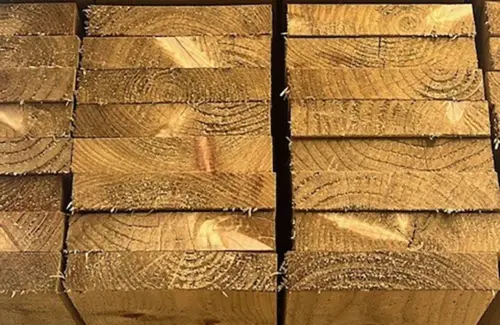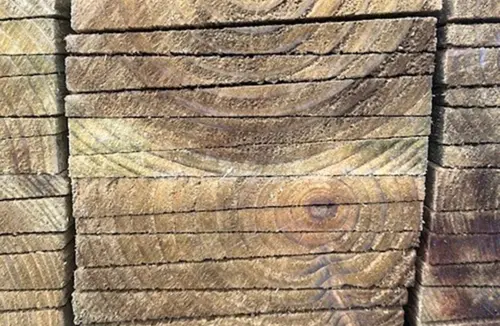


If you want to build a log store yourself, a few lengths of standard timber will do the job well. As a supplier of fencing and timber supplies in Clitheroe, we sell the rails, boards and posts that make a sturdy DIY store. This guide walks you through the frame, the roof and the sides. It also covers the small details that help a store last through Lancashire winters.
Planning Your DIY Log Store
Before you build a log store, decide where it will stand. Choose a spot close to the back door but away from house walls and fences. A gap of at least a hand’s width behind the store lets air move freely. In addition, avoid low corners where water pools after rain.
Next, think about size. Measure the space, then sketch a simple box with a sloping roof. A store around 1.5m wide and 1.5m high suits most households. However, you can scale it up or down to fit your stove and your garden.
Choosing Posts and Fixing Them Down
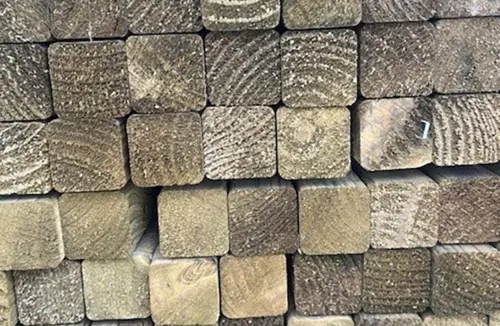
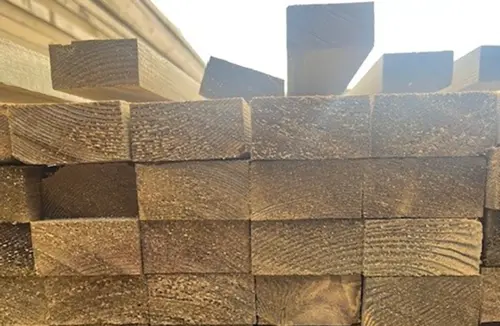
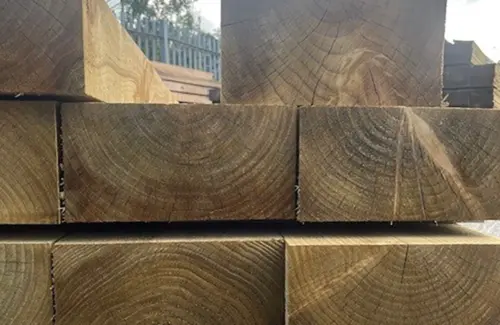
The four corner posts carry the whole structure. Our 75mm x 75mm rough sawn timber post is ideal for a store of this size. Cut the front posts slightly taller than the back posts. That height difference creates the roof slope.
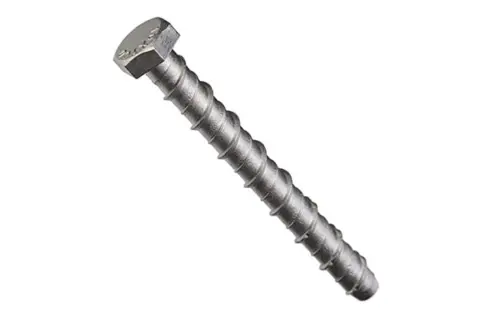
If you build a log store on a concrete slab or patio, bolt down post supports hold the posts securely. They also keep the post ends off the wet ground. On soil, you can instead set the posts in concrete or use a firm gravel base. Our full range of timber posts includes heavier sizes for larger stores.
Framing With Rough Sawn Rails
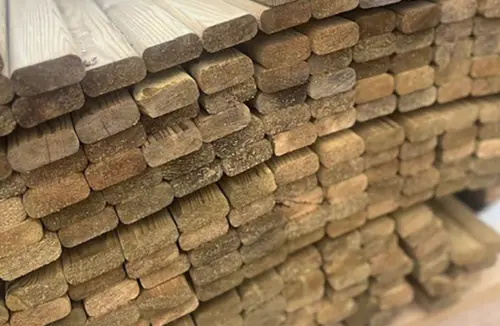
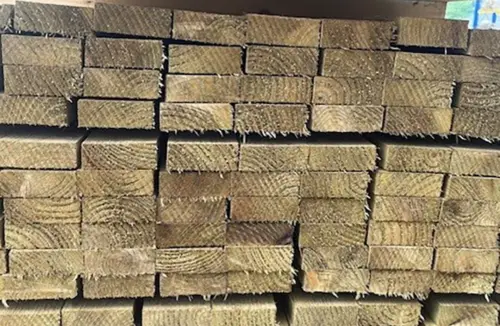
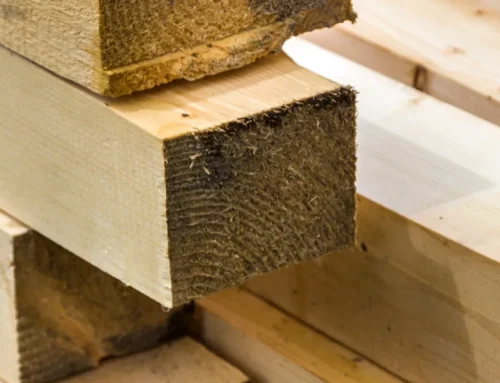
Rough sawn rails form the frame between the posts. Fix rails across the top front and top back to carry the roof. Then add rails at the bottom to support the floor slats. A middle rail on each side adds stiffness and gives the side boards something to fix to.
Rail size depends on span and load. Our article on rough sawn rails and how to choose the right size explains the options. For a small store, 38mm rails in 88mm or 100mm widths work well. For the floor, run several rails front to back so logs sit clear of the ground.
A Sloping Feather Edge Roof
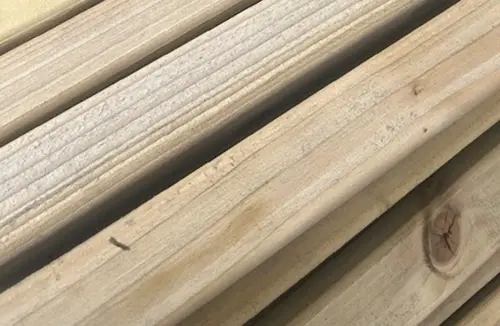
The roof keeps rain off your firewood, so it matters most. Lay roof rails from front to back across the top frame. Then fix feather edge board across them, starting at the low back edge. Each board is 125mm wide and 22mm thick at the thick edge.
Overlap the boards like roof tiles, with the thick edge of each board over the thin edge of the one below. That way, rain runs off the slope rather than through the joints. Let the roof overhang the front and sides by a few centimetres. As a result, wind driven rain stays off the logs.
Slatted Sides for Airflow
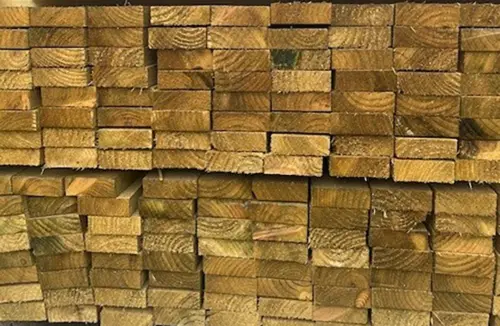
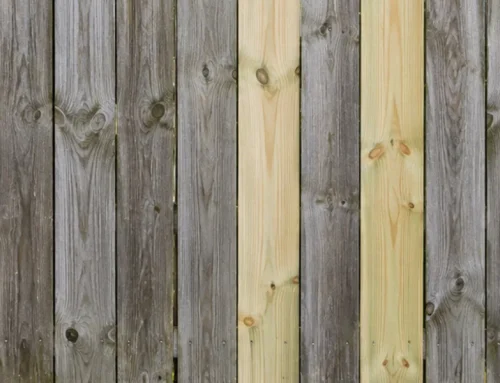
Firewood needs air moving around it to stay dry. So when you build a log store, make the sides and back slatted rather than solid. Rough sawn board at 100mm x 16mm is ideal for this. It comes in 1.2m, 1.5m and 1.8m lengths.
Fix the boards horizontally with a gap of around 15mm to 20mm between each one. A spare offcut makes a handy spacer. That gap lets air flow through while keeping most rain out. Leave the front open for easy access to your logs.
Treating Cut Ends Before You Build a Log Store
Our timber is pressure treated softwood. However, every cut you make exposes the untreated core. Cut ends absorb water quickly and are where rot usually starts. Therefore, brush a suitable end grain preserver onto every cut surface before assembly.
Pay particular attention to the bottoms of the posts and the ends of the floor rails. Those parts sit closest to damp ground. A timber post cap on each post top also helps shed water. Use galvanised screws or nails throughout, as plain steel rusts quickly outdoors.
Raising the Logs Off the Ground
A slatted floor is essential. Logs stacked on soil or concrete draw up moisture from below. Leave gaps between floor boards so any water drains straight through. In addition, a layer of gravel beneath the store keeps weeds down and improves drainage.
Once the store is built, stack logs loosely with small gaps for air. Place them bark side up where possible. Keep the front edge of the stack just inside the roof overhang. Finally, leave a small space at the top so air can circulate under the roof.
Tools and Timber You Need to Build a Log Store
You do not need a workshop to build a log store. A saw, a drill driver, a spirit level and a tape measure cover most of it. In addition, a square helps keep the frame true. Work on a flat patio or lawn so the frame stays level as you assemble it.
Before ordering, list every piece with its length. Count four posts, the frame rails, the roof rails, the roof boards and the side boards. Then add a couple of spare boards for mistakes. That way, everything arrives in one delivery.
The Ready Made Alternative
Not everyone has the time or tools to build a log store over a weekend. In that case, our ready made log stores are a simple option. The log store 3×5 is 3ft wide and 5ft high. A larger 5×5 version is also available.
Both use rough sawn pressure treated softwood with a sloping feather edge roof. They also have slatted backs and sides for airflow. Each one is delivered fully assembled, ready to fill.
Timber Deliveries Around Clitheroe and Sabden
Gardens below Pendle Hill catch a lot of wind and rain. A solid store with a good roof overhang copes well with that weather. We deliver timber throughout the area. Local details are on our Clitheroe fencing and Sabden fencing pages.
We aim to deliver within 5 working days, and we phone ahead with your delivery day. Please note that our driver cannot lift timber over walls. Add any access notes in the order comments box.
Ready to build your own log store? Call us on 01200 449930 for help choosing rails, boards and posts. We offer free delivery on orders over £150 across all BB postcode areas. Collection from our Clitheroe yard is also available.