

New build garden fencing is rarely what homeowners would have chosen themselves. As a supplier of fencing and timber supplies in Clitheroe, we regularly speak to people on new estates. Many have just collected their keys and found a thin panel fence or a simple post and rail boundary. Understandably, they want something more private and more robust.
What Developers Usually Leave Behind
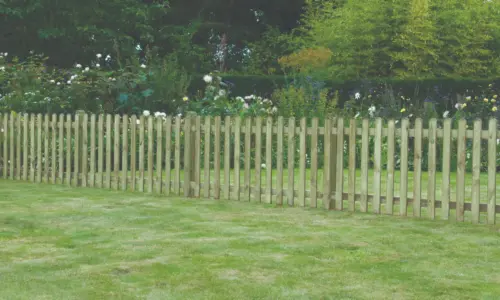
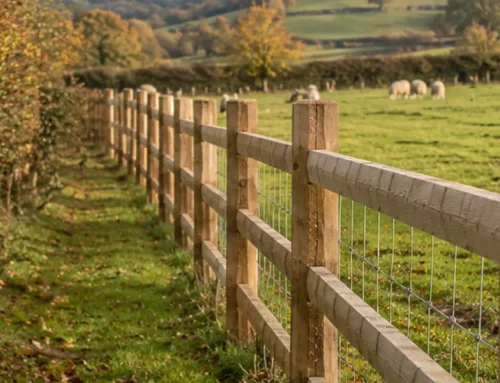
Housing developers need to fence hundreds of plots quickly. As a result, they tend to choose the lightest panels that meet the brief. Rear boundaries are often lapped panels with thin slats. Side boundaries between gardens may be low post and rail, or even just a row of posts with wire.
That kind of new build garden fencing marks the boundary, but it rarely lasts. Thin panels rattle in the wind and can blow out in the first winter. Moreover, open boundaries give very little privacy in a small garden. Neighbours can see straight across several plots.
Check Your Deeds Before You Change Anything
Before changing any new build garden fencing, read your title plan and any estate covenants. New estates often have rules about front gardens in particular. Some ban fences or walls in front of the building line. Others limit height or require open frontages to keep the street looking uniform.
Rear and side boundaries are usually less restricted. Even so, the deeds may say which boundaries belong to your plot. In addition, planning rules generally limit garden fences to around two metres high. If you are unsure, ask your conveyancer or the local council before you start. Our article on garden boundary disputes and fencing responsibility covers how ownership usually works.
Choosing Panels for Small New Build Gardens
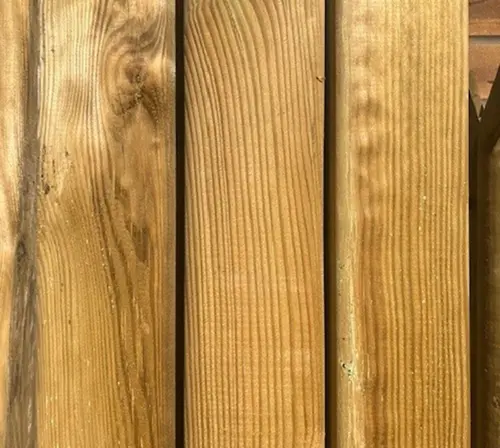
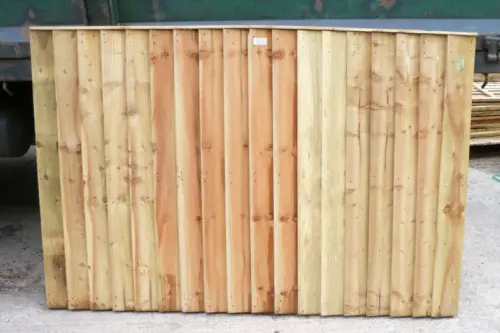
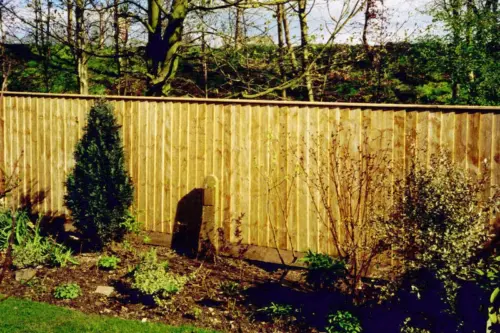
Privacy is normally the first priority. Our 6ft fence panels give full height screening along rear and side boundaries. A 6ft feather edge fence panel is a sturdy, solid choice. Its overlapping vertical boards stand up well to wind.
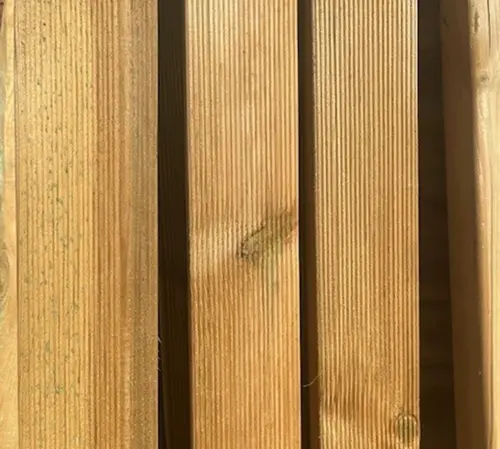
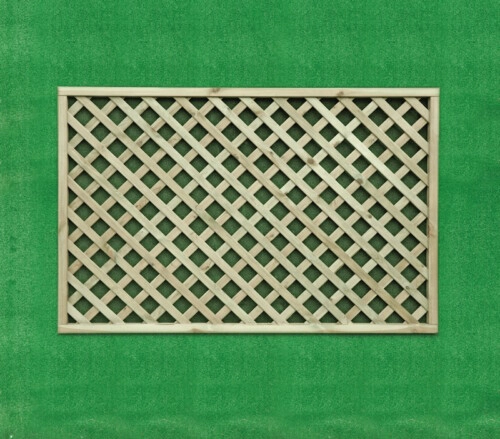
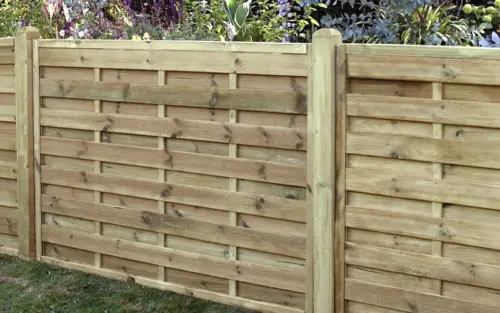
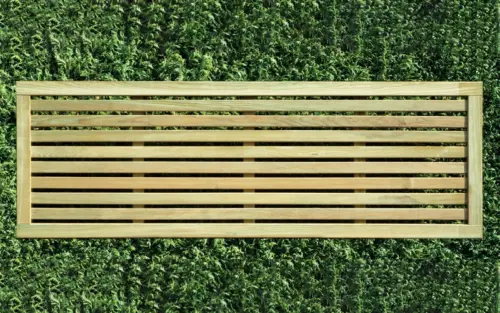
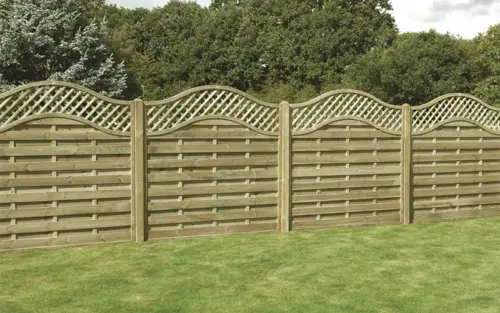
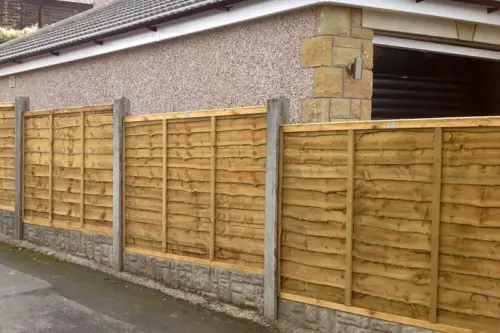
For a more modern look, slatted and square horizontal panels suit contemporary houses. Our 1.8m Slatted and 1.8m Square Horizontal panels are both popular on newer estates. You can see the full range on our decorative fence panels page. These designs let a little light through while still screening the garden.
Upgrading New Build Garden Fencing Without Starting Again
Sometimes the posts in new build garden fencing are perfectly sound. In that case, you may only need to swap the panels. Measure the gap between posts carefully first. Standard panels are 6ft or 1.8m wide, so most developer fences take them easily.
However, check how the posts were set. Some estates use shallow holes and minimal concrete. Give each post a firm push. If it wobbles, it will not hold a heavier panel through a Lancashire winter. Replacing the posts with fence posts set in 20kg Postcrete gives a much firmer result. Postcrete needs no mixing and sets in about ten minutes.
Gravel Boards for New Build Garden Fencing
New build gardens often have a thin layer of topsoil over compacted clay and rubble. That ground holds water for a long time after rain. As a result, panels that sit directly on the soil stay damp and rot from the bottom. A gravel board along the base lifts the panel clear of the wet.
Also, expect the ground to settle in the first few years. Backfilled trenches around new houses can sink noticeably. Therefore, check your fence line each spring and top up soil where needed. Keep soil and turf below the gravel board rather than heaped against it.
Stopping Rattles and Blowouts
Estate gardens are often exposed, so new build garden fencing takes the full force of the wind. With few mature trees, gusts sweep straight across the plots. An anti rattle clamp holds each panel tight in its post. It stops the knocking noise and reduces wear on the panel edges.
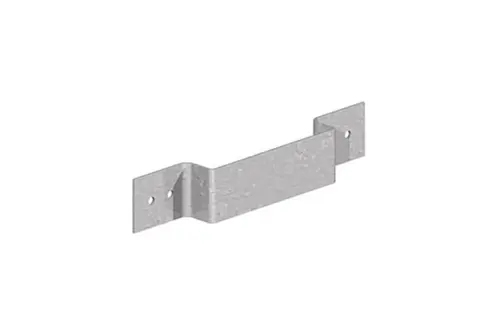
If you have concrete slotted posts, security brackets help too. They stop panels being lifted out of the slots from the other side.
Planning Quantities for a Typical Plot
Most new build rear gardens are fairly modest. A plot ten metres wide needs roughly six panels across the back. Each side boundary may need another five or six, depending on depth. Remember that every panel run needs one more post than panels.
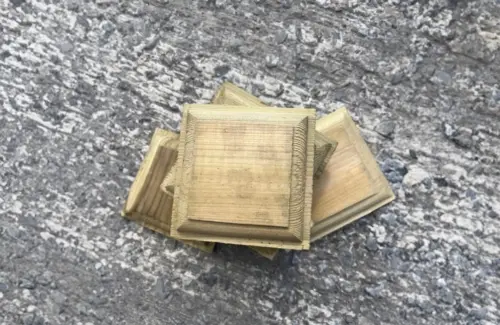
Corner posts take extra load, so many people choose the heavier 100mm x 100mm rough sawn post there. Meanwhile, 75mm x 75mm posts suit lighter runs. Add a post cap to each post to shed rainwater from the end grain. In addition, order panel clips or clamps for every post.
Before you buy, measure each boundary twice and sketch it on paper. Mark any gates, drains or manhole covers along the line. New estates often have inspection chambers close to the boundary. Those can affect where you place a post.
New Estates Around Clitheroe and Whalley
Both towns have seen a lot of new housing in recent years. Many of those gardens back onto open fields with views toward Pendle Hill. Consequently, homeowners often want new build garden fencing with height at the sides but a lower rear boundary. Local details are on our Clitheroe fencing and Whalley fencing pages.
Estate roads can be narrow, with cars parked on both sides. So please add any access notes in the order comments box. Our driver will find the most suitable spot and avoid blocking gates. We aim to deliver within 5 working days and will phone with the day.
Talking to the Neighbours First
On a new estate, everyone moves in at roughly the same time. That makes it a good moment to agree a plan for shared boundaries. Some neighbours split the cost of new panels between them. Others agree a style so both sides look tidy. A short conversation now avoids disagreements later.
Ready to upgrade your new build garden? Call us on 01200 449930 for advice on panels, posts and fixings. We offer free delivery on orders over £150 across all BB postcode areas. Collection from our Clitheroe yard is also available.