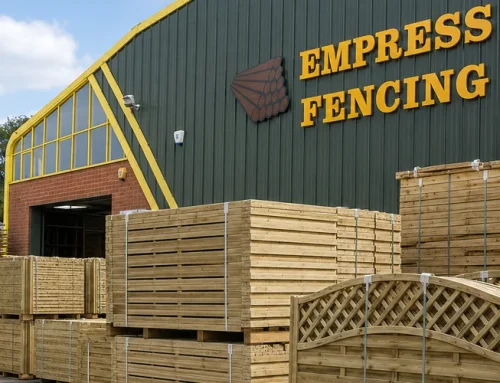

A fence is only as strong as the posts holding it up, and in Lancashire that point carries more weight than it might elsewhere. The combination of high rainfall, Atlantic winds coming in across the Pennines, and ground that stays saturated for months at a time puts real pressure on fence posts in a way that drier parts of the country simply do not experience. At Empress Fencing, your local fencing and timber supplies in Clitheroe, we stock timber posts, concrete posts, and the Durapost steel post system, and we can help you work out which is the right choice for your garden, your ground conditions, and your budget.
Why Post Choice Matters More in Lancashire Than the Manufacturers’ Specs Suggest
Most fence post manufacturers quote expected lifespans under average UK conditions. Lancashire is not average. The BB postcode area regularly records some of the highest annual rainfall figures in England, and properties across the Ribble Valley, the moors above Burnley and Accrington, and the exposed higher ground around Darwen and Haslingden experience wind loading that puts sustained lateral pressure on fence lines throughout the winter months. A post that performs adequately in a sheltered suburban garden in the south of England may fail noticeably faster in these conditions.
The ground itself is a significant factor. Clay-heavy soils common across much of Lancashire retain moisture and shift with seasonal freeze-thaw cycles. Posts set into clay that is not properly drained are subject to heave over winter, which can work timber gradually loose over several seasons even where the timber itself is in good condition. Understanding this before you choose your post type — and before you decide on depth and setting method — saves you from repeating the job in five years.
Timber Fence Posts – the Case For and the Conditions That Suit Them
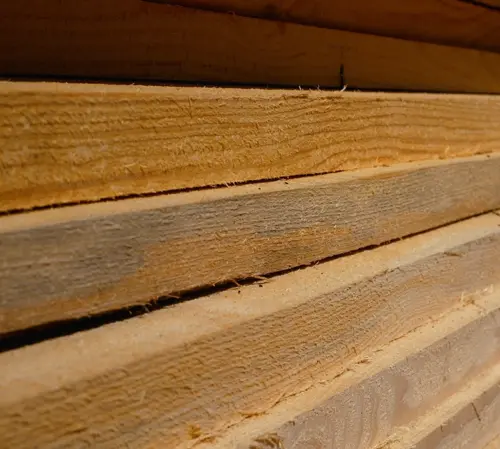
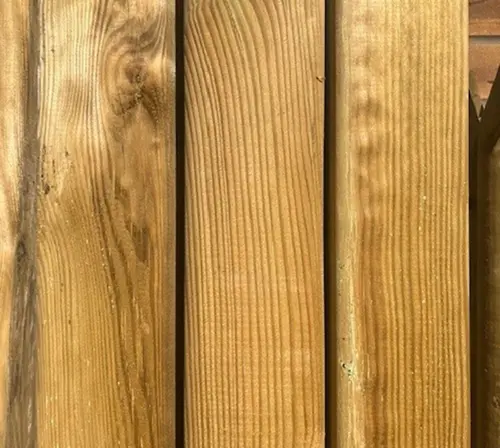
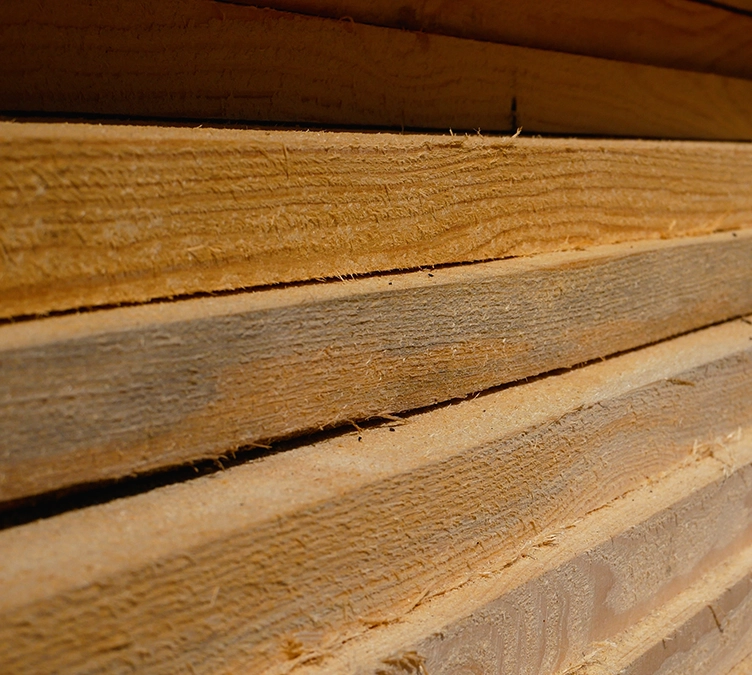
Pressure-treated timber posts remain the most widely used option across the BB postcode area, and for most standard domestic fencing projects they remain a sound choice. The treatment process drives preservative deep into the timber under pressure, providing resistance to rot, fungal decay, and insect attack that untreated timber cannot match. For a standard 6ft fence in a reasonably sheltered garden, a 100mm x 100mm pressure-treated post set 600mm into the ground in a concrete surround will give you many years of reliable service.
The key variables with timber posts in Lancashire conditions are the quality of the treatment, the depth of setting, and what happens at the below-ground section where timber meets damp soil. This is the zone where rot begins even in treated posts, and protecting it with a post saver sleeve or bitumen coating before setting in concrete extends lifespan considerably. Our existing blog post on what causes fence posts to rot goes into the detail of why failure almost always starts below ground and how the right preparation addresses it before it becomes a problem.
Timber posts suit projects where you want a natural finish that matches fence posts to timber panels visually, where budget is a consideration, or where you are replacing individual posts rather than reworking an entire fence line. They are also considerably easier to cut and adapt on site than concrete, which matters when you are working along a boundary that is not perfectly straight or where ground levels vary.
Concrete Fence Posts – Where They Earn Their Place
Concrete posts are the right answer for exposed locations, for fences that need to stand for decades with minimal intervention, and for situations where the ground conditions make timber longevity a genuine concern. They do not rot, they do not require periodic treatment, and their weight and rigidity make them genuinely resistant to the kind of sustained wind loading that affects open gardens and rural boundaries across Lancashire.
The trade-off is practical rather than performance-related. Concrete posts are heavy, which makes solo installation significantly more difficult and makes cutting or adapting on site impractical. They are also more expensive than equivalent timber posts at the point of purchase, though the reduced maintenance and replacement cost over a long period often narrows that gap considerably. For a fence that you expect to last twenty or more years without significant intervention, concrete posts represent better long-term value in most exposed Lancashire locations than timber alternatives.
Slotted concrete posts are particularly useful where you want the option to replace panels without disturbing the posts. The panel slots into a channel on each face of the post, which means a damaged panel can be lifted out and replaced without breaking out any concrete setting. This is worth considering when you are installing a long fence run where panel replacement over the years is a realistic prospect.
Durapost – the Steel Alternative Worth Considering
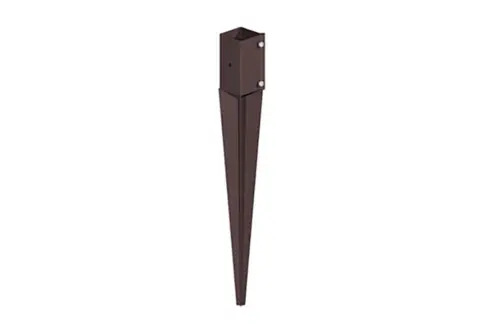
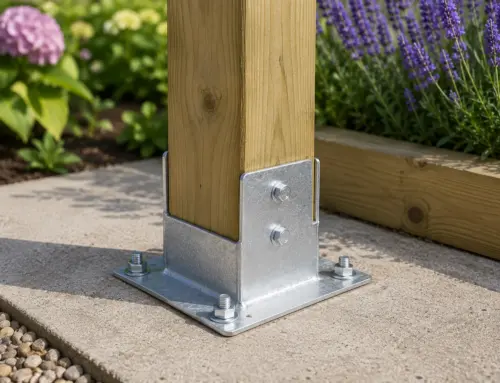
The Durapost system uses a galvanised steel post that is driven or set into the ground and accepts standard timber panels and gravel boards through a channel system. It combines the installation simplicity of a timber post with corrosion resistance that outlasts both timber and, in many conditions, concrete. Durapost has become increasingly popular across the area precisely because it addresses the main weakness of timber posts — below-ground deterioration — without the weight and handling difficulties of concrete.
The posts are notably slimmer than equivalent timber or concrete options, which gives a cleaner finish visually and makes them easier to work with on site. For customers replacing failing timber posts without wanting to disturb an entire fence line, Durapost can often be set alongside or in place of the original post with less disruption than pouring new concrete around a full-size replacement. Our post on Durapost vs timber fence posts covers the comparison in detail if you want to weigh both options before deciding.
Installation in Lancashire’s Conditions – Practical Points
Whatever post type you choose, installation method has a significant effect on how long the fence performs. Post mix concrete — the fast-setting bagged variety — has become the standard for most domestic fence post installation and suits Lancashire’s climate well. It sets within minutes, which matters when you are working through a wet autumn day and cannot leave fresh concrete exposed for hours. It also performs reliably in cooler temperatures, whereas traditional mixed concrete can struggle to cure properly in the cold conditions that arrive across the Pennines from October onwards.
Post hole depth is the other variable that determines longevity more than almost anything else. The general rule is that one third of the total post length should be below ground, with a minimum of 600mm for a standard 6ft fence. On exposed sites or where ground conditions are poor, going deeper improves stability meaningfully. Backfilling around the concrete with gravel before the concrete pour improves drainage and reduces the freeze-thaw heave that affects clay-heavy soils in hard winters.
Choosing Posts to Match Your Fence Panels
Post choice should reflect what you are attaching to it. Heavy closeboard panels or 6ft fence panels in a fully exposed garden need posts that are sized and set to handle the wind load those panels generate. Decorative fence panels with more open lattice or trellis sections catch less wind and place less demand on posts, which can allow a lighter specification in a sheltered location. Our team at the Clitheroe yard can advise on post sizing relative to the panels you are buying, which is worth doing before you purchase rather than after installation reveals a mismatch.
We supply across Clitheroe fencing, Blackburn fencing, Burnley fencing, Darwen fencing, Accrington fencing, Haslingden fencing, Great Harwood fencing, and Whalley fencing, with free delivery on orders over £150 to all BB postcode areas. Call us on 01200 449930 to discuss your project or to check current stock before ordering.