
Ecodesign stove logs need more care than the fuel many of us burned in older stoves. Modern appliances are tuned for clean, efficient combustion, so they react quickly to poor wood. As a Ready to Burn registered supplier of fencing and timber supplies in Clitheroe, we hear from new stove owners every autumn. So here is what your stove wants from its logs.
What Ecodesign Means for Your Stove
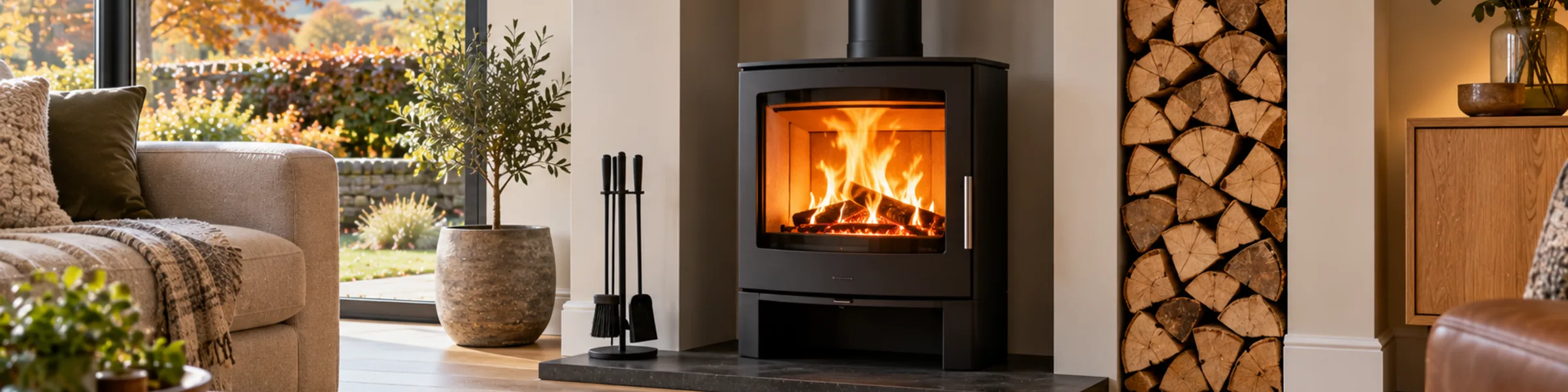
Ecodesign is a standard for wood-burning stoves that sets limits on emissions and requires good efficiency. In practice, these stoves burn the gases that older models let escape up the chimney. That means more heat from each log and less smoke. However, they only manage this when the Ecodesign stove logs are right.
An older stove might tolerate slightly damp wood and simply smoke a bit more. By contrast, an Ecodesign stove is far less forgiving. Wet fuel cools the firebox and upsets the careful balance of air. The result is a lazy fire, black glass and wasted logs.
How Secondary Air Works
Most modern stoves use secondary air, often called airwash. This air enters above the fire and sweeps down across the glass. It also feeds oxygen to the hot gases rising from the logs. Those gases then burn as flickering flames above the wood.
For this to work, the firebox must be hot. Damp Ecodesign stove logs keep the temperature down, so the gases never ignite. Instead, they leave as smoke and condense as tar in the flue. Our guide to stove glass going black explains the tell-tale signs.
Why Ecodesign Stove Logs Must Be Under 20%
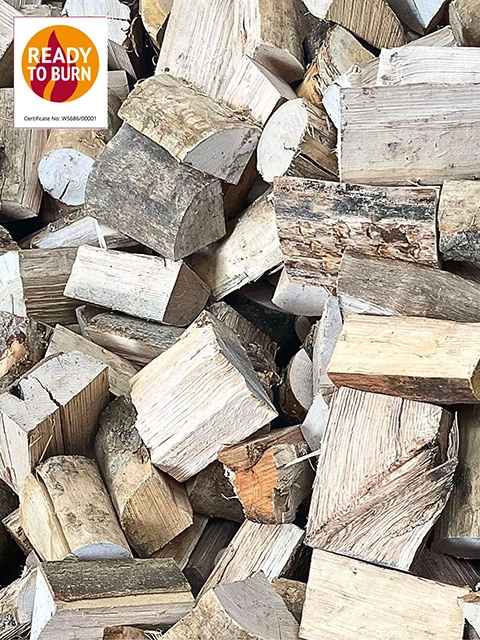
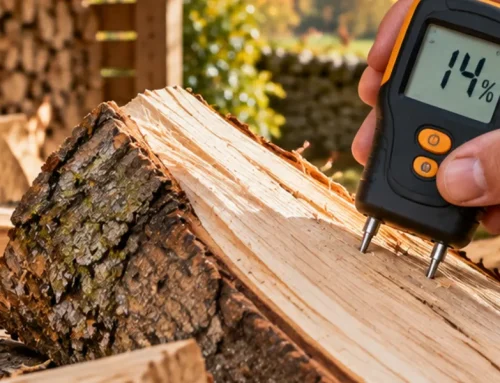
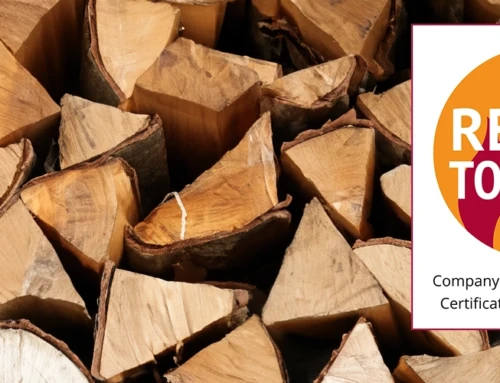
Ready to Burn certified wood has a moisture content under 20%. That threshold matches what modern stoves are built to burn. Below it, the wood releases its heat quickly and cleanly. Above it, energy goes into boiling off water first.
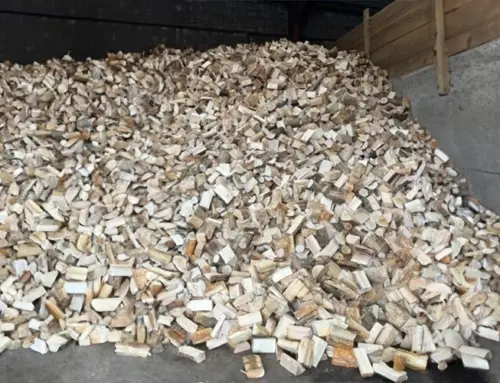
Every one of our Ecodesign stove logs meets this standard. In addition, our hardwood is kiln-dried, so the moisture is driven out evenly through each piece. That consistency matters to a stove that is tuned so precisely. You can read more on our Ready to Burn certified logs page.
Kiln-Dried Hardwood as Ecodesign Stove Logs
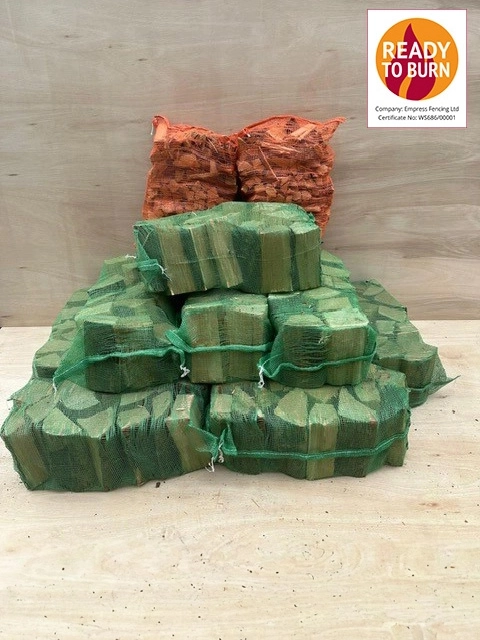
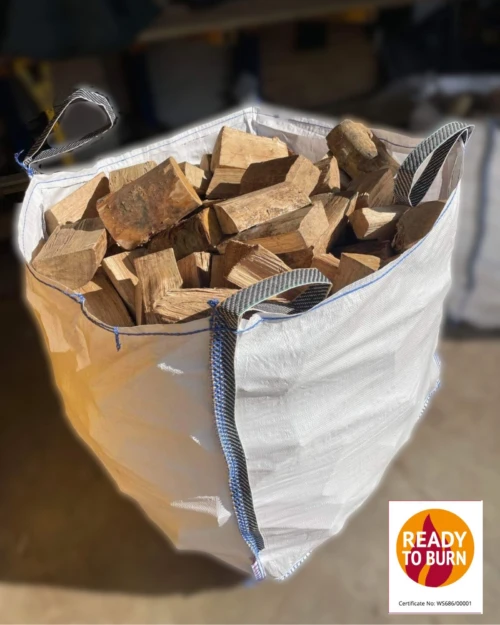
Once the stove is up to temperature, hardwood gives a steady, long burn. Our builders bag of logs holds kiln-dried mixed hardwood in a bag around 85cm on each side. Species may include oak, ash, beech, silver birch, sycamore, alder and hornbeam. The mix cannot be specified, but all burn well when dry.
Logs are cut on average to 8 inches long, with a maximum diameter of 6 inches. That size makes them practical Ecodesign stove logs for most domestic fireboxes. Still, check the depth of your firebox before ordering. Our article on log length for a stove shows how to measure it.
Softwood and Kindling for Lighting
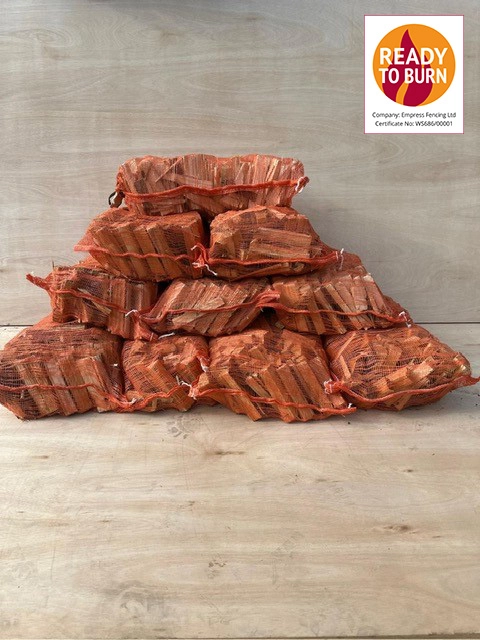
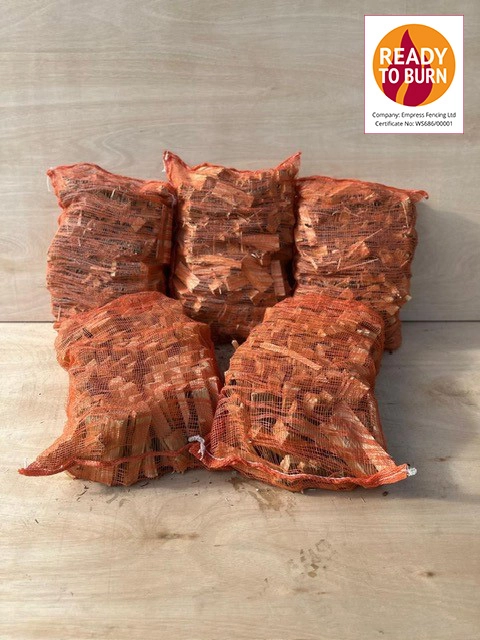
A modern stove needs to get hot fast after lighting. Softwood and kindling do that job best. Our kindling is kiln-dried softwood, and one net lights around 10 to 12 fires. The 5 nets of kindling pack is a handy starting amount.
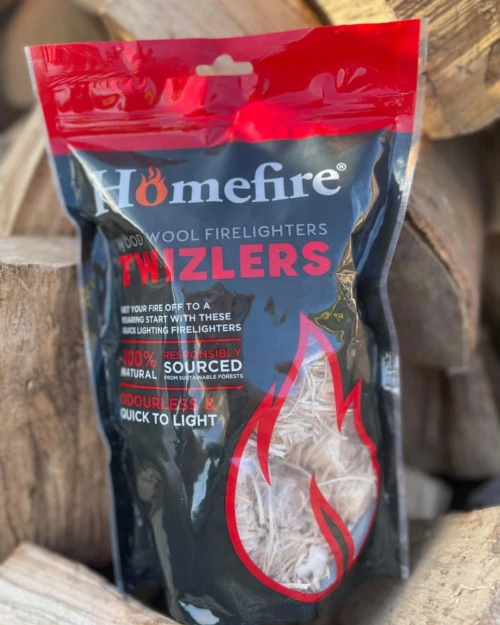
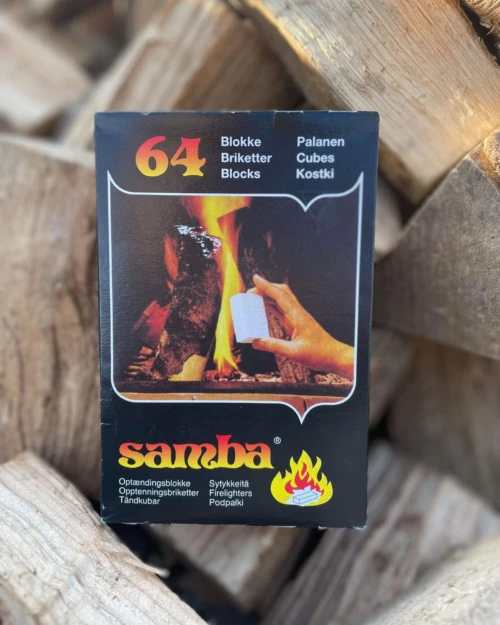
Build a small, loose fire of kindling with a natural firelighter underneath. Open the air controls fully while it catches. Then add two or three small logs once the kindling is burning well. After ten minutes or so, the firebox should be hot enough for hardwood.
Do Not Overload the Firebox
It is tempting to fill the stove right up before settling down for the evening. However, overloading an Ecodesign stove chokes the airflow. The logs smoulder rather than burn. As a result, you get smoke, tar and a cooler room.
Instead, add two or three Ecodesign stove logs at a time onto a hot bed of embers. Leave space around them for air to move. Then reload little and often as each batch burns down. Your stove manual will usually state a maximum load, so follow it.
Air Controls and Turning Down
Many owners shut the air right down to make logs last longer. Unfortunately, this starves the fire and creates smoke. Ecodesign stoves are designed to burn efficiently with enough air. So close the controls gradually, and only once the fire is well established.
If the flames turn dull and lazy, open the air a little. Bright, active flames show clean combustion. Meanwhile, clear glass is a good sign that both the fuel and the air are right. Black glass suggests one of them is not.
Keeping the Flue and Stove in Good Order
Dry fuel also protects the chimney. Wet wood leaves tar deposits that build up inside the flue. Over a season, those deposits narrow the flue and reduce the draw. In turn, the stove struggles to reach a clean burning temperature.
Have your chimney swept regularly, as your installer or sweep recommends. Between sweeps, watch for signs such as smoke on opening the door. A good burn with dry logs keeps those problems to a minimum. It also means fewer deposits for the sweep to remove.
Storing Logs So They Stay Dry
Logs leave our yard dry, but storage keeps them that way. A roofed store with slatted sides allows air to circulate. Keep the logs off the ground and away from house walls. In a wet Lancashire winter, keeping Ecodesign stove logs dry protects your stove too.
Many homes in Whalley and the nearby villages have new stoves fitted during renovations. We deliver plenty of logs for sale Whalley to these households. Likewise, customers on the slopes near Wiswell order logs for sale Wiswell ahead of the cold. Further along, homes below Pendle Hill choose logs for sale Pendleton for their stoves.
Please note that the driver cannot lift bags over walls or stack logs in your store. So add any access notes to the order comments box. That helps the delivery go smoothly.
For dry, certified logs and kindling for your Ecodesign stove, call us on 01200 449930. We offer free delivery on orders over £150 across all BB postcode areas, and collection from our Clitheroe yard is also available.