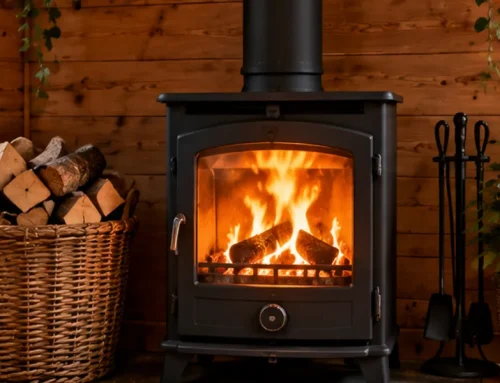

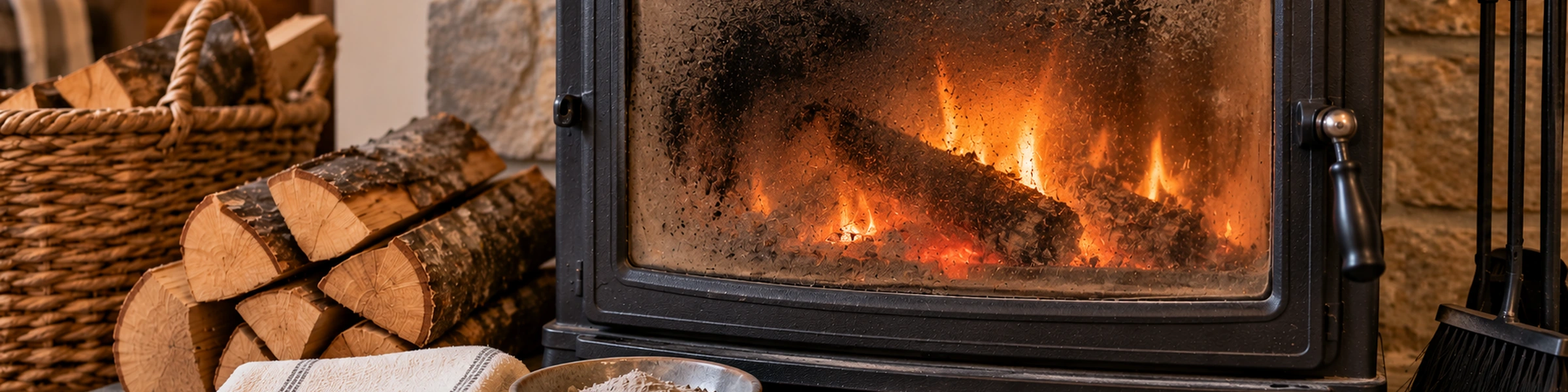
Stove glass going black within an evening is one of the clearest signals a wood burner gives you, and it is almost always about fuel or air rather than the stove itself. People tend to treat it as a cleaning problem when it is really a diagnostic one. As a supplier of fencing and timber supplies in Clitheroe selling firewood across Lancashire, we hear about it constantly from customers who have switched fuel and cannot work out what changed.
How the Airwash Is Supposed to Work
Modern stoves draw a curtain of air down the inside of the glass. That moving air keeps combustion products away from the surface, which is why a well run stove stays clear for weeks.
Anything that interferes with that curtain, or that produces more deposits than it can carry away, results in blackening. There are only a handful of realistic causes and they are easy enough to work through.
Damp Wood Is the Usual Culprit
Wet logs are the most common reason by a considerable margin. Water in the wood has to be boiled off before the wood can burn properly, and that consumes heat that should be driving combustion.
The result is a cooler, dirtier fire producing far more unburnt particles, which land on the nearest cold surface. That surface is the glass. Blackening that appears rapidly, particularly with a tarry rather than dusty deposit, points almost certainly at moisture content.
Testing What You Are Burning
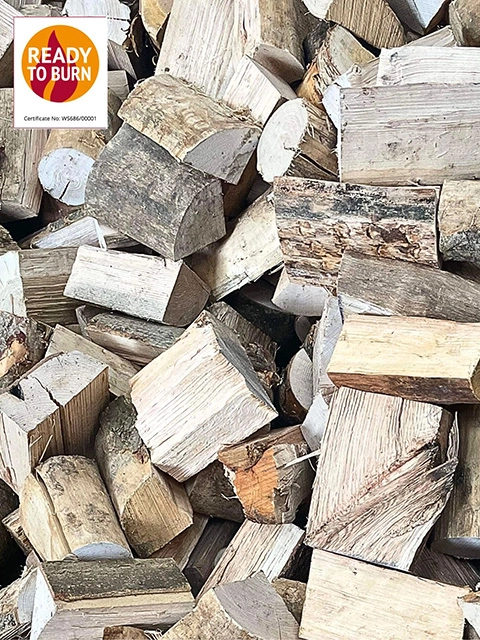
Two dry logs knocked together give a sharp crack. Damp ones give a dull thud. Look at the end grain too, because dry logs show fine radial splitting and damp ones do not. Wood that hisses or bubbles at the end when burning is holding significant water.
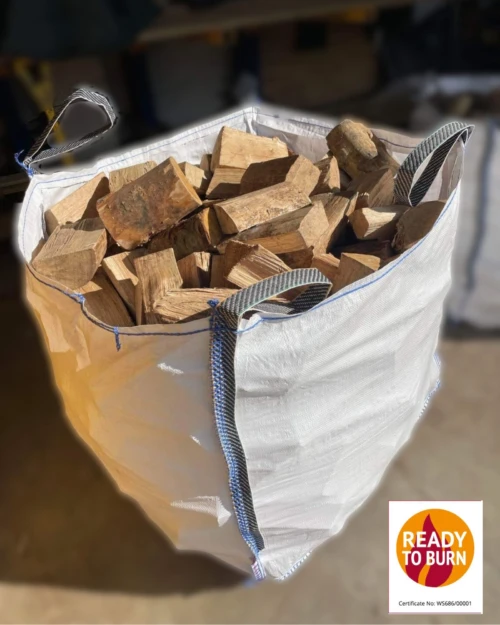
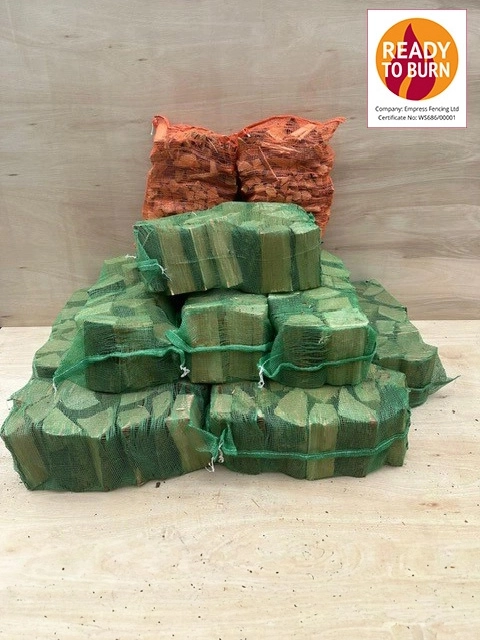
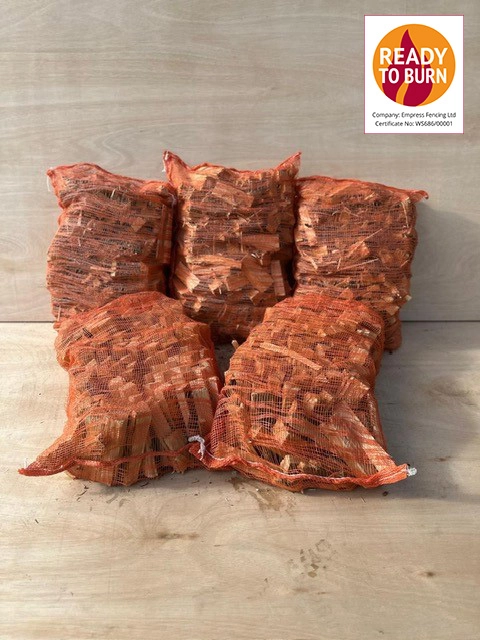
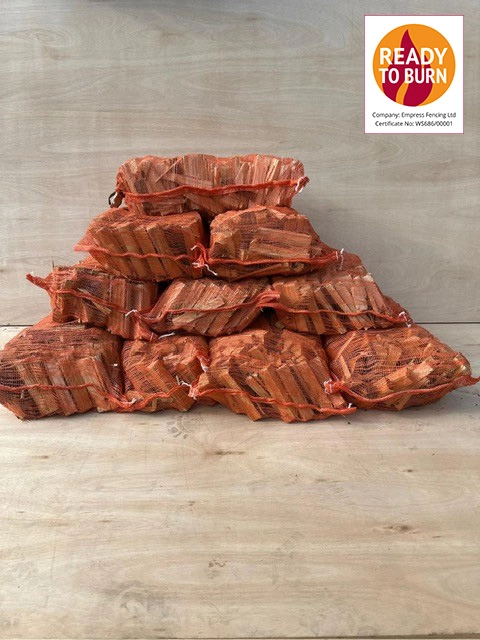
Certified Ready to Burn firewood is supplied at under twenty per cent moisture content, which is the threshold at which these problems largely disappear. That is the whole reason the certification exists, and it is why our logs for sale are supplied kiln dried rather than air dried.
Storage Can Undo Good Firewood
Buying dry logs does not guarantee burning dry logs. Firewood reabsorbs moisture from the air, and a stack kept somewhere damp and airless will be materially wetter by midwinter than it was on delivery.
If the glass was clear in October and black by January with the same delivery, storage is the likely explanation rather than the fuel. Keeping logs off the ground, covered on top and open at the sides is what preserves the condition you paid for, and our log storage solutions are built around that principle.
Running the Stove Too Slowly
The second common cause is airflow. Shutting a stove right down to make a load last overnight drops the firebox temperature below the point at which combustion is clean.
The fire smoulders rather than burns, produces heavy deposits, and blackens the glass quickly. It also lays down creosote in the flue, which is a genuine safety concern rather than a cosmetic one. Running hotter with a smaller load is better in every respect than damping down a large one.
Logs Too Close to the Glass
A simple one that gets overlooked. A log resting against or very near the glass interrupts the airwash directly, and you will see a distinct patch of blackening exactly where it sat.
Load towards the back and centre of the firebox. If the logs you are buying are consistently too long to sit clear, the log length is wrong for the stove rather than the technique.
Cleaning It Properly
Cold stove, damp cloth, dip it in the fine ash from the pan, and wipe. Wood ash is a mild abrasive and removes deposits without scratching. Finish with a clean damp cloth and dry off.
Avoid harsh abrasives and household scouring products, which scratch the surface and make future deposits stick more readily. If the glass needs this treatment weekly, treat that as the signal to look at fuel and airflow rather than resigning yourself to the job.
What Good Looks Like
A properly run stove burning dry wood should keep its glass largely clear for weeks at a time, with at most a light haze that burns off during a hot fire. Customers who move to kiln dried firewood after burning seasoned or homemade logs usually notice the difference within days, and it is the most frequent unprompted comment we get from people ordering logs for sale Burnley or logs for sale Accrington for the first time.
Keep a Note of What Changed
If the glass starts blackening after months of running clean, something has changed, and identifying what is far easier than guessing. Ask yourself whether the fuel is from a different batch or a different supplier, whether the stack has been moved or exposed to weather, whether you have started damping the stove down overnight, and when the flue was last swept. Nine times out of ten the answer is one of those four. Customers who keep even a rough note of when a delivery arrived and where it was stored find these problems far quicker to solve. It also makes the conversation with us more productive, because we can look at what you actually bought rather than working from memory.
For advice on fuel or to place an order for the season, call us on 01200 449930. We deliver from Clitheroe with free delivery on orders over £150 across all BB postcode areas.