
Before you order anything from us, you’ll need to measure your garden fence run accurately. It’s simpler than it sounds, and getting the measurements right the first time can save you time, money, and frustration. In this guide, we’ll walk you through a straightforward process for calculating the number of panels, posts, and fixings you’ll need, with practical tips to avoid common mistakes. If you’re unsure at any point, Empress Fencing is always happy to help you get your order right first time.
Measure the total run
The foundation of any accurate fencing order is a precise measurement of the total fence run. Use a tape measure, ideally a long builder’s tape, to determine the full length of the fence line.
- If your fence line is straight, measure the entire length in one go.
- If the run includes corners or bends, measure each straight section separately and then add the lengths together.
Pro tip: Measure twice if you’re unsure. It’s better to re-check now than to find out you’re short on panels after you’ve started digging posts.
What to record
- Total run length (in metres or feet, but keep units consistent)
- Any corner points or irregularities (e.g., jogs, curves)
Work out the number of panels
Standard fence panels are typically 1.83 metres (6 feet) wide. Once you have the total run, divide it by 1.83 to estimate the number of panels you’ll need.
- Calculation example: If your total run is 9.0 metres, 9.0 ÷ 1.83 ≈ 4.92. You’ll need to round up to 5 panels to avoid a shortfall.
- Always round up: it’s far better to have a small off-cut than to find yourself a panel short and delaying installation.
Keep in mind that slight variations in panel width or non-standard gaps might require a minor adjustment, but rounding up is the safer default.
Don’t forget the posts
Posts are essential for supporting your panels. You’ll typically need one post for every panel, plus one extra post for the final end.
- If you need 10 panels, you’ll need 11 posts (one post at each panel junction, plus an extra end post).
- Post length should be at least one third longer than the panel height. For a 1.8 m panel, plan for posts of at least 2.4 m long to allow for setting into the ground and fixing.
Why longer posts matter: longer posts provide better stability and more space for a solid mix-in and cap, especially in exposed climates or uneven ground.
Account for gates
If your fencing run includes a gate opening, you’ll need to subtract the width of the opening from the total run when calculating the number of panels.
- A standard single gate is usually 0.9 m to 1.0 m wide.
- Subtract the gate width before dividing by 1.83 m to determine the number of panels.
- Don’t forget to account for the gate posts as well; you’ll typically use additional posts and a gate kit in the appropriate location.
Tip: If your gate location disrupts a panel line, you may need a cut panel or a custom-cut section. We can help with precise cuts and recommended kit.
Add fixings and accessories
A complete fence kit isn’t just panels and posts. Don’t forget the fixings and accessories that finish the job neatly and securely.
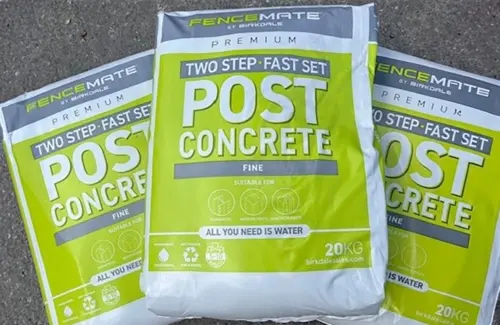
- Post mix: roughly one 20 kg bag per post to secure each post into the ground.
- Panel clips: typically two per panel per post to ensure panels stay firmly in place.
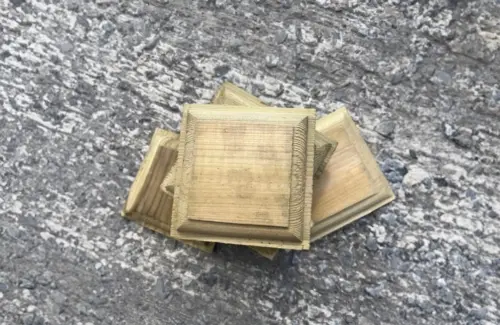
- Post caps: to protect and finish the top of each post, improving aesthetics and longevity.
Optional extras (depending on your site):
- Gravel boards to raise the base for fence panels and protect against ground moisture.
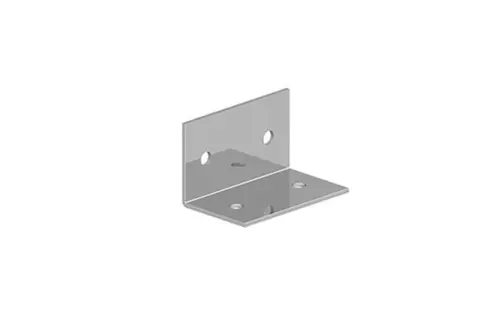
- Corner posts or L-posts for angled sections or sharp jogs in the run.
- Gate hardware kits if you’re installing a new gate.
We can help you put together a full materials list when you order, ensuring you have everything needed for a smooth installation.
Practical tips for accuracy and efficiency
- Use a helper: a second person can hold the tape and mark measurements, reducing the chance of error.
- Mark your measurements on a plan: sketch your fence line and annotate lengths for each section, including gate openings and corners.
- Consider ground conditions: uneven ground, dips, or rises can affect post depth and panel alignment. Plan for longer or shorter posts accordingly.
- Check local regulations: some areas have setback requirements or height restrictions that could affect your layout.
Measuring your garden fence run accurately is the first, and arguably the most important, step in getting your fencing right the first time. By determining the total run, calculating the number of panels (and rounding up), accounting for posts and gates, and adding the necessary fixings and accessories, you’ll minimise waste and avoid delays. If you’re unsure about any aspect of the process, remember that Empress Fencing is happy to help you get your order right first time. With careful measurements and a clear plan, your fencing project will proceed smoothly from measurement to installation, delivering a sturdy boundary that looks great year after year.
Please check out our 6ft fence panels, decorative fence panels, decorative garden gates and fence posts range for more information.