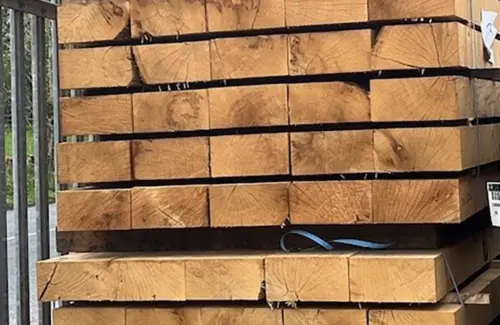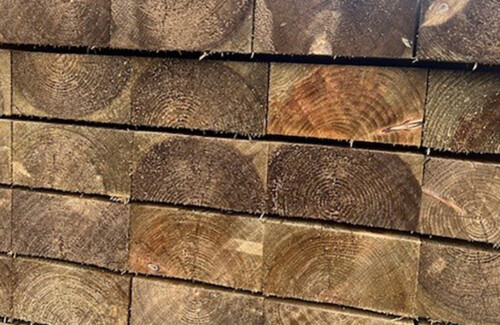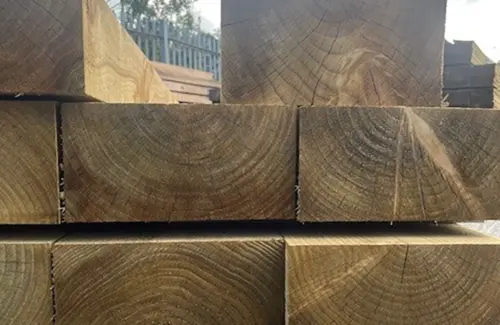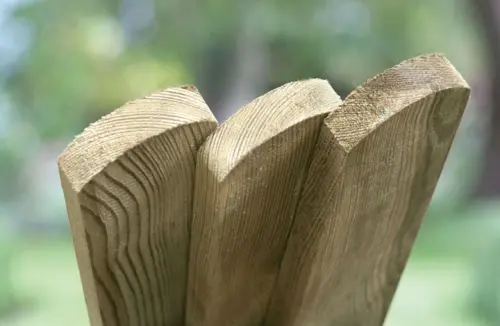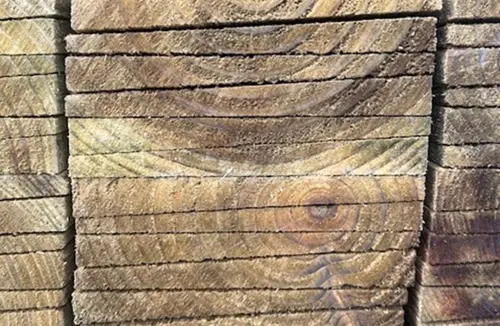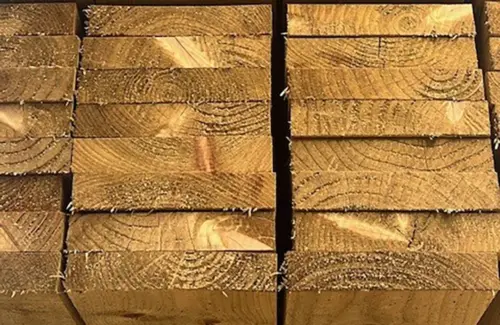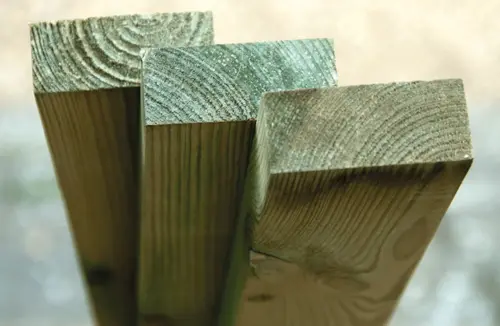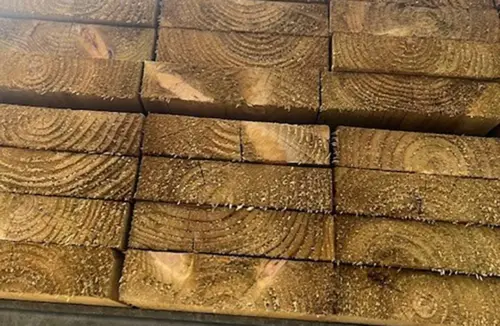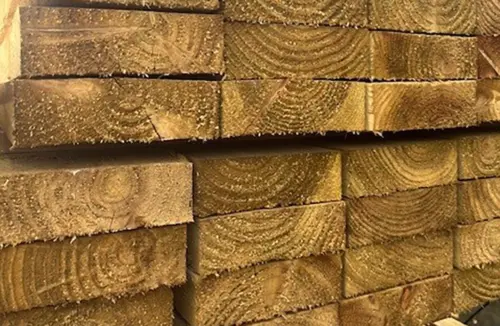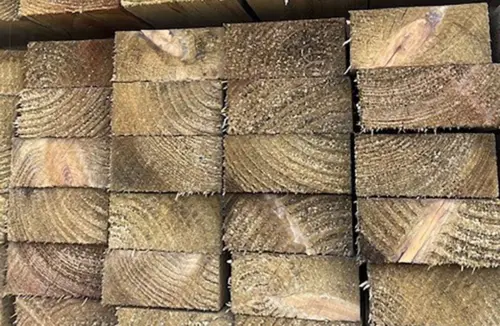

Softwood mini sleepers exist because the full-size sleeper, for all its virtues, is a genuinely awkward thing to work with in a domestic garden. A full sleeper is heavy enough to need two people, difficult to manoeuvre down a narrow side passage, and visually far too heavy for a small bed or a low border. The mini section keeps the character and the substance of a sleeper while being something one person can carry, cut and position without help. We stock them alongside the full sizes as part of our fencing and timber supplies in Clitheroe, and for a great many garden jobs they are the better choice.
Where the smaller section makes more sense
Scale is the first consideration and the one most often ignored. A full sleeper used as edging to a border in a small garden dominates it. The bed ends up looking like a fortification rather than a planting area, and the proportions of the whole garden suffer. The mini section gives the same solid timber edge at a scale that suits a modest plot.
Access is the second. If everything has to come through a house, down a ginnel or along a narrow path, weight and length become the deciding factor rather than a detail. That describes a great many terraced and town properties across east Lancashire, where the back garden is only reachable on foot.
The third is simply what one person can manage. Garden projects that require a second pair of hands often wait for a second pair of hands, sometimes for years. A material you can handle alone on a free Saturday is a material that actually gets used.
Edging paths and borders
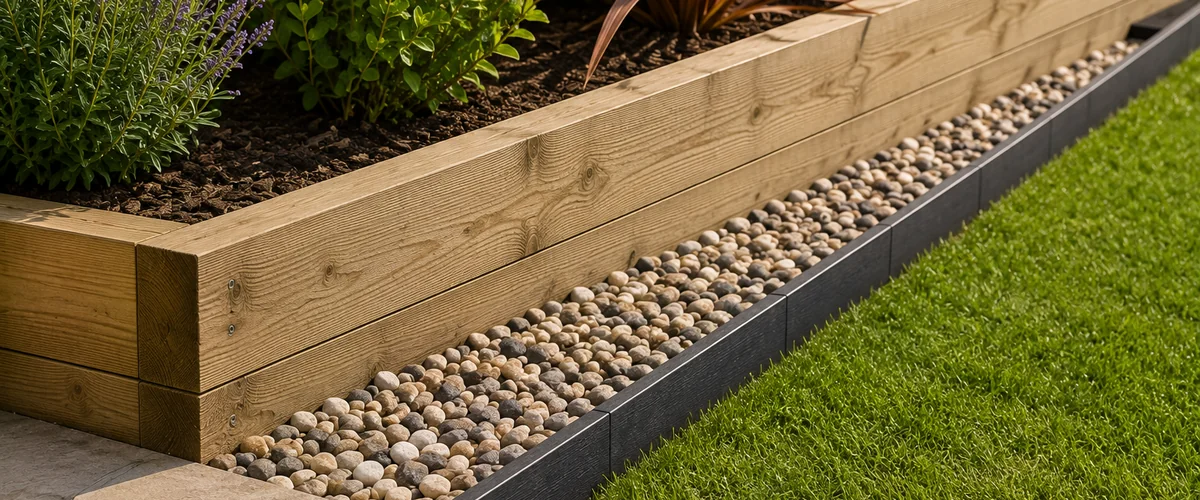
Edging is where the mini section is at its best. It gives a clean, solid line between a lawn and a border, or between a path and a planted area, at a height that reads as a definition rather than a wall. It holds a gravel path in place, it stops soil creeping onto a lawn, and it gives the mower a clear line to work to.
Laid on edge it gives more height for the same amount of timber. Laid flat it gives a wider, more visible line. Both work, and the decision depends on whether you want the edge to hold something back or simply to mark it.
Low raised beds
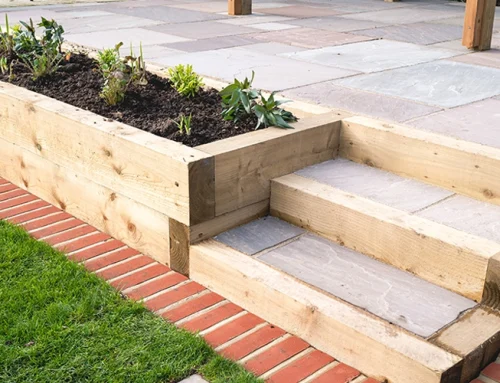
For a vegetable bed or a herb bed, a single course of mini sleepers gives enough depth to hold good soil above whatever is underneath, without the cost or weight of a full sleeper bed. Two courses gets you into genuinely useful growing depth for most crops.
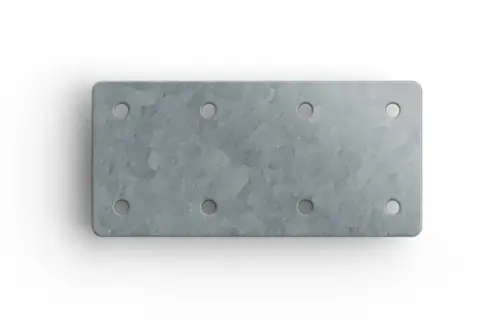
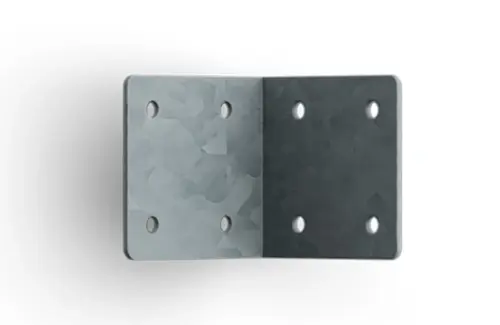
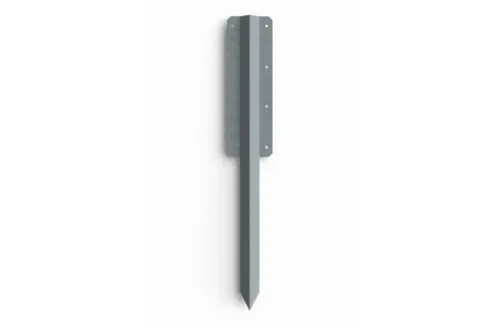
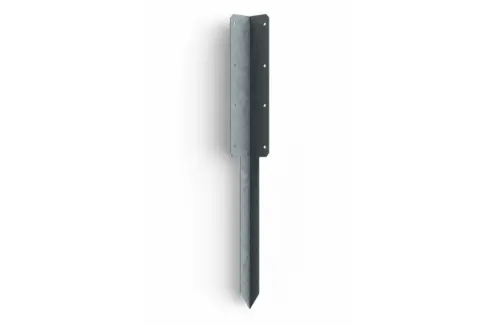
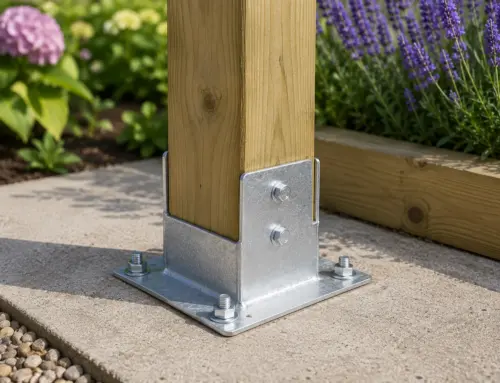
The important detail is the same as with any sleeper build. The corners need tying properly, and the joints need plates. Soil is heavy when wet and an untied corner will open over a season. Mini sleepers are lighter, which means the timber itself contributes less resistance to spreading, so the fixings matter more rather than less.
Steps and changes of level
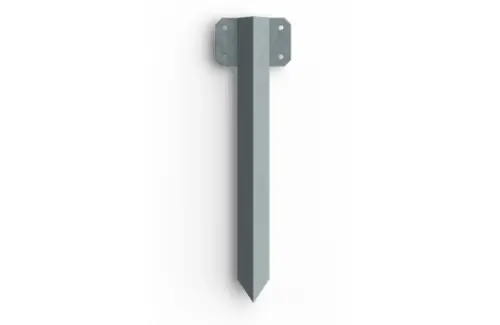
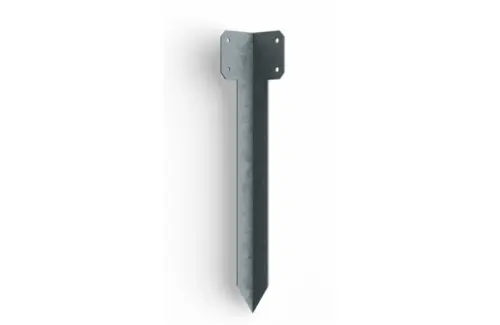
On a gently sloping garden, mini sleepers make good step risers. They set the height of each step, hold the material behind them, and give a solid edge to walk to. Pin them properly into the ground behind and make sure each one is bedded level, because a step riser that has settled at one end is both unattractive and a trip hazard.
For a genuine retaining situation with a significant change of level, go up to the full section. The mini sleeper is for definition and modest retention, not for holding back a bank.
Softwood, treatment and lifespan
Softwood is lighter, easier to cut and considerably more economical than oak. It is also pressure treated, which is what gives it a working life in ground contact. Oak has a different character and will last longer untreated, but it costs more, weighs more and is markedly harder to work, so for a small bed or an edge the softwood is usually the sensible choice.
Whichever you use, treat every cut end. This is the point at which most sleeper projects are quietly compromised. The treatment is driven into the timber before it is cut, so every cut you make on site exposes untreated wood, and in a garden that cut face is often the one sitting in wet soil.
Handling and cutting on site
One of the genuine advantages of the smaller section is that it can be cut with ordinary tools. A full sleeper needs a substantial saw and a firm setup. The mini section can be cut with a decent handsaw or a standard circular saw, which means the work can happen in a domestic garden without hiring anything.
Support the timber properly on both sides of the cut so it does not pinch the blade or drop as you finish the cut. Mark all round rather than on one face only, since a square cut is what makes a corner sit tight, and a cut that wanders is obvious once two lengths meet.
Ordering and planning a small project
Measure the run, work out how many lengths it takes, and add the brackets and fixings to the same order. Where a design has corners, count them and order accordingly rather than working it out on the day.
Customers working on smaller gardens around Sabden fencing and near Pendleton fencing often use the mini section precisely because access is tight and the plots are modest.
They sit within our timber sleepers range alongside the full softwood and oak sections, the wider timber range and the brackets in fixings and accessories.
If you are planning a bed, an edge or a set of steps and want help working out quantities, ring 01200 449930 with the dimensions. Delivery is free on orders over £150 across all BB postcode areas, which is worth having on timber of this weight.