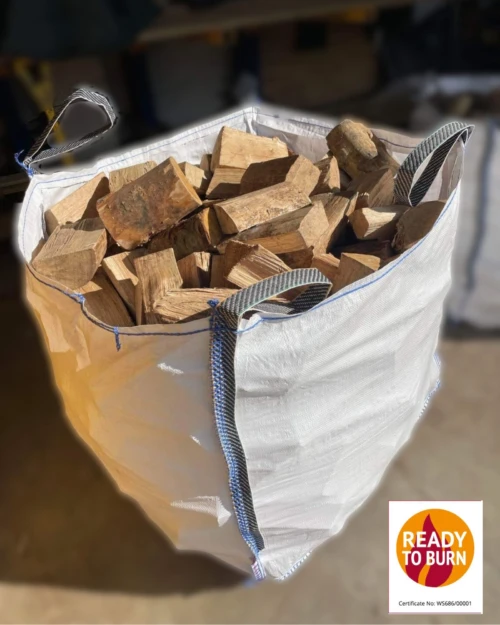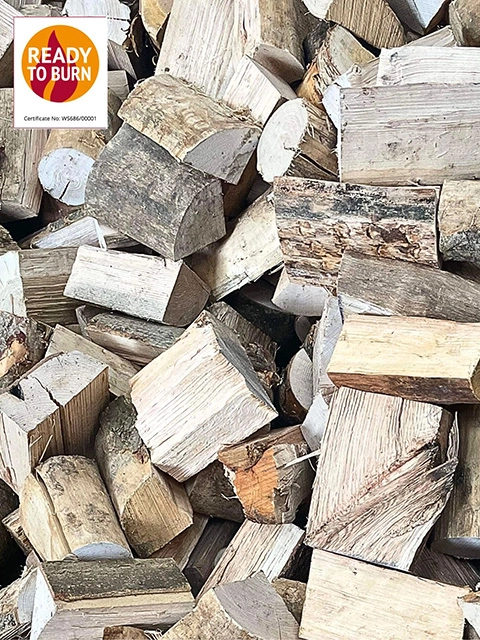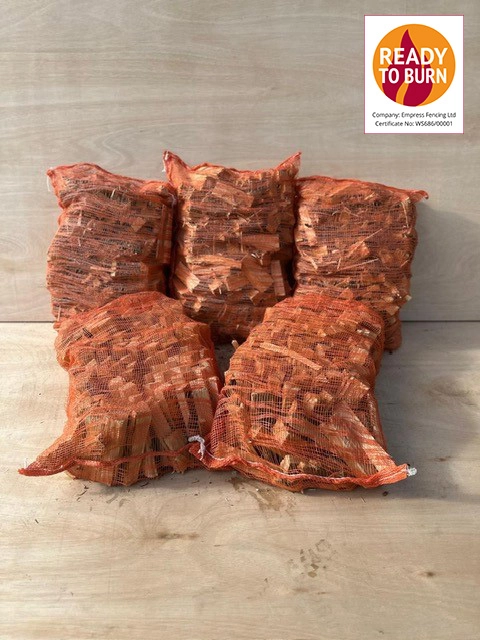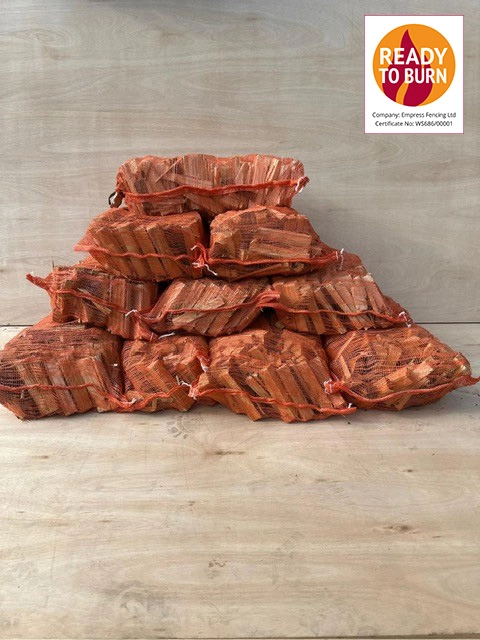

Loose tipped logs surprise people the first time, because the mental picture almost never matches what appears on the driveway. A cubic metre sounds modest written down and looks considerable in front of you. As a supplier of fencing and timber supplies in Clitheroe delivering firewood across Lancashire, we would rather customers knew what to expect before the vehicle arrives than discover it afterwards.
Bagged and Loose Are Not the Same Purchase
A bagged delivery arrives contained. It sits where it is placed, it stays tidy, and it can be left for weeks without spreading. A loose tip arrives as a pile, and a pile occupies a footprint considerably wider than its stated volume suggests because logs roll.
Neither is better in the abstract. Bagged suits customers who want the logs to stay put. Loose suits customers stacking straight away and wanting the best value by volume.
The Footprint Question
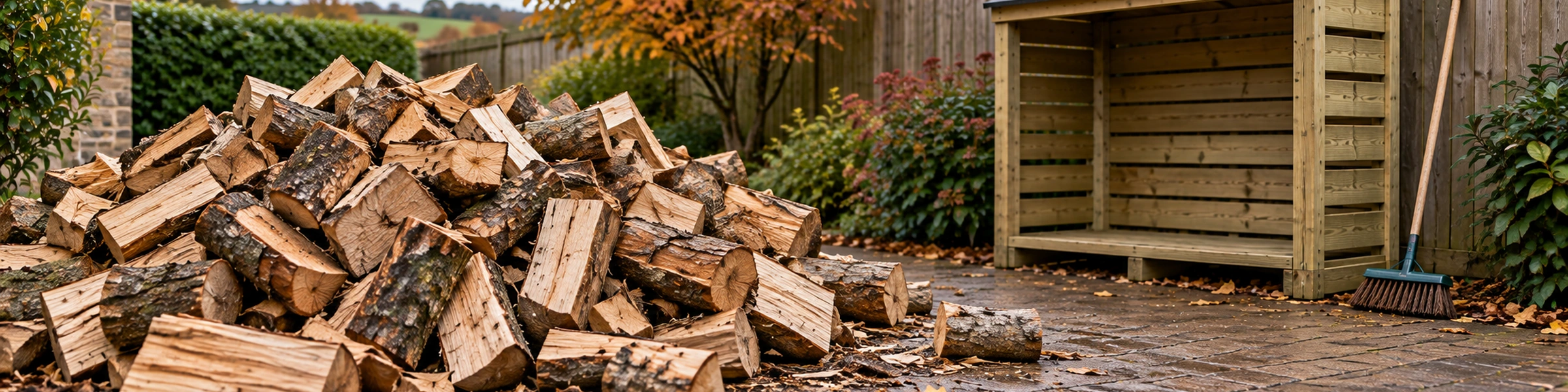
A cubic metre of firewood tipped onto a flat surface spreads out. Allow noticeably more ground area than the volume implies, and allow for the fact that the outer logs will keep moving as you take from the pile.
Tipping against a wall or into a corner controls the spread and makes the stacking easier, because you are working into something rather than chasing logs across a driveway.
Choose the Surface Carefully
Hard standing is best. A driveway, a yard or a concrete pad keeps the logs clean and lets you sweep up afterwards. Grass is a poor choice because the pile kills the turf beneath and the bottom logs pick up soil and moisture.
Gravel is workable but messy, since stones lodge between logs and end up in the store. If gravel is the only option, laying a sheet down first makes a real difference.
Plan to Stack Immediately
The main obligation that comes with a loose tip is dealing with it promptly. A pile left in the open takes on rain across the whole surface, and the bottom sits in whatever water collects underneath.
Stacking the same day is ideal, and the following day is acceptable in dry weather. Leaving it a fortnight in a Lancashire autumn will undo the condition of firewood you paid a premium to have kiln dried.
Where It Suits and Where It Does Not
Loose tipping works well for customers with a store ready to fill, a hard surface to receive the delivery, and the time to move it straight away. It is efficient and it gives the best value for the volume.
It works badly for anyone who wants to buy now and deal with it later, or who has nowhere hard to put it. In those situations a builders bag of logs is the better purchase even at the higher rate per volume, because the bag does the containing for you.
Access Requirements
Tipping needs vehicle access to the drop point and enough clearance to raise a body or open a tailgate. Overhanging branches, low cables and narrow gateways all matter, and a tight turning area can rule it out entirely.
If in doubt, ask before ordering rather than on the day. Details of the areas we cover are set out on our delivery charges page.
Sorting As You Stack
One genuine advantage of a loose tip is that you handle every log, which lets you sort as you go. Put the larger pieces towards the back of the store for later in the season, keep the smaller and better split pieces accessible for lighting, and set aside anything awkwardly shaped.
Households doing this find the whole winter easier, because reaching for the right log becomes automatic rather than a search through an undifferentiated stack.
The Value Argument
Loose tipping removes the cost of bagging and the handling that goes with it, which is why it prices well by volume. For anyone burning seriously through the winter with somewhere proper to put it, it is usually the most economical way to buy.
Customers ordering logs for sale Rawtenstall or logs for sale Haslingden with good driveway access frequently move to loose tipping after their first bagged season, once the storage is sorted.
Clearing Up Afterwards
A loose tip leaves bark, chippings and fine debris behind on whatever surface it landed on, and that is worth planning for. A stiff yard brush deals with most of it in a few minutes if you do it straight after stacking, and considerably less easily once it has been rained on and walked through. On a block paved driveway the fine material works down between the joints, so sweeping promptly is genuinely worthwhile. Some customers lay a tarpaulin down before the delivery arrives and simply lift the whole lot afterwards, which is the tidiest approach and takes no real effort. The debris itself is clean wood waste and composts perfectly well, so it need not go in the bin.
To check whether loose tipping suits your property, call us on 01200 449930. We supply certified Ready to Burn firewood from Clitheroe with free delivery on orders over £150 across all BB postcode areas.