
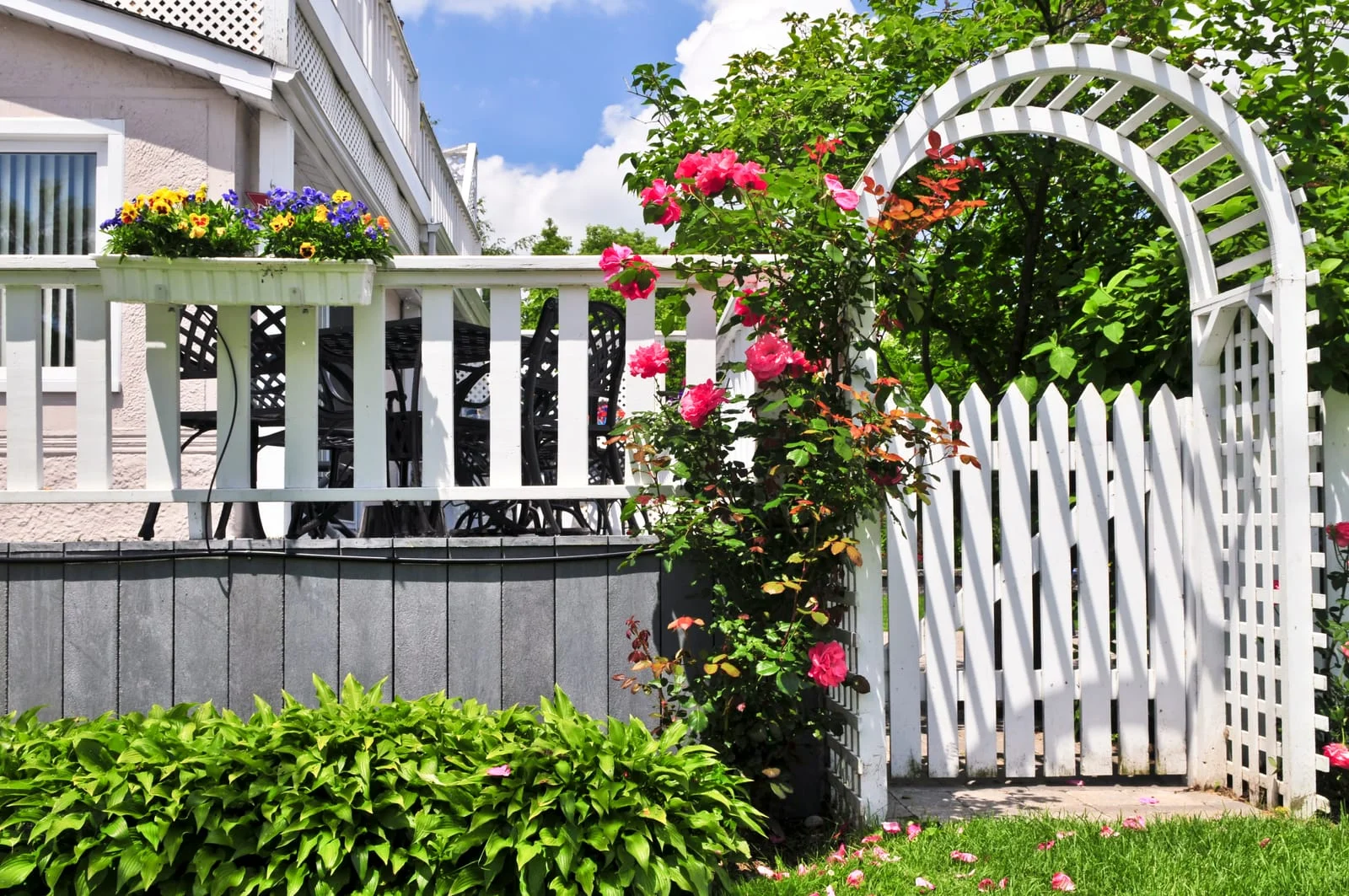
Not every boundary needs to be a six foot wall of timber. For front gardens, cottage plots and low dividing boundaries, picket fencing remains one of the most charming and practical choices in the range, and it is one we are asked about constantly as a supplier of fencing and timber supplies in Clitheroe. A picket fence defines a boundary without closing the garden in, which is exactly what a lot of Ribble Valley homes want at the front of the property.
What Makes Picket Fencing Different
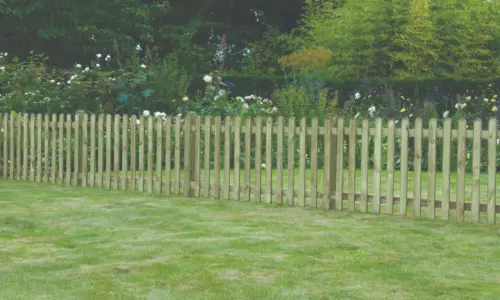
A picket fence is built from vertical pales fixed to horizontal rails, with deliberate gaps between each pale. We stock a 6ft picket fence panel as well as individual rounded top picket pales for customers who want to build a run to their own length and design. The open spacing is the defining feature. It keeps sightlines open, lets light through to planting, and gives a property a softer, more traditional frontage than a solid panel ever could. Rounded top pales are the classic cottage look, and they suit the older stone properties common across the valley particularly well.
Because picket fencing is low and open, it does not carry the wind load that a tall solid panel does, which means it is more forgiving on posts and fixings. That said, the principles still apply. The pales and rails are timber, so pressure-treated stock and proper end protection keep them looking good through Lancashire winters rather than going grey and soft within a couple of seasons.
Matching a Picket Gate to the Run
A picket fence almost always wants a matching gate, and a decorative picket gate completes the frontage neatly. The gate is the part that takes daily use, so it is worth hanging it on quality fittings from the start. A sagging front gate is one of the most common timber gate complaints, and it nearly always comes down to the hinges and the post rather than the gate itself. Our guide on how to fix a sagging garden gate is useful reading, and our gate fittings range covers the hinges, latches and catches you will need.
Where Picket Fencing Works Best
Picket fencing earns its place at the front of a property, around a cottage garden, as a divider between a lawn and a planted border, or anywhere you want to mark a boundary without blocking it. It is rarely the right answer for a rear boundary where privacy and security matter, and we would steer you toward a solid panel for that. Where it genuinely shines is kerb appeal. A crisp white or natural picket frontage lifts the whole look of a house, and it is a low-cost way to make a tired front garden feel cared for.
Treating and Finishing Picket Timber
Because so much of a picket fence is on show, the finish matters. A classic look is a painted white pale, but a clear or tinted timber treatment that lets the grain show through is increasingly popular and arguably easier to maintain. Whichever you choose, the question of paint versus stain comes up a lot, and our honest take is set out in should I paint or stain my fence. For a town like Clitheroe with plenty of period frontages, getting the finish right is half the job.
Building to Your Own Length With Individual Pales
One of the advantages of stocking individual rounded top picket pales rather than only fixed panels is that you can build a run to your exact length and to your chosen spacing. Wider gaps between pales give a lighter, more open look and use fewer pales; closer spacing reads as more substantial and offers a little more screening. Fixing the pales to two horizontal rails set between posts lets you follow a gentle slope or turn a corner in a way a rigid panel cannot, which is genuinely useful on the uneven frontages common to older valley properties. It also means a single damaged pale can be swapped out in minutes rather than replacing a whole panel, keeping the fence looking its best for years.
To plan a picket run and gate for your frontage, call 01200 449930. We supply picket pales, panels and gates across Clitheroe and the BB postcode areas, with free delivery on orders over £150.