
Softwood logs for a fire pit are a different proposition from the firewood you would put in a stove, and the distinction is worth understanding because outdoor burning has become a year round activity rather than a summer one. As a supplier of fencing and timber supplies in Clitheroe we sell a great deal of firewood in September and October to people who are not heating their houses with it at all.
Why Outdoor Fires Want Different Wood
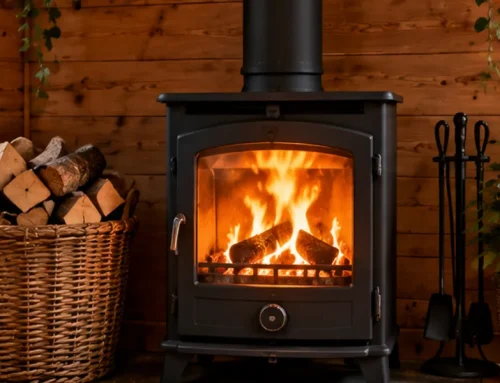
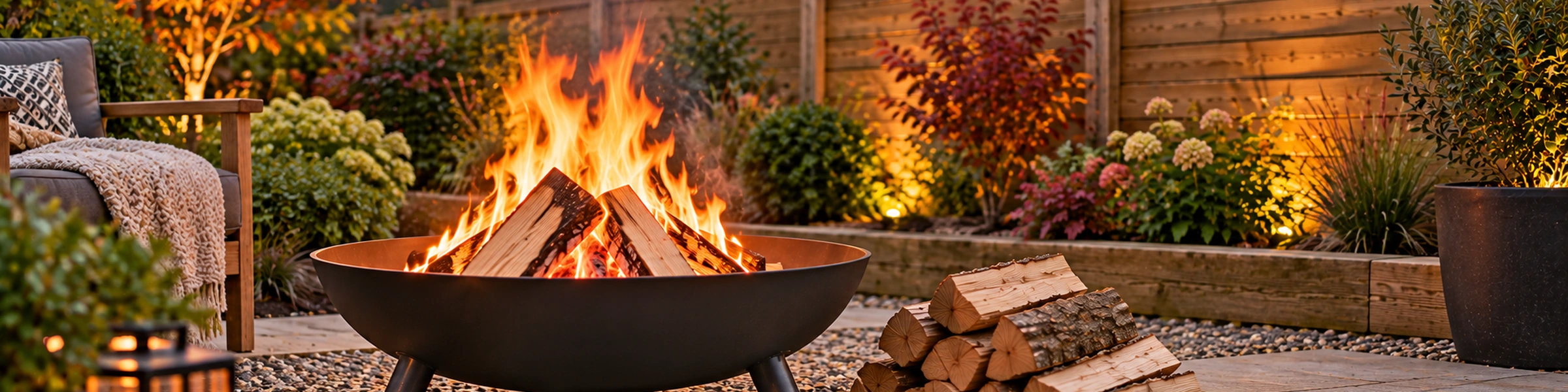
A wood burning stove is a closed, insulated box designed to extract as much heat as possible from a slow burn. A fire pit is the opposite. It is open, it loses heat in every direction, and what most people want from it is flame, light and a bit of warmth on the near side.
That changes what makes a good log. In a stove, dense hardwood burning slowly is ideal. In a fire pit, softwood that catches quickly and burns bright gives you the effect you actually want, and the shorter burn time matters far less because you are feeding it anyway.
Lighting Outdoors Is Harder
Wind, cold air and damp surroundings all work against you outdoors. There is no chimney draught to pull the fire along and no insulated firebox holding heat in. Anything that lights readily is worth having.
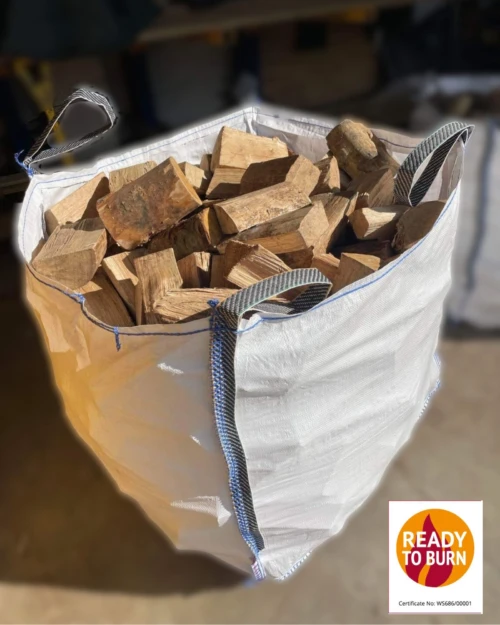
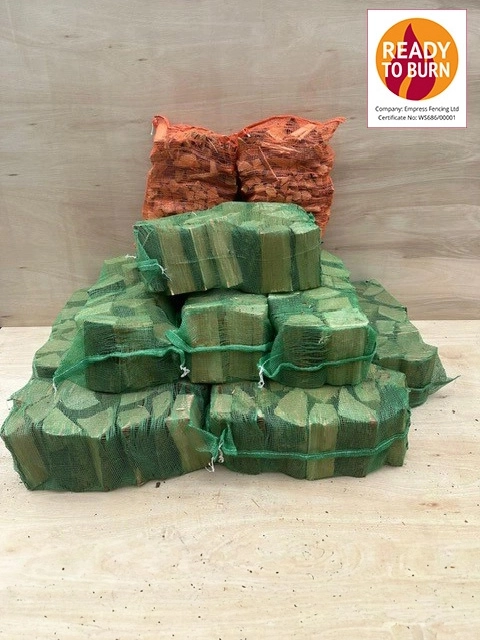
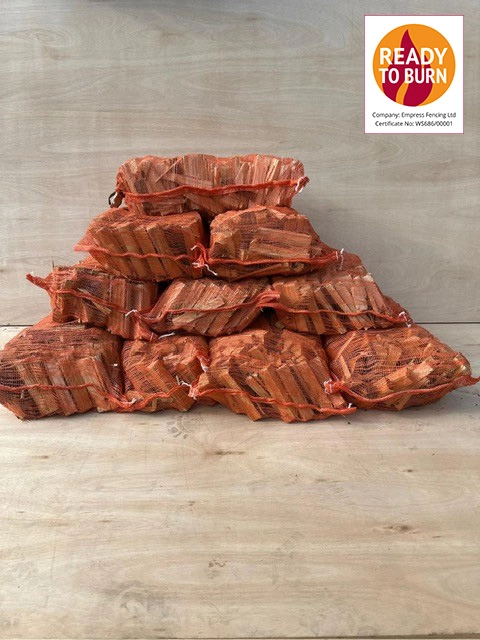
Softwood earns its place here. Our 10 nets of softwood logs and 2 nets of kindling is easy to get going even in poor conditions, and the individual nets are convenient for outdoor use because you can carry one out and take back what you do not burn.
Kindling Matters More Than People Think
Outdoor fires need considerably more kindling than indoor ones. Without a draught to establish the burn, the early stage takes longer and needs more sustained small fuel before the logs catch properly.
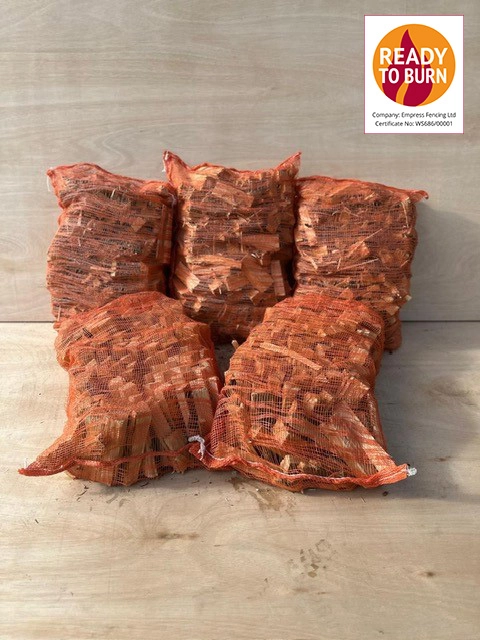
Budget roughly double what you would use indoors. Our 5 nets of kindling is a sensible quantity for anyone using a fire pit regularly through autumn, and it saves the frustration of a fire that will not take on a cold evening.
Moisture Content Still Applies
Being outdoors does not make wet wood acceptable. Damp logs smoke heavily, and in an open fire pit that smoke goes straight into the faces of everyone sitting around it rather than up a flue. It is the single most common reason an evening around the fire ends early.
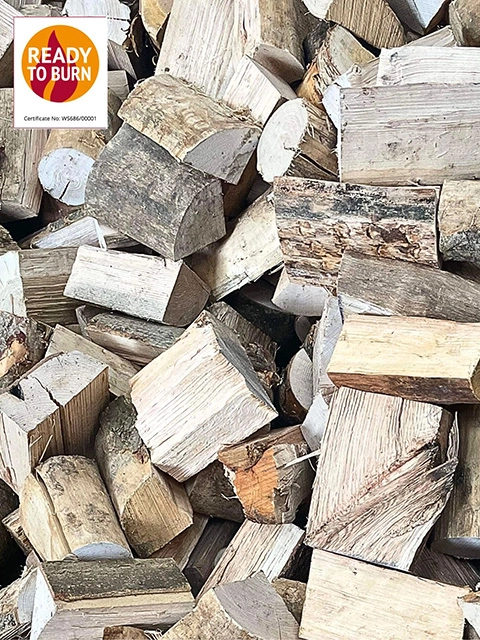
Kiln dried logs at under twenty per cent moisture make a genuine difference to how pleasant an outdoor fire is to sit next to. Ready to Burn certification exists precisely because moisture content determines smoke output, and outdoors you notice it immediately.
Pizza Ovens Are a Special Case
A garden pizza oven wants a fast, hot, clean fire, and softwood suits that well for bringing the oven up to temperature. Once hot, a small amount of hardwood holds the heat while you cook.
What matters far more than species is that the wood is clean and untreated. Never burn treated timber, painted wood, old fence panels or anything that has been near preservative in something you intend to cook in. That applies to fire pits too, but it matters most where food is involved.
What Not to Burn
Offcuts from garden projects are a constant temptation and a poor idea. Pressure treated timber, the sort used for fence posts and panels, contains preservatives that should not be released into the air in a garden where people are sitting. Old decking, painted timber and manufactured boards are all worse.
Keep firewood and construction offcuts entirely separate. It is a habit worth establishing, because the offcuts pile always looks like free fuel at the end of a project.
Storing Outdoor Firewood
Fire pit wood tends to get stored casually because it is used casually, which is why so much of it is unusable by the time anyone wants it. A net left out in the open through three wet weeks will not light.
Keeping outdoor firewood in the same store as everything else is the simplest solution, and our log storage solutions handle both. If that is not practical, a covered spot off the ground will do, provided air can still move around it.
Autumn Is the Season for This
Outdoor fires get the most use in September and October, when evenings turn cool but the weather is still fine enough to sit out. Gardens across the Ribble Valley are busy at exactly this point in the year, and customers ordering logs for sale Whalley or logs for sale Waddington in early autumn are often buying for the fire pit rather than the stove.
Sparks and Where You Site the Fire
Softwood throws more sparks than dense hardwood, which is worth knowing before deciding where an outdoor fire lives. Resinous pockets pop as they heat, and in an open fire pit those sparks travel. Keep a sensible distance from timber boundaries, garden furniture, decking and anything with a fabric cover, and never site a pit directly beneath overhanging branches. A spark guard is a worthwhile addition for anyone using a pit regularly, particularly where children are around. On a still autumn evening none of this matters much, but Lancashire evenings are rarely still, and a gusty night changes the picture entirely. Positioning the fire with the prevailing wind in mind saves both your garden and your patience.
For advice on what suits outdoor burning, call us on 01200 449930. We supply certified Ready to Burn firewood from Clitheroe with free delivery on orders over £150 across all BB postcode areas.