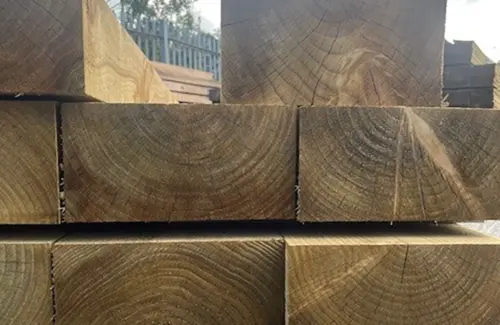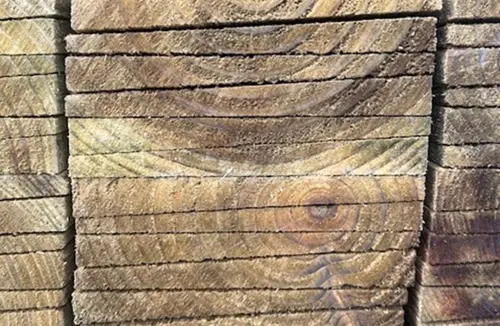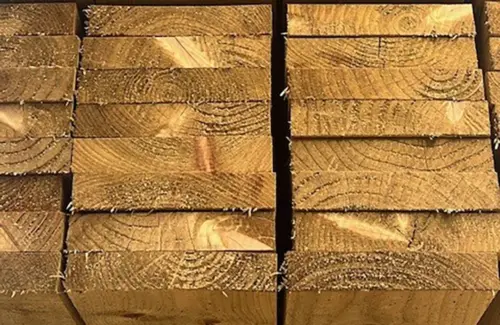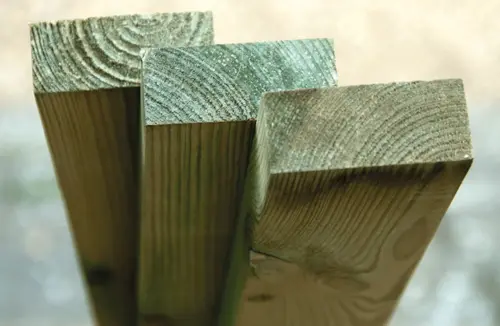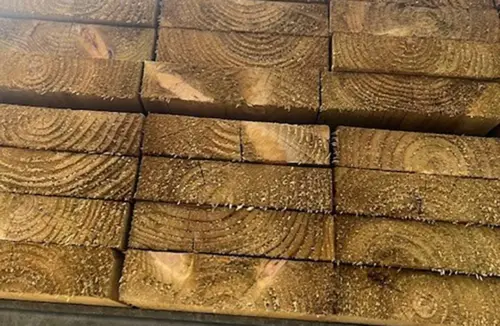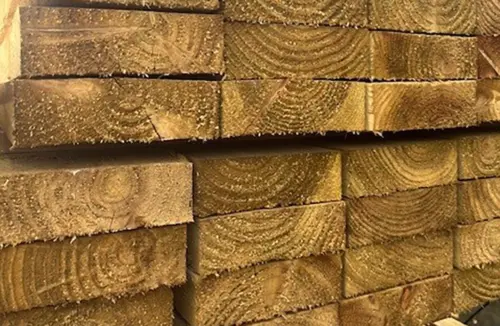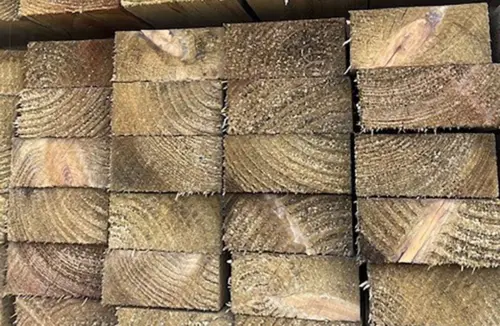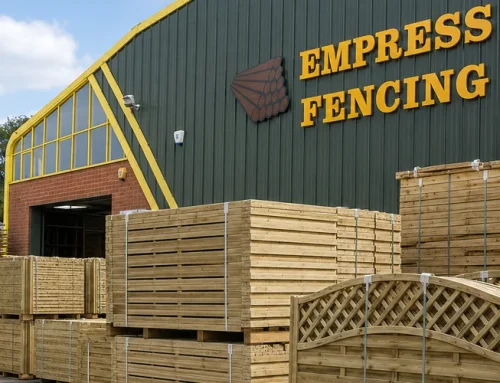

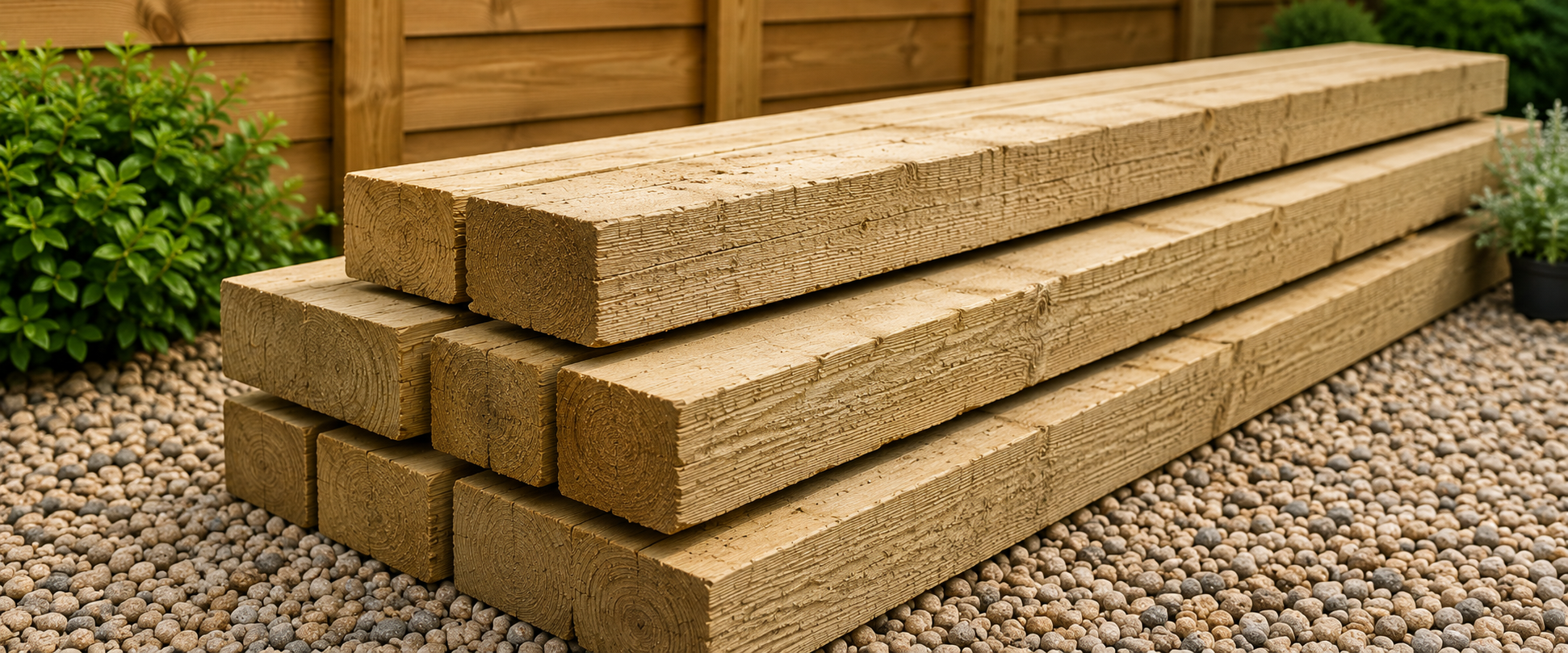
Rough sawn rails are the quiet workhorse of the timber yard. They do not have the appeal of a finished panel or a new gate, but they are what holds a feather edge fence together, what a shed roof is framed from, what a raised bed is battened with, and what half the small repairs in a garden end up being made of. We carry them across a range of sections as part of our fencing and timber supplies in Clitheroe, and the most common question is simply which size does what. The answer is more logical than the spread of options suggests.
What rough sawn means and why it matters
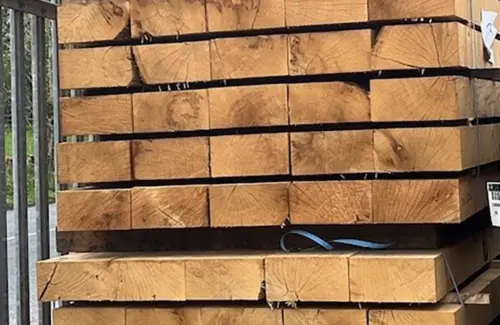
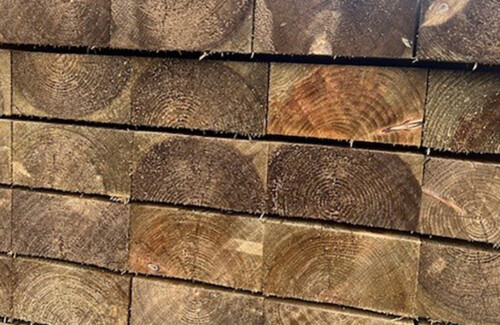
Rough sawn timber comes straight off the saw without being planed. The surface is textured rather than smooth, the arris is square rather than eased, and the section is at or very close to the nominal size rather than being reduced by planing. That last point is the practical one. A rough sawn section holds its stated dimension, whereas planed timber loses a few millimetres on each face during finishing, which is why a planed piece always measures smaller than its nominal name suggests.
For structural and hidden work, rough sawn is the right choice on almost every count. It is stronger for the money because you are buying the full section, it takes preservative treatment well because the open surface absorbs readily, and it is considerably cheaper than the planed equivalent. The texture is only a drawback where the timber will be handled or seen at close quarters, which for rails is rarely the case.
The smaller sections and what they are for
The lightest rails in the range are for battening, spacing and light framing rather than for carrying load. These are what you reach for when you need to hold something in position, pack out a gap, batten a trellis to a wall, form a light frame inside a structure, or run a fixing line for cladding. They are easy to cut and handle, they take a screw without splitting if you are sensible about pilot holes near the ends, and they are cheap enough that having a few spare lengths in the garage is never wasted.
The mistake people make is trying to span with them. A light batten fixed flat against something solid works perfectly. The same batten asked to bridge a gap unsupported will bow. If it is spanning, go up a section.
The mid-range sections for fence framing
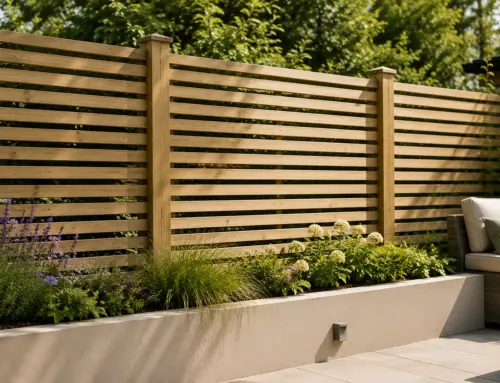
The middle of the range is where feather edge fencing lives. A feather edge fence is built rather than bought as a panel, and the rails are what the boards fix to. Those rails span between posts and take the whole load of the cladding, plus wind pressure across the face of the fence, which on an exposed Lancashire boundary is not trivial.
Rail count matters as much as rail size here. A tall fence run on two rails will move noticeably more than the same run on three, regardless of how heavy the sections are, because the unsupported height of board between rails is what governs the flex. Where a fence is exposed, going up in rail count is usually more effective than going up in rail size.
The same sections do a great deal of general garden work. Framing for a store, bearers for a small platform, the frame of a compost bay, edging that needs more substance than a batten. These are the sizes people buy most often and the ones worth keeping a couple of spare lengths of.
The heavier sections and what they carry
The heaviest rails in the range are into genuine structural territory. Bearers, joists for light structures, framing that carries weight, and anything spanning a real distance. This is where you stop thinking about what looks about right and start thinking about span and load properly, because the failure mode is not cosmetic.
A useful rule when you are unsure is that depth does far more for stiffness than width does. A section stood on edge is dramatically stiffer than the same section laid flat. If something is sagging, the answer is usually to turn it or deepen it rather than to widen it.
Treatment, cutting and site work
Rough sawn timber takes treatment well, but the moment you cut it you expose an untreated face. Every cut end wants treating before it goes anywhere, and cut ends are exactly where rails sit against posts, into brackets, and down at ground level. That single habit does more for the life of a fence frame than any other maintenance.
Because rough sawn holds its nominal size, it also comes with more variation than planed timber. Sort through a stack and use the straightest lengths where straightness matters, and put anything with a slight bow where it will be pulled true by fixing. Nobody notices a rail that was pulled straight. Everybody notices a bowed top rail.
Working out what to order
Measure the run, decide the rail count, add for waste at ends and for the odd length you will inevitably need, and order in the longest lengths that suit the job rather than joining unnecessarily. Joins in rails should land on a post, never mid-span, so plan the lengths against the post spacing rather than the other way round.
Customers building feather edge boundaries around Accrington fencing and out through Great Harwood fencing generally take rails, boards, posts and fixings on one delivery, which keeps the run consistent and avoids matching problems later.
The rails sit within our wider timber range alongside the timber boards and timber posts sections, with the brackets and fixings in fixings and accessories.
If you are unsure which section suits a particular job, ring 01200 449930 and describe the span and what it is carrying. Delivery is free on orders over £150 across all BB postcode areas, which most timber orders reach comfortably.