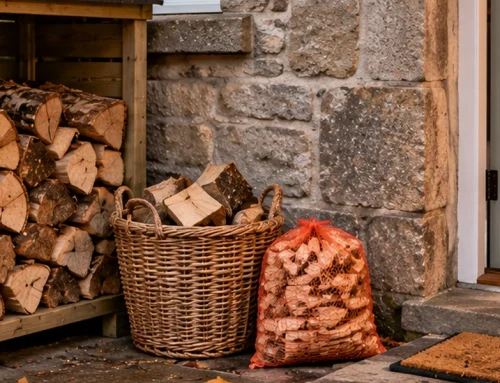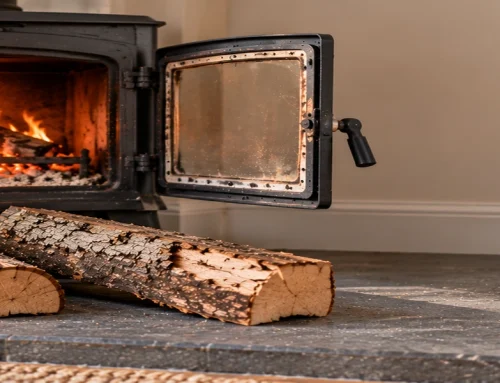

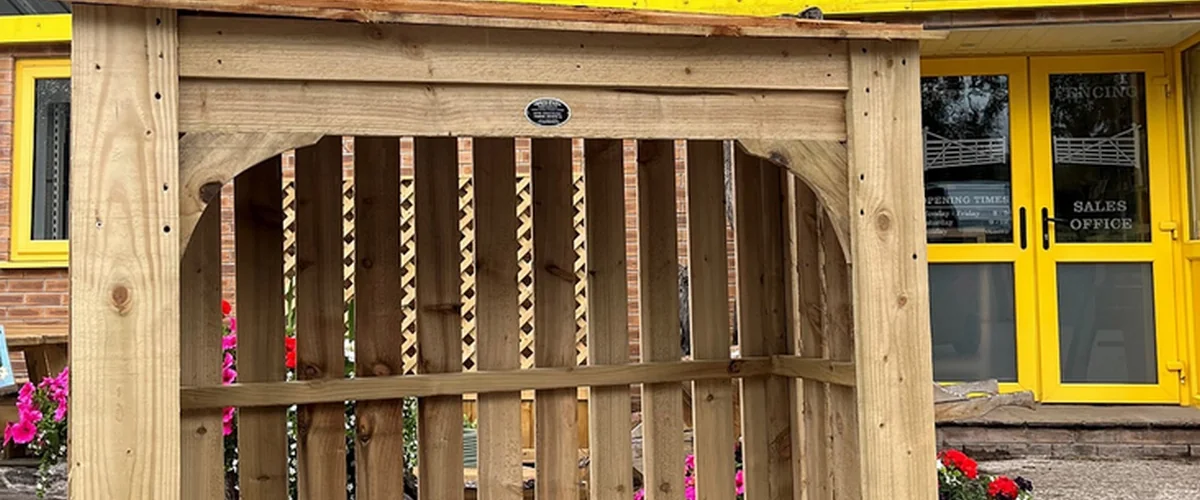
A log store base is the part of the job nobody photographs and the part that decides whether the store works. Plenty of attention goes into choosing a store and into what goes in it. Very little goes into what it stands on, and yet a store sitting on soft, uneven or wet ground will rack out of square, sit its lowest logs in damp, and rot from the bottom up regardless of how good the timber is. Late summer, with dry ground and dry logs, is the right time to sort it. We supply stores and the timber to base them on as part of our fencing and timber supplies in Clitheroe.
What the ground is doing to a store
Three things go wrong when a store sits directly on soft ground. It settles unevenly, so the frame racks and the doors or openings no longer line up. It draws moisture up from below into the lowest timbers and the bottom layer of logs. And it sits in whatever water runs across the surface after heavy rain, which on clay ground around here can be a surprising amount.
The last of these is the one people underestimate. A patch of lawn that seems fine in August can hold standing water for days in December. Logs at the bottom of a store sitting in that will not dry, and worse, they will hold moisture against the timber of the store itself.
Choosing where to put it
Get the position right before worrying about the base. Airflow matters more than shelter. Firewood dries because air moves through it, so a store tucked into a sheltered corner with no air movement will keep logs wetter than one in a more exposed spot with a roof over it.
Prevailing wind in this part of Lancashire comes predominantly from the west and south-west, so an open aspect on that side helps considerably. A store backed onto a wall or fence on the sheltered side and open on the windward side is the arrangement that works.
Then think about the walk. A store sited at the bottom of a long garden will be a pleasant stroll in September and a genuine nuisance in February in the dark and the rain. The best position is a compromise between good airflow and a route you will actually be willing to walk in bad weather.
Keep it clear of the house wall rather than tight against it, so air can move behind and nothing is held against the masonry.
What a base needs to do
It needs to be level, stable, free-draining and it needs to lift the store clear of the ground. Those four together.
Level matters because a store that is out of level racks, and a racked frame is a weakened frame. Check it properly with a level across both directions rather than judging by eye, since ground that looks flat rarely is.
Stable means it will not settle further once loaded. A store full of logs is heavy, and ground that takes the empty store fine may sink under a full one. Firming and compacting the ground before anything goes on it is worth the effort.
Free-draining means water runs away rather than collecting. A slight fall away from the store is better than dead level ground, and considerably better than a hollow.
Practical ways to build one
The simplest approach is bearers. Two or three lengths of treated timber laid across the ground, levelled, with the store sitting on them. That lifts the store clear, lets air move underneath and is quick to do. Use a substantial section rather than something light, since the bearers carry everything.
Slabs bedded level make a firmer and longer-lasting base, and are worth it where the store is a permanent fixture. Lay them with a slight fall and make sure they are properly bedded rather than sitting on high spots.
A frame of timber sleepers filled with compacted gravel gives an excellent base for a larger store, draining freely while giving a firm level platform. That approach suits the larger stores in particular, which cover enough ground that a couple of bearers will not do.
Whatever you use, treat every cut end on any timber that goes into it. Cut ends in permanent ground contact are where a base fails.
Doing it now rather than in October
The argument for late summer is straightforward. The ground is workable, you are not standing in mud, the store can be positioned without a struggle, and any existing logs can be moved and restacked while they are dry. Doing the same job in October means wet ground, wet logs and a job that takes twice as long.
It also means the store is ready when you order the season’s firewood rather than the delivery arriving to nowhere prepared. Customers ordering logs for sale Clitheroe and logs for sale Whalley deliveries generally get the store sorted first for exactly that reason.
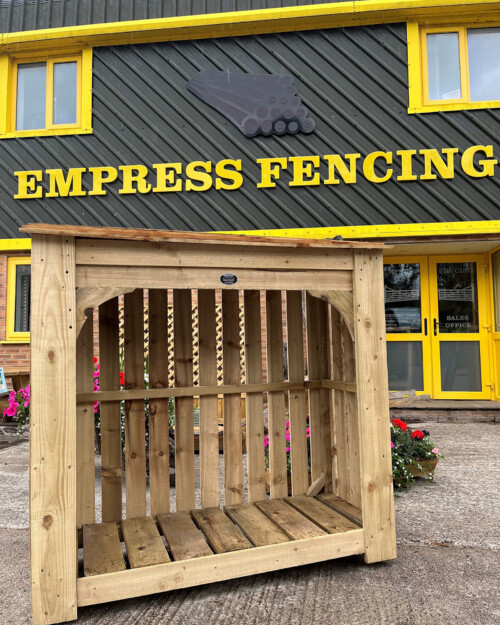
Our log storage solutions range covers the stores themselves, with timber sleepers and timber posts for building a base and log store ideas for the wider picture.
If you want help working out what a particular store needs to stand on, ring 01200 449930 with the size and the ground conditions. Delivery is free on orders over £150 across all BB postcode areas.