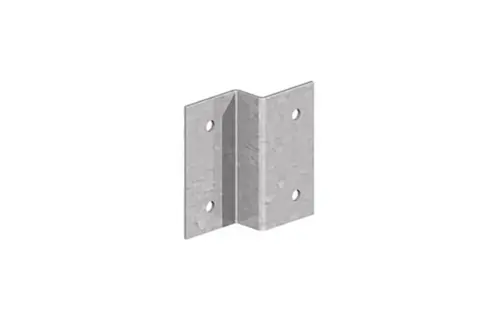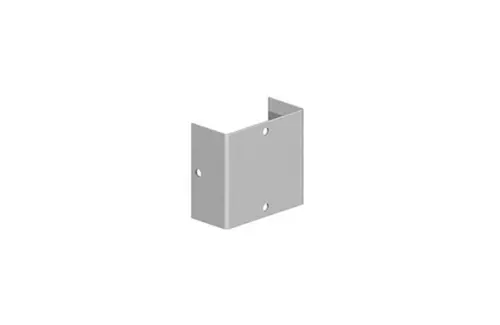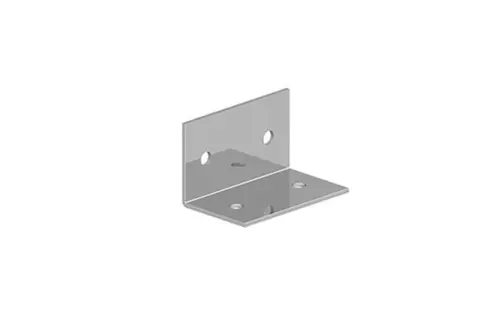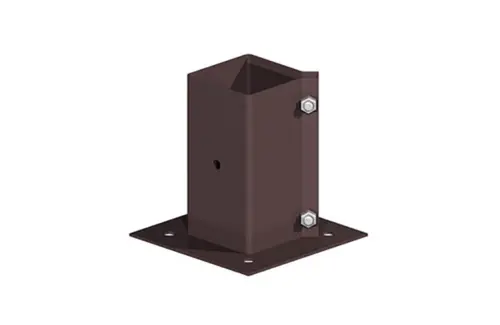

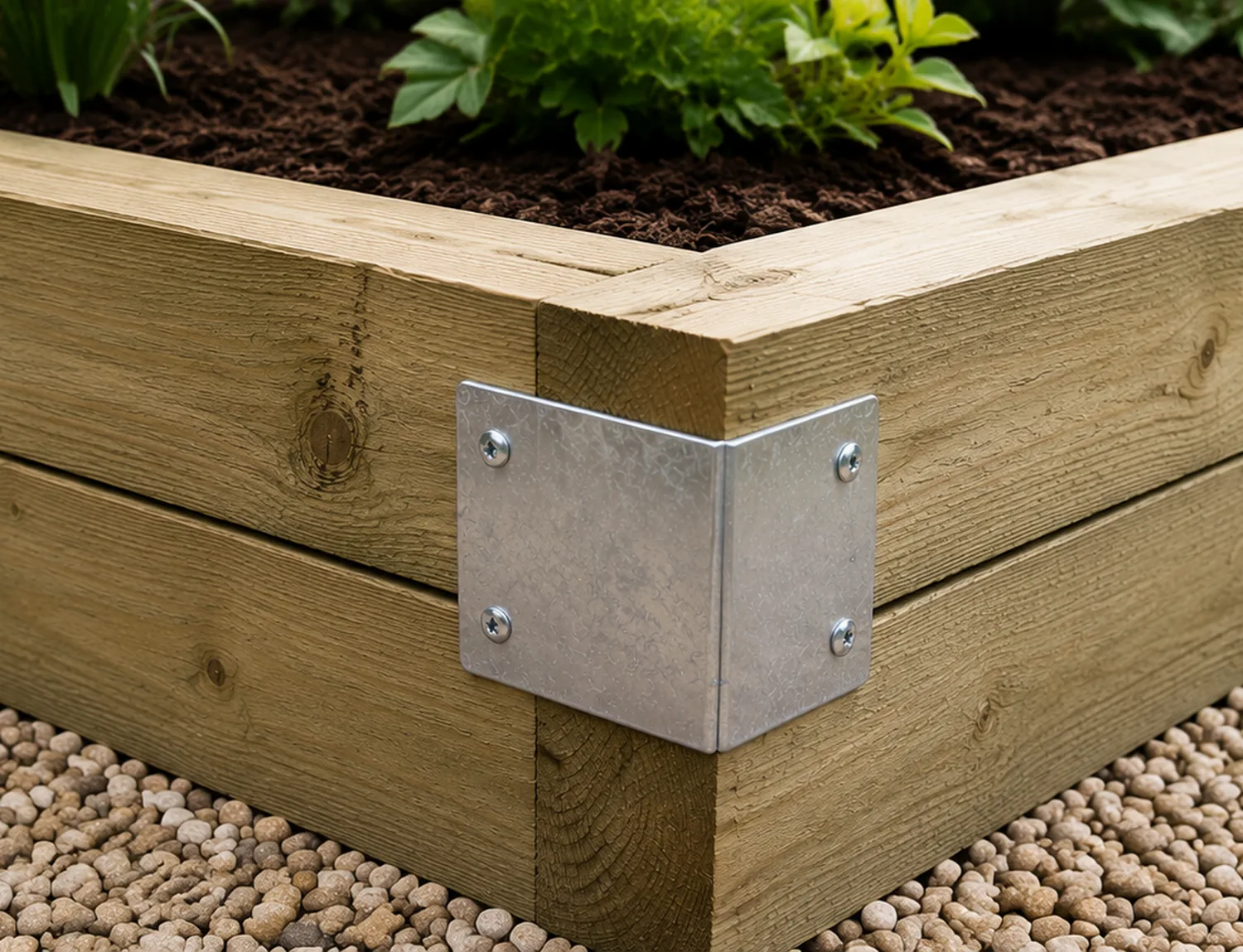
Sleeper brackets are the components that make sleeper projects achievable for people who do not own a chainsaw or a heavy-duty drill. A sleeper is a substantial piece of timber, and the traditional approach to joining them involves long timber screws, deep pilot holes, threaded bar or steel pins driven through the stack. All of that works, and all of it takes tools and effort that a domestic gardener may not have. Brackets do the same structural job in a fraction of the time. We supply the full set alongside our fencing and timber supplies in Clitheroe, and knowing which one does which job saves a great deal of guesswork.
Why joining sleepers properly matters more than it looks
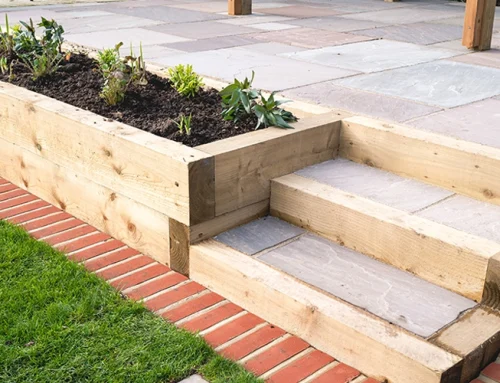
A raised bed or retaining wall built from sleepers is holding back soil, and soil is far heavier than people expect once it is wet. A bed two sleepers high, filled and thoroughly soaked after a week of Lancashire rain, is exerting real outward pressure on the corners and on every joint along its length. A structure that looks perfectly solid when dry and empty will start to bow, and the corners will open, if the joints are not doing their job.
The three failure points are always the same. Corners spread outwards. Stacked courses slide relative to each other. And long straight runs bow outwards in the middle. Each has a corresponding bracket, which is why the range exists in the shape it does.
Angle brackets for corners
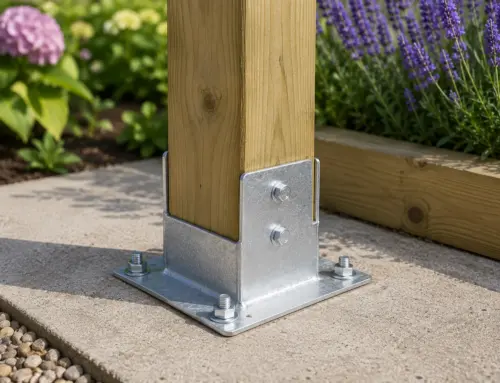
Corners are where the outward pressure concentrates, and an angle bracket fitted on the inside face ties the two sleepers together so they cannot spread. Fitting internally keeps the bracket out of sight and, more importantly, puts it in tension where the load actually is. A corner tied only by screws driven through end grain will loosen over time, because end grain holds a screw far less well than face grain does.
On a bed more than one course high, tie every corner on every course rather than only the top or bottom. The courses do not act as one piece unless they are connected.
Joining plates for running joints
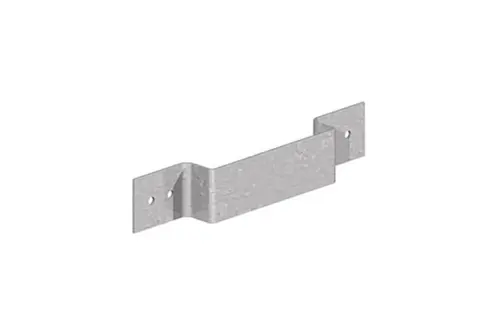
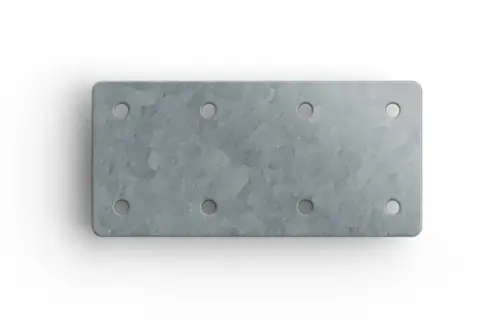
Where two sleepers meet end to end along a run, a joining plate spans the joint and holds them in line. Without one, the joint is the weak point in the run and it will open as the timber moves and the soil pushes. Sleepers move a good deal seasonally, shrinking through a dry August and taking up moisture again through autumn, and an unrestrained butt joint gapes.
Where you can, stagger the joints between courses in the same way brickwork is bonded, so a joint in one course sits over solid timber in the course below. Staggered joints plus plates is considerably stronger than either alone.
Pin brackets for stacking courses
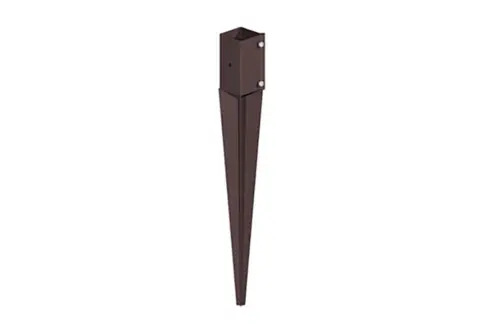
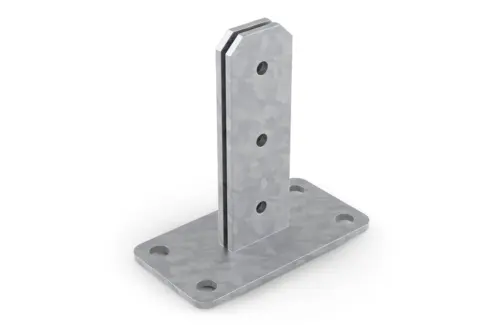
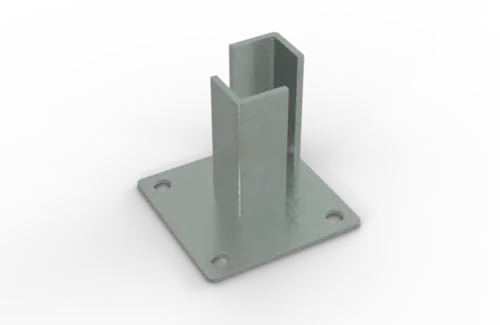
Pin brackets tie one course to the next so the stack behaves as a single wall rather than as loose layers. The straight version handles a run, the corner version handles a corner, and the double versions carry more where the load is higher or the wall is taller. This is the part people most often skip, and it is why so many home-built sleeper walls end up with the top course shunted slightly out of line.
The taller the structure and the wetter the ground behind it, the more this matters. On a genuine retaining situation where there is a change of level, treat pinning between courses as essential rather than optional, and think carefully about drainage behind the wall as well.
Matching brackets to the sleeper you are using
Oak and softwood sleepers behave differently and the brackets need to suit what you are actually building with. Oak is dense, heavy and hard to drive a fixing into without a pilot hole, and it will react with the wrong metals over time, so the fixings you use with it matter. Softwood is easier to work, lighter to handle and considerably cheaper, and the mini sleeper sections are easier again for smaller garden features.
Fixing choice matters as much as bracket choice. Oak in particular reacts with unsuitable metals, and the staining that results runs down the face of the timber and does not wash off. Use fixings intended for exterior use with the timber you have chosen, and use the length the bracket is designed for rather than the nearest thing in the box. A bracket held by fixings that are too short is doing a fraction of the job it was made for, and you will not be able to tell by looking at it.
Whichever you use, drill pilot holes rather than driving fixings dry. A sleeper split along its length by an over-driven screw is a wasted sleeper, and they are not light enough to be casual about.
Planning a project and ordering the ironmongery
The most common ordering mistake is buying the timber and forgetting the brackets entirely, then discovering on a Saturday afternoon that the corners cannot be fixed. Work out the corner count, the running joint count and the number of course-to-course connections before ordering, and put the brackets on the same delivery as the sleepers.
Customers building raised beds and low walls around Barrowford fencing and over towards Barrow fencing generally take sleepers, brackets and fixings together, which also means the whole order usually clears the free delivery threshold on its own.
The brackets sit in our fixings and accessories range and pair with the timber sleepers section and the wider timber range.
If you are planning a bed or a low wall and are not sure which brackets the design needs, ring 01200 449930 and describe the shape and height. Delivery is free on orders over £150 across all BB postcode areas, and sleepers are heavy enough that this is worth having.