
Firelighters compared side by side is a smaller subject than it sounds, but it makes a disproportionate difference to how easily a fire gets going. Most people buy whatever is nearest the till and then blame the logs when the fire will not take. As a supplier of fencing and timber supplies in Clitheroe stocking both firewood and firelighters, we see the whole chain from lighting to burn.
What a Firelighter Is Doing
A firelighter has one job, which is to burn steadily for long enough to get kindling properly alight. It is not there to light the logs. Anyone trying to light a log directly from a firelighter is asking it to do something it cannot do, and the fire will fail every time.
The sequence is firelighter to kindling, kindling to small logs, small logs to larger ones. Skip a stage and you end up relighting.
The Two We Stock
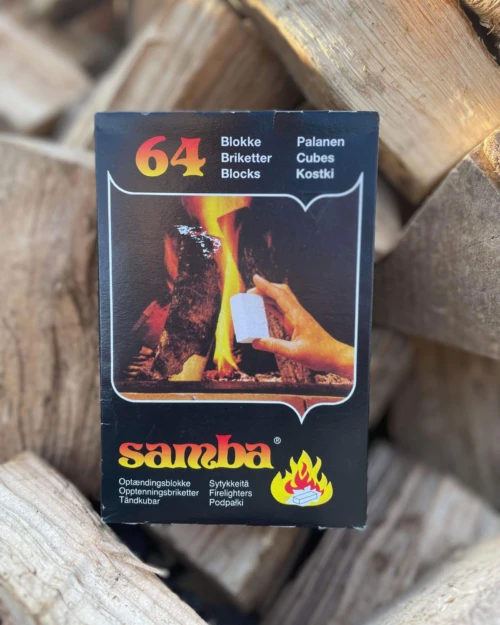
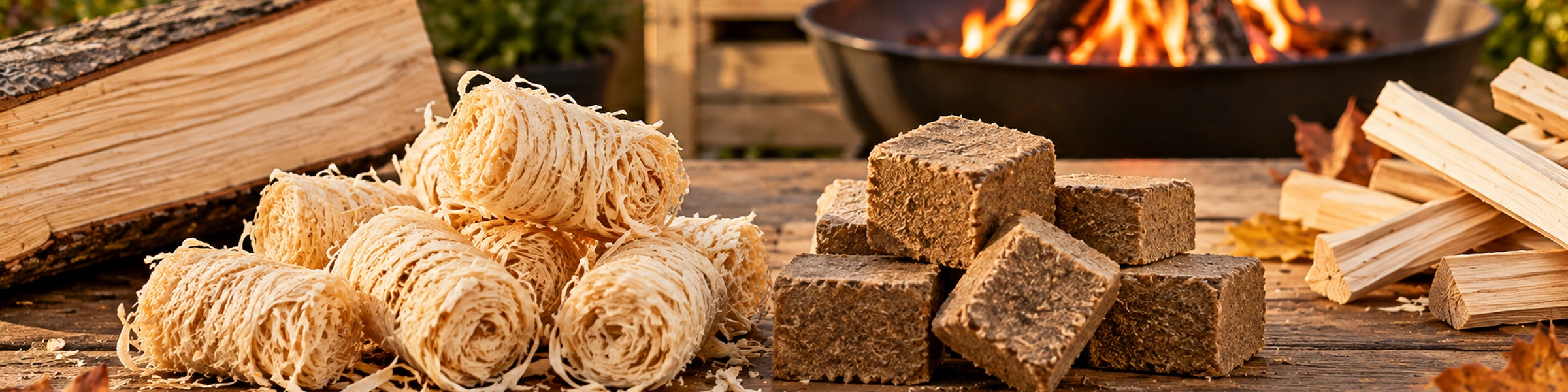
Our Samba firelighters are a conventional block type, broken into cubes and used the way most people are familiar with. They are straightforward, reliable and inexpensive per fire.
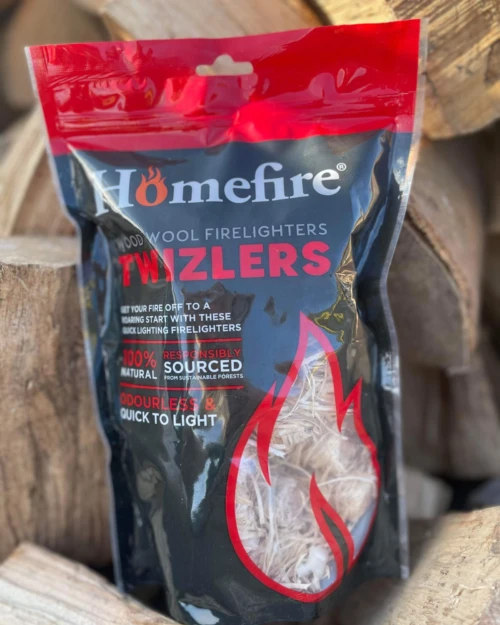
The Homefire Twizlers fire lighters are a wood wool and wax type, twisted into a shape that holds air within it. That structure is the point, because a firelighter with air around it burns better than one lying flat.
Which Suits Which Fire
For a stove with a decent draught, either works well. The stove does much of the work for you once the door is closed and the air controls are open, and a single firelighter with adequate kindling is usually enough.
For an open fire, and particularly a cold flue that has not been used since spring, the wood wool type generally has the edge. It burns longer and holds its shape, which matters when the chimney is still cold and the draught has not established.
How Many to Use
One is enough more often than people think, provided the kindling is right. The instinct after a failed attempt is to add three or four more, which produces a brief impressive flame and no lasting result, because the problem was never the firelighter.
If a fire consistently needs several, the issue is almost always damp kindling, too little kindling, logs that are too large for the early stage, or a flue that has not warmed. Fixing any of those does more than adding firelighters.
Kindling Is the Real Variable
Firelighters get blamed for what is usually a kindling problem. Kindling needs to be genuinely dry, split small, and used in enough quantity to build a proper bed of flame before any log goes on.
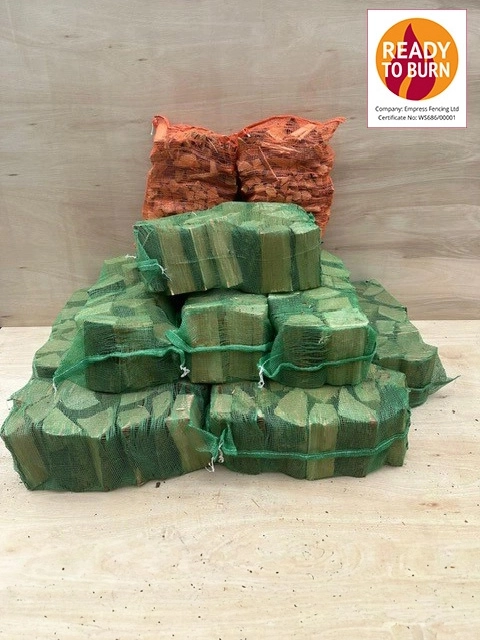
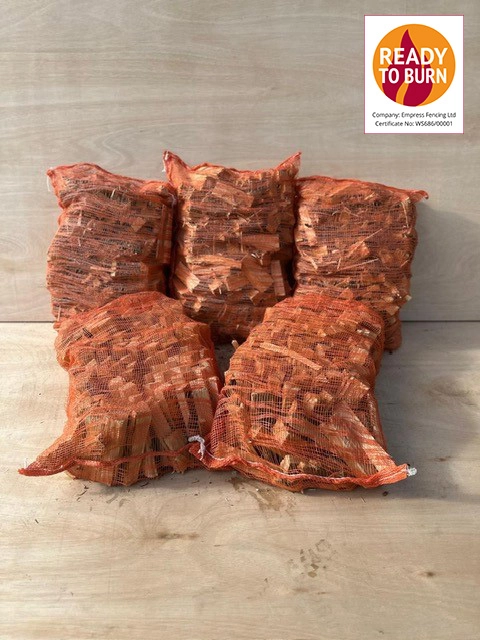
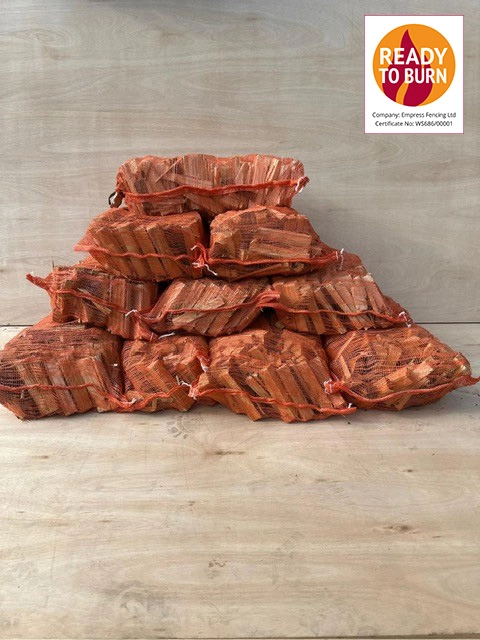
Most people use roughly half what they should. A generous handful, stacked with air gaps rather than piled flat, transforms how reliably a fire lights. Our 10 nets of kindling works out considerably better value than buying single nets for anyone burning regularly through the season.
Storage Affects Performance
Firelighters absorb moisture from the air over time, particularly in a damp garage or an unheated outbuilding. A packet left open through a wet autumn lights noticeably less readily by December.
Keep them sealed and indoors. They take up almost no space, and the difference on a cold morning is worth the shelf.
What About Newspaper
Newspaper works, and generations managed perfectly well with it. It burns very fast and leaves a lot of light ash that can lift into the flue, and modern papers with heavy ink and gloss are less suitable than the newsprint people remember.
It is a reasonable backup rather than a first choice. If you are using paper regularly, twist it tightly rather than screwing it into loose balls, because tightly twisted paper burns for longer.
The First Fire of the Season
The hardest fire of the year is the first one, because the flue is cold and everything in the room is working against the draught. That is the occasion to be generous with kindling and patient with the process.
Customers ordering logs for sale Clitheroe in early autumn often add kindling and firelighters at the same time for exactly this reason. Full details of everything available are in our logs for sale range.
Storing a Season’s Supply of Lighting Materials
It is worth thinking about firelighters and kindling as a season’s supply rather than a weekly purchase, in the same way you would with logs. Running out of either on a cold Sunday evening is the sort of small annoyance that makes a stove feel like hard work rather than a pleasure. Buying enough in early autumn to cover the whole winter costs very little, takes up almost no room, and removes the problem entirely. Keep them somewhere dry, sealed and indoors, well away from the main log stack, since anything stored in a damp outbuilding gradually loses its effectiveness. A shelf in a utility room or a cupboard by the back door is ideal, and having everything in one place makes lighting the fire a two minute job rather than a search.
For advice on what to keep in stock for the season, call us on 01200 449930. We supply firewood, kindling and firelighters from Clitheroe with free delivery on orders over £150 across all BB postcode areas.