
Wood ash disposal is the least glamorous part of running a stove and one of the few jobs that genuinely affects how well the fire performs. Get it wrong in either direction, clearing too much or too little, and the stove works harder for less heat. As a supplier of fencing and timber supplies in Clitheroe selling firewood throughout the Ribble Valley, we get asked about this far more often in the first month of the season than at any other time.
Why You Should Not Clear It All Out
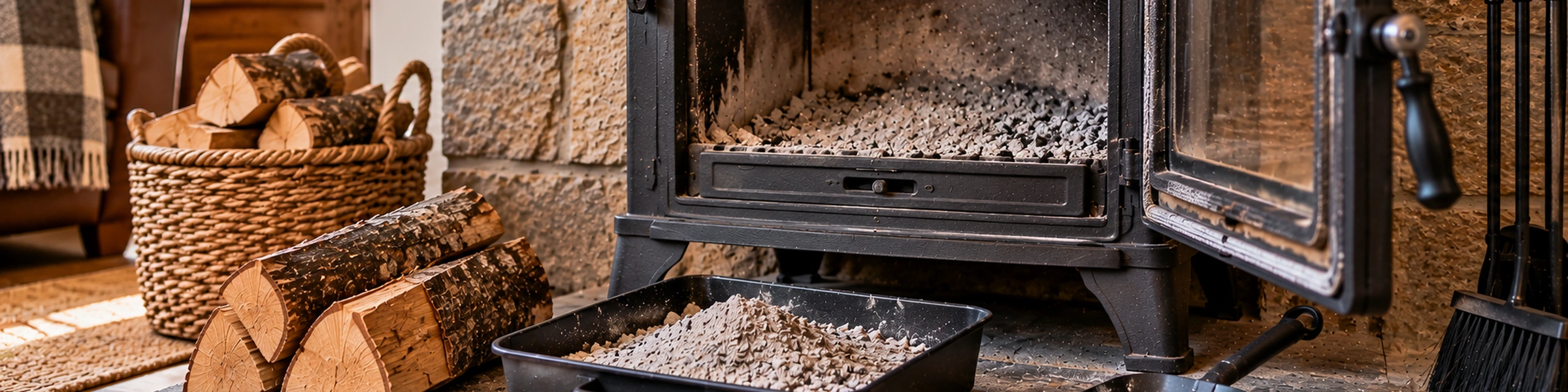
The instinct is to empty the firebox completely every morning. For a wood burning stove that is usually a mistake. A bed of ash roughly twenty to thirty millimetres deep insulates the base of the firebox, holds heat between fires, and gives new logs something warm to sit on.
Wood burns best from above and from the sides rather than from underneath, which is why wood stoves are designed differently from coal ones. Coal needs air from below and a clear grate. Wood does not, and stripping the bed back to bare metal every day makes the fire slower to establish and cooler to run.
What Does Need Clearing
Excess is the enemy. Once the bed is deep enough to reach the bottom of the door opening or to obstruct the air inlets, it needs reducing. Ash spilling out when the door opens is the obvious sign.
If your stove has an ash pan beneath a grate, that pan does want emptying regularly. A full pan blocks airflow through the grate, and restricted air produces a cooler, dirtier burn with all the problems that follow from it.
Wait Until It Is Cold
Ash holds heat for a remarkably long time. Embers can stay live in a settled bed for more than a day, and every winter brings stories of bins and sheds set alight by ash that felt cold on the surface.
Leave it a full day at minimum, and empty into a metal container with a lid, never a plastic bin or a cardboard box. Keep that container away from the house, the fence line and anything else that will burn. This is genuinely the part of the job where care matters.
Ash in the Garden
Wood ash from untreated logs is a useful garden material. It is alkaline and contains potassium, which suits fruit bushes, roses and anything grown for flower or fruit rather than leaf.
Use it sparingly and spread it thinly. Heavy applications raise soil pH sharply, and much of the Ribble Valley already sits on ground that does not need help in that direction. Keep it away from acid loving plants such as blueberries, rhododendrons and azaleas entirely.
What Not to Spread
Only ash from clean, untreated wood should go anywhere near growing ground. Ash from treated timber, painted wood, manufactured boards or household waste contains residues that have no place in a vegetable bed.
This is another reason to keep firewood and project offcuts separate. Timber intended for outdoor construction, such as the material we supply through our timber boards range, is treated to resist decay and is not fuel.
Other Practical Uses
Wood ash is a mild abrasive and cleans stove glass better than most proprietary products. A damp cloth dipped in fine ash lifts deposits without scratching, which is why it remains the standard method.
It also gives grip on icy paths, and it draws moisture, which makes it useful in a damp outbuilding. None of this is a reason to generate more of it than you need, but it is worth knowing.
How Much Ash Is Normal
Clean, dry hardwood produces relatively little ash for the heat it gives. If you are clearing large quantities relative to the wood you are burning, that usually points to fuel quality, because bark, dirt and poorly seasoned wood all leave more residue behind.
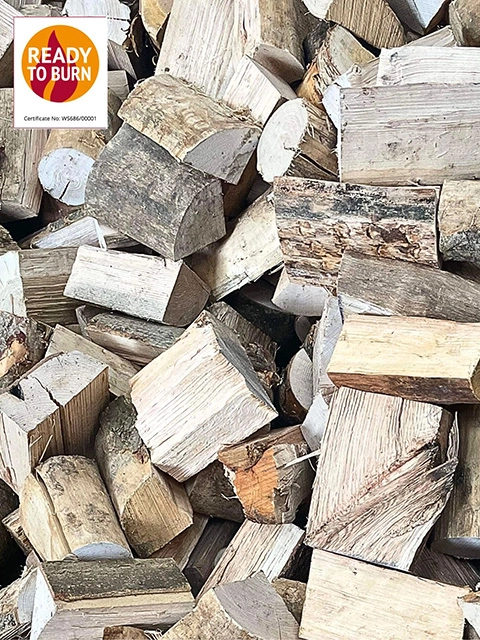
Kiln dried logs supplied at under twenty per cent moisture burn more completely and leave less behind. Customers who switch to our kiln dried logs delivered from mixed or homemade wood usually notice the reduction within a fortnight.
A Simple Routine
Level the bed rather than emptying it, take out the excess every few days, empty the pan when it fills, and keep a lidded metal bin outside for the ash to cool in properly. Ten minutes a week keeps a stove running at its best.
Ash Volume and What It Tells You
It is worth paying attention to how much ash a delivery produces relative to the heat you get from it. Consistently heavy ash from a modest amount of wood usually points to bark content, dirt picked up from poor storage, or wood that was never properly dried in the first place. Clean kiln dried hardwood burns close to completely, and the residue should be fine, pale and light rather than coarse and dark. Coarse dark ash with unburnt fragments in it generally means the fire is running too cool, which brings you back to airflow and moisture content. Treating the ash pan as a source of information rather than just a chore tells you a surprising amount about how well the whole system is working.
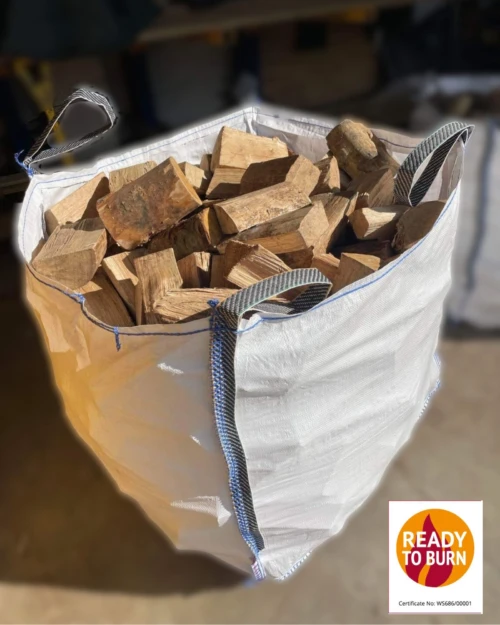
To order firewood for the season, call us on 01200 449930. We supply certified Ready to Burn logs from Clitheroe with free delivery on orders over £150 across all BB postcode areas.