

Leaves against fence panels look harmless, but a wet drift can quietly shorten the life of your fence. Every October and November, leaves pile up along the bottom of boundaries across the Ribble Valley. At Empress Fencing, we supply fencing and timber supplies in Clitheroe, and we see the results of neglected leaf drifts every spring. This guide explains why the leaves matter and how a simple clearing routine protects your panels.
What Wet Leaves Do to the Bottom of a Fence
Timber copes well with rain that falls and runs off. The trouble starts when water has nowhere to go. Wet leaves against fence panels act like a blanket pressed against the lowest boards.
How Leaves Against Fence Panels Keep Timber Wet
Fallen leaves hold a surprising amount of water. Once they settle against a panel, they stay damp long after the rain stops. As a result, the bottom rail and the lower edges of the boards never get a chance to dry.
Wind makes the problem worse. Gusts push leaves into corners, against posts and along the base of a run. Consequently, the same few metres of fence collect a deep drift every year.
Moreover, rotting leaves break down into a soil-like mulch. That mulch creeps up the face of the panel over time. Before long, the timber is effectively sitting in damp earth.
Why Feather Edge and Waney Lap Panels Suffer Differently
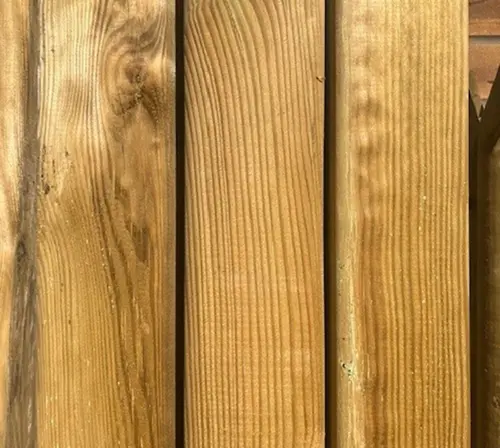
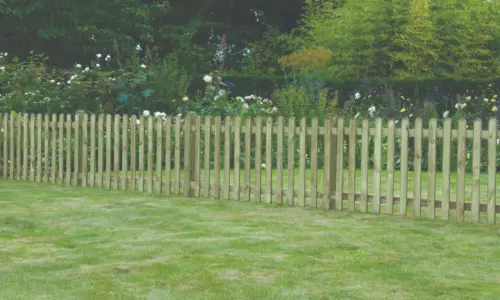
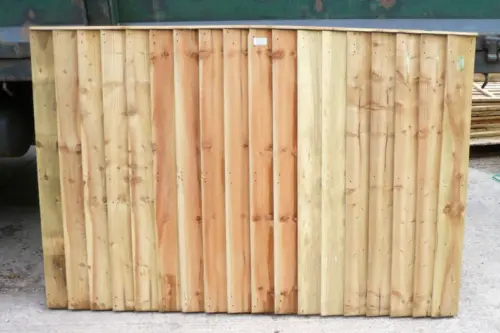
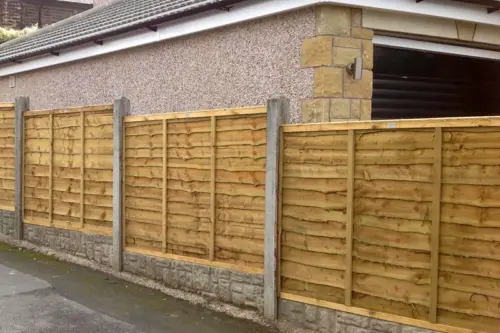
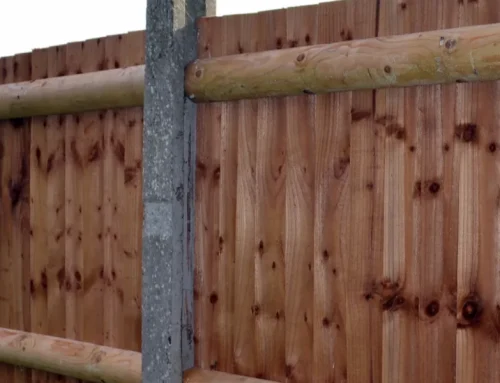
A 6ft feather edge fence panel has vertical boards that meet a horizontal rail near the base. Leaves gather on top of that rail and against the board ends. Since end grain soaks up water quickly, this is often where softening begins.
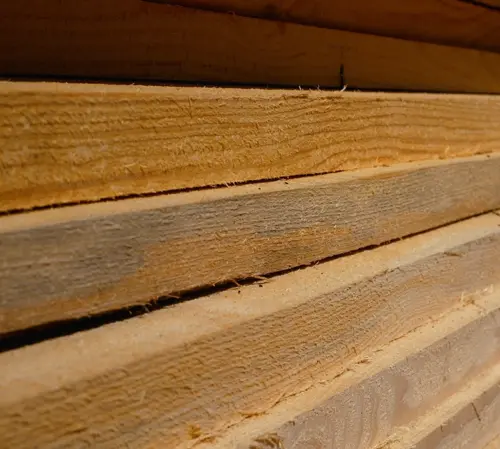
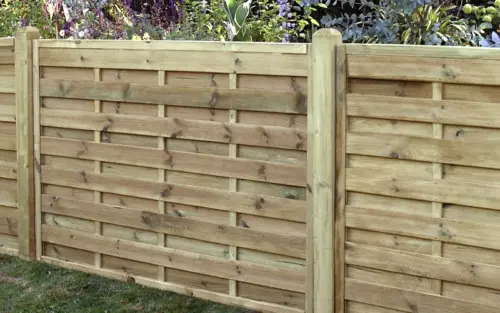
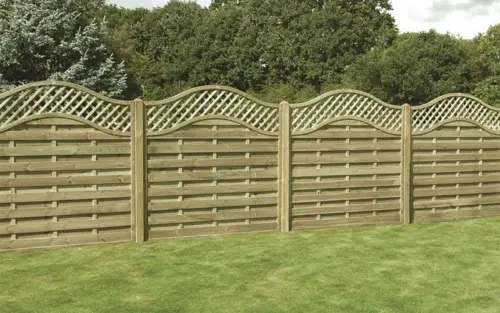
By contrast, a 6ft waney lap fence panel uses overlapping horizontal boards. Leaves wedge into the small ledges where each board overlaps the next. Therefore, the lowest two or three boards stay damp right through a wet spell.
Both panel types are pressure-treated softwood. Treatment helps a great deal. However, leaves against fence panels can still keep treated timber wet for weeks on end.
Clearing Leaves Against Fence Panels Through October and November
The answer to leaves against fence panels is a regular routine rather than one big clear-up. Ideally, rake along the fence line every week or two while the trees are dropping. A leaf rake or a stiff brush works well on paths and gravel.
Pay most attention to corners and the lee side of the fence. In addition, check behind sheds, bins and planters, because leaves hide there unnoticed. A ten-minute sweep after each windy night makes a real difference by the end of November.
Don’t pile the cleared leaves back against the boundary. Instead, move them to a compost bin or leaf cage well away from the timber. Otherwise, you have simply moved the drift a few feet along.
Leaf blowers help on long boundaries, but use them with care. Blow leaves away from the fence line rather than along it. Otherwise, the drift just gathers again at the next post or corner.
Gutters, Hedges and Trees That Feed the Drift
Sometimes leaves against fence panels come from above rather than across the lawn. Overflowing gutters on a garage or shed can spill wet leaves straight onto a fence. So, clear nearby gutters at the same time as the fence line.
Hedges planted tight to a fence are another common source. Beech and hawthorn hedges drop leaves into the gap behind the panels. That narrow gap is hard to rake, so it stays wet for months.
Mature trees in a neighbour’s garden can be the biggest culprit. In leafy parts of Clitheroe and Whalley, a single sycamore can bury a fence line in a week. Our pages on Clitheroe fencing and Whalley fencing cover local boundaries in more detail.
Lifting Panels Clear With Gravel Boards
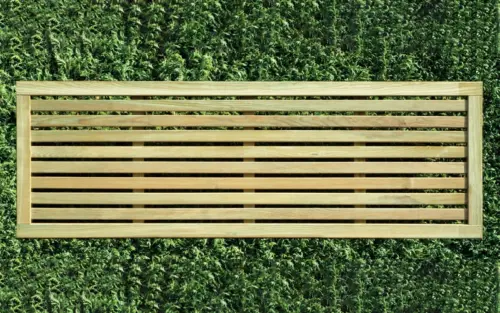
A gravel board sits beneath the panel and keeps it off the ground. As a result, leaves and soil build up against the board rather than the panel itself. The board takes the wet, and the panel above stays drier.
For example, the Durapost system includes a 150mm x 50mm gravel board. It fits between the steel posts and carries the panel above ground level. Furthermore, steel posts won’t rot where the leaves gather at their base.
If you are planning a new run, it is worth leaving a small gap between the lowest timber and the soil. That gap lets air move along the bottom edge. Consequently, the timber dries out faster after every downpour.
Checking for Soft Timber Once the Leaves Are Cleared
Clearing leaves against fence panels is the perfect moment to inspect the fence. Press a screwdriver gently into the bottom rail and the lower board ends. Sound timber resists, whereas rotten timber gives way easily.
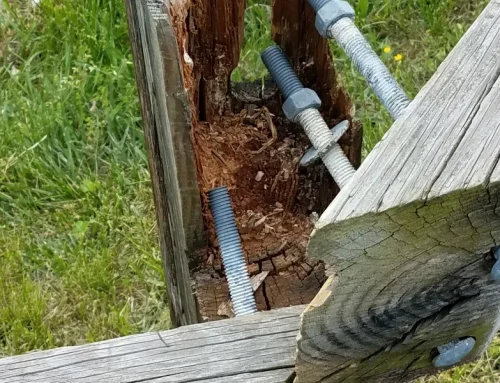
Also look closely at the posts where leaves have been sitting. Dark staining, soft patches or green growth are early warning signs. Our guide on what causes fence posts to rot explains what to look for next.
If one panel has softened badly, replacing it before winter often saves the panels either side. Our range of traditional fence panels includes feather edge and waney lap styles to match most existing runs.
Building Autumn Clearing Into Your Routine
Clearing leaves against fence panels works best as part of a wider autumn check. Look at fixings, panel clips and post tops at the same time. In addition, trim back any plants leaning on the boards.
Our guide to preparing a fence for autumn covers the rest of the list. Taken together, these small jobs keep a fence sound through a long, wet Lancashire winter.
Need a replacement panel, post or gravel board before winter sets in? Call Empress Fencing on 01200 449930 or visit the yard in Clitheroe. Delivery is free on orders over £150 across all BB postcode areas, and collection from Clitheroe is available too.