
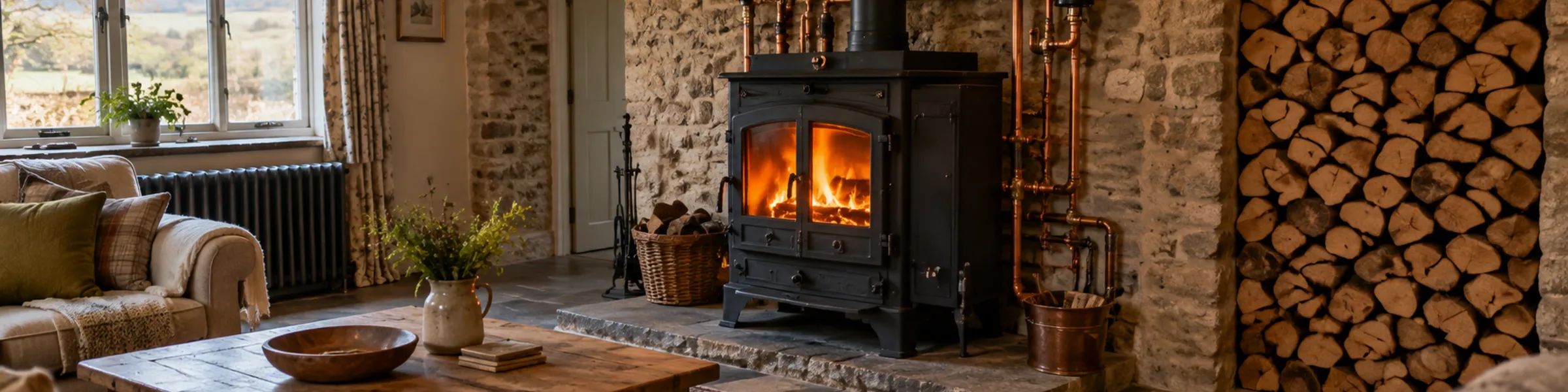
Choosing logs for a back boiler stove takes a little more thought than buying fuel for an ordinary wood burner. As a supplier of fencing and timber supplies in Clitheroe, we deliver firewood to many rural homes that rely on a boiler stove. In those houses, the fire heats the water and the radiators as well as the room. So the quality and quantity of fuel really matter.
How a Boiler Stove Uses Its Heat
A boiler stove has a water jacket or boiler behind or around the firebox. Water circulates through it and carries heat away to the cylinder and radiators. That is excellent for warming a whole house. However, it also means the firebox runs cooler than in a standard stove.
The boiler constantly pulls heat out of the fire. As a result, the flames and flue gases lose temperature faster. That cooler environment changes how logs for a back boiler stove behave. Therefore, logs that would burn adequately in a room stove can struggle in a boiler stove.
Why Wet Wood Causes Tar
Burning wet logs uses energy to boil off the water before the wood itself burns. In a boiler stove, that energy is already in short supply. Consequently, the fire smoulders instead of burning cleanly. The smoke contains unburnt gases and moisture.
Those gases then meet the cool boiler surfaces and the flue. There they condense into a sticky black tar called creosote. Tar coats the boiler, reducing how much heat reaches your water. Even worse, it builds up in the chimney and raises the risk of a chimney fire. Our guide on what happens if you burn wet logs explains the problem in more detail.
The Right Logs for a Back Boiler Stove
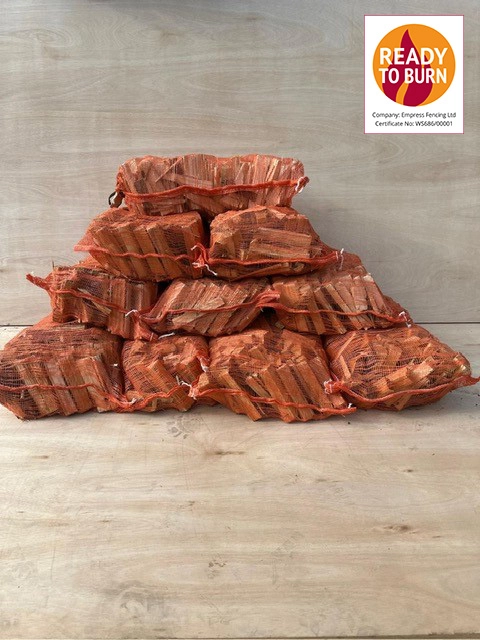
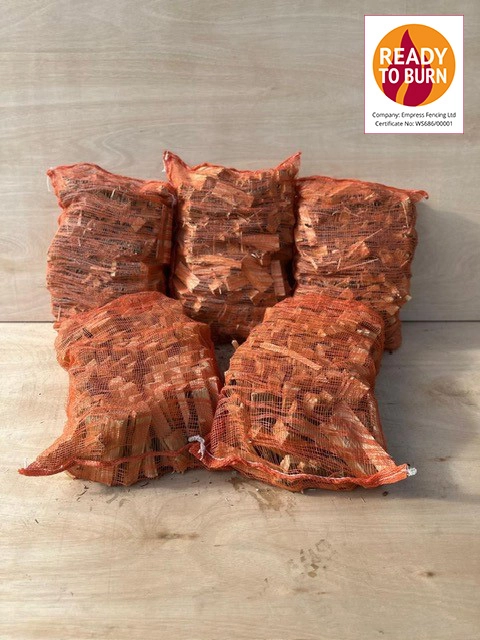
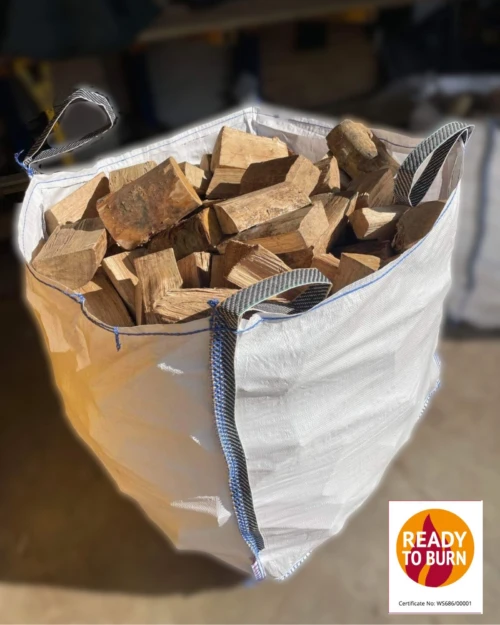
Dry wood is the single most important factor in logs for a back boiler stove. Our firewood is kiln dried to under 20% moisture content. It is also Ready to Burn certified logs, so the moisture level is checked and registered. That gives a boiler stove the hot, clean burn it needs.
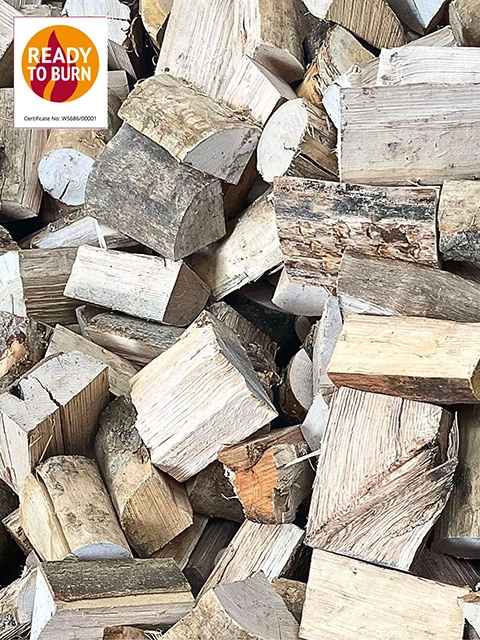
Hardwood is usually the best choice for steady heat. Our hardwood mix may include oak, ash, beech, birch, sycamore, alder and hornbeam. Denser species burn longer, while lighter ones catch quickly. The mix cannot be specified, but it works well across a full day of burning.
Size matters too. Our logs are cut on average to 8 inches long, with a maximum diameter of 6 inches. That suits most boiler stove fireboxes. Even so, measure your firebox depth before ordering.
Steady Loading Beats a Big Blaze
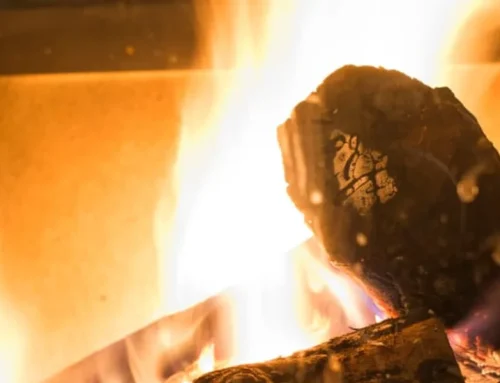
Logs for a back boiler stove work best with regular, moderate loading. Two or three logs on a hot bed of embers keep the firebox temperature up. By contrast, cramming the stove full drops the temperature sharply. That brings back the smouldering and tar problem.
Many owners find a rhythm through the day. A morning load heats the water for showers. Then smaller top ups keep the radiators warm through the afternoon and evening. Good kindling helps relight quickly after the stove goes out overnight.
How Many Logs for a Back Boiler Stove You Will Need
Boiler stoves get through considerably more wood than a room stove. After all, they are heating the whole house and the hot water. During a cold spell, a busy household may burn the stove from breakfast until bedtime. That adds up quickly.
For that reason, most people buying logs for a back boiler stove order 1m3 hardwood logs rather than smaller bags. A cubic metre load is tipped loose on your drive. You then move it into store yourself. Our article on firewood for a farmhouse looks at volumes for off-gas homes in more depth.
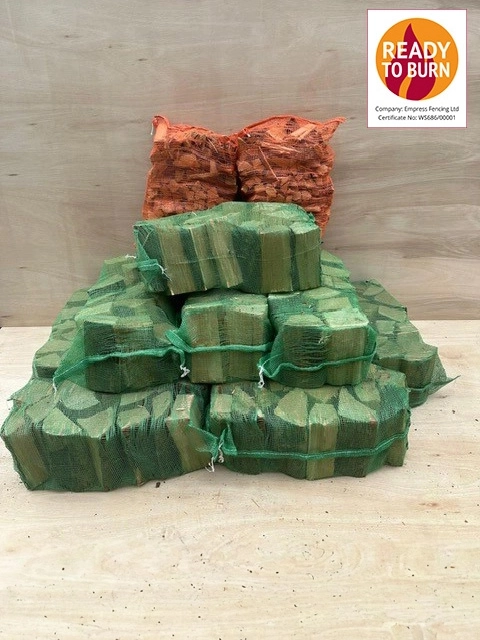
If access is tight, a builders bag of logs is an alternative. Each bag is roughly 85cm on every side. It is slid off the back of the vehicle onto your drive.
Ordering Ahead of the Cold
Running a boiler stove means you cannot afford to run out. Therefore, keep at least a few weeks of logs for a back boiler stove in store at all times. Reorder when the store is around a third full, not when it is nearly empty. That way, a busy week or a spell of snow never leaves you short.
In addition, think about where the next load will go. A fresh tipped load needs space on the drive and room in the store. So plan your stacking before the delivery arrives. Add any access notes in the order comments box.
Storing Logs Near the House
When the stove is your heating, you will fetch logs several times a day. So keep your store close to the back door. A short, sheltered walk is far better than a trip across a muddy yard. In winter, that makes a big difference.
Use a store with a solid roof and slatted sides. Raise the logs off the ground and leave gaps for air. Keep a few days’ supply in a covered spot right beside the door. However, avoid stacking large quantities indoors.
Rural Homes in Slaidburn and Rimington
Many homes in the Forest of Bowland and around Pendle have no mains gas. Slaidburn and Rimington are typical examples. In those villages, a boiler stove is often the main source of heat and hot water. Running short in January is simply not an option.
We deliver throughout those areas. Local details are on our logs for sale Slaidburn and logs for sale Rimington pages. We aim to deliver within 5 working days, and we phone ahead with your day. Please note that our driver cannot stack logs in your store or lift them over walls.
Keeping the System Healthy
Dry fuel protects the boiler as well as the chimney. Even so, have the flue swept regularly through the heating season. Boiler stoves often benefit from a sweep more than once a year. A HETAS registered engineer can advise on the right schedule for your setup.
Need a steady supply of dry hardwood for your boiler stove? Call us on 01200 449930 to order or discuss quantities. We offer free delivery on orders over £150 across all BB postcode areas. Collection from our Clitheroe yard is also available.