
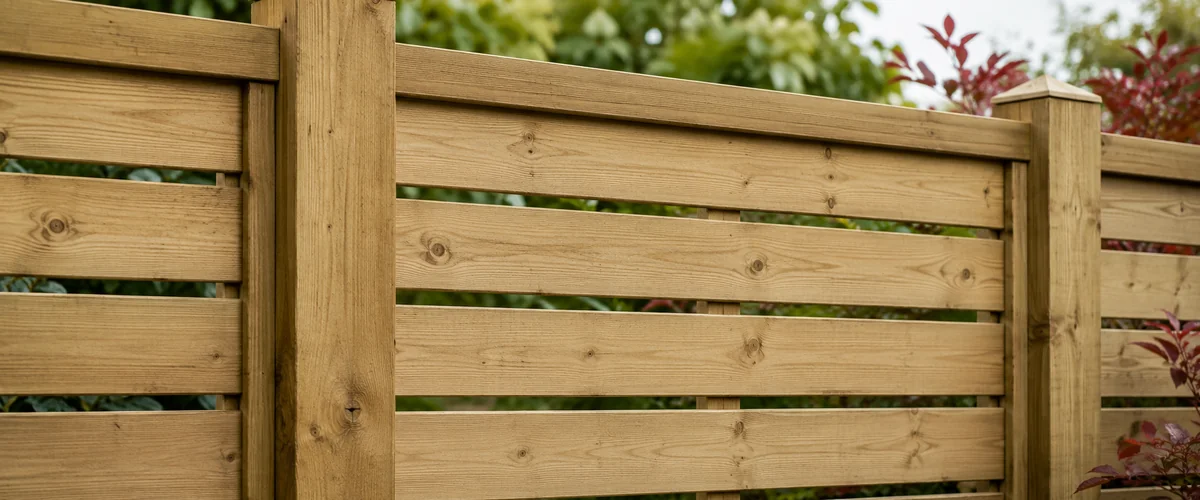
Timber shrinkage is behind a large proportion of the calls we take in a dry August, and almost none of them are actually about a fault. The pattern is consistent. A fence goes up in spring, looks perfect, and by the middle of a hot summer there are gaps between boards that were not there before, a gate has developed clearance around it, and the owner is convinced something has gone wrong. Nothing has. It is timber doing what timber has always done. We supply fencing and timber supplies in Clitheroe all year round and this is the most common seasonal question we get.
What is happening inside the wood
Timber is hygroscopic, meaning it exchanges moisture with the air around it continuously. When the air is humid the wood takes moisture up and swells. When the air is dry it gives moisture back and shrinks. This never stops for the life of the timber.
The moisture content of wood in an outdoor British setting varies substantially through the year, and it follows the seasons with a lag. Wood is at its wettest and largest towards the end of winter, and at its driest and smallest at the end of a hot dry spell in summer. A run of genuinely warm dry weeks in August will bring timber down to a moisture content it has not seen since the previous summer.
The movement is not equal in all directions. Timber moves very little along its length, which is why a fence rail does not get shorter. It moves considerably more across the width of a board. That is precisely why gaps open up between boards on a fence or gate while the overall structure stays the same size.
Where you notice it most
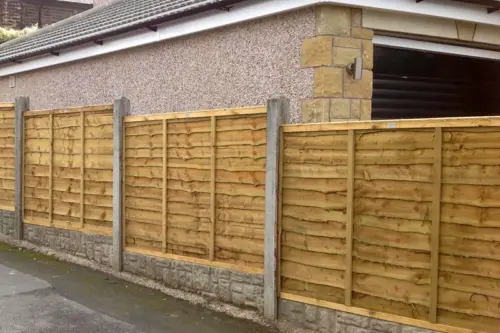
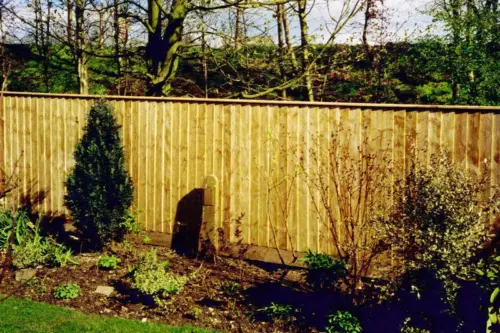
Feather edge and closeboard fencing shows it clearly. Boards are fixed at one edge and overlap the next, and the overlap is designed to accommodate movement. In a dry summer the boards narrow and the overlap reduces, so light comes through where it did not before. Come the wet autumn the boards take up moisture, widen, and the gaps close again.
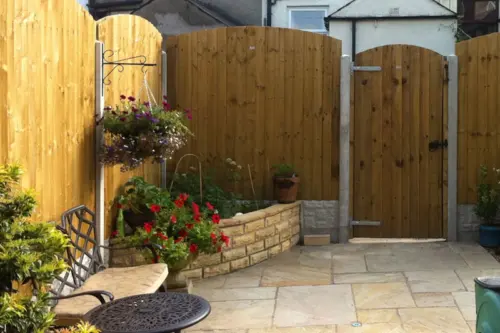
Tongue and groove gates are the other classic. The joint is designed with a tolerance so boards can move without forcing each other apart, and in a dry spell that tolerance shows as a visible line. That is the joint working correctly. A gate built with no tolerance at all would push itself apart in winter.
You may also see checks, which are fine splits running along the grain, particularly on larger sections such as posts and sleepers. Surface checking on a post is normal and does not compromise its strength.
Why gates behave differently in summer
A gate is the one part of a boundary where the movement has an immediate practical effect. A gate that was fitted with a snug clearance in cold damp conditions will develop noticeable clearance in a dry August. A gate fitted tight in a dry August will very likely bind by December.
This is why gates should be hung with a clearance that accounts for movement in both directions rather than fitted to the closest possible tolerance on the day. Fitting a gate on the tightest possible clearance in summer is one of the most common reasons for a gate that will not close in winter.
When it is normal and when it is not
Normal is gaps that open in dry weather and close again when the weather turns. Normal is fine surface checking on posts and sleepers. Normal is a slight change in how a gate sits between seasons.
Worth investigating is a split that runs right through a board rather than partway into the surface, a joint that has opened and does not close when the weather turns, or movement that is progressive year on year rather than seasonal. Also worth investigating is any board that has cupped or twisted significantly rather than simply narrowed, which usually means one face has been drying much faster than the other.
That last point is a useful clue. Timber sealed or treated on one face only will dry unevenly and distort. Treating every face, including the back and the ends, is the best insurance against distortion as well as against rot.
What actually reduces it
You cannot stop timber moving, but you can slow the rate. A water-repellent treatment does not seal timber permanently, but it slows the exchange, and slower exchange means less dramatic swings and less stress at the joints.
Treating all surfaces matters more than treating one surface heavily. Treating cut ends matters most of all, since end grain absorbs and releases moisture far faster than a face does.
Buying properly treated timber to begin with helps, as does allowing new timber a little time on site before final fixing where the job permits.
Customers with new fences around Hurst Green fencing and out towards Bashall Eaves fencing often ring in their first summer having noticed gaps, and in the great majority of cases the answer is to wait for the weather to turn.
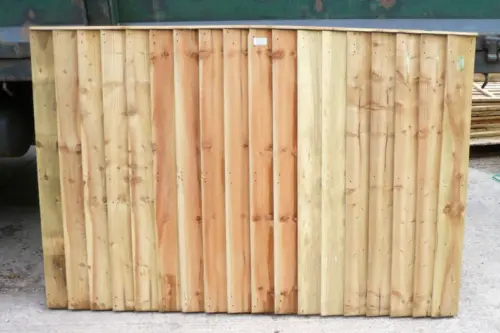
Our timber types page explains the treatment options, with the 6ft fence panels, traditional garden gates and timber boards ranges alongside.
If you are unsure whether what you are seeing is seasonal movement or a genuine problem, ring 01200 449930 and describe it. Delivery is free on orders over £150 across all BB postcode areas.