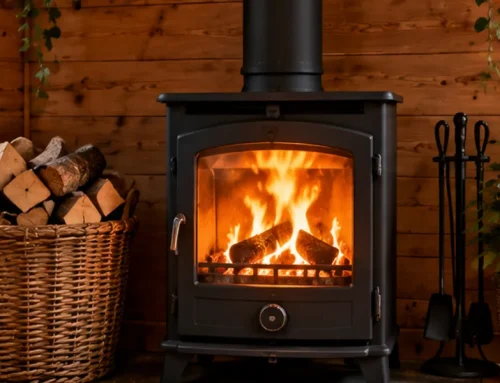

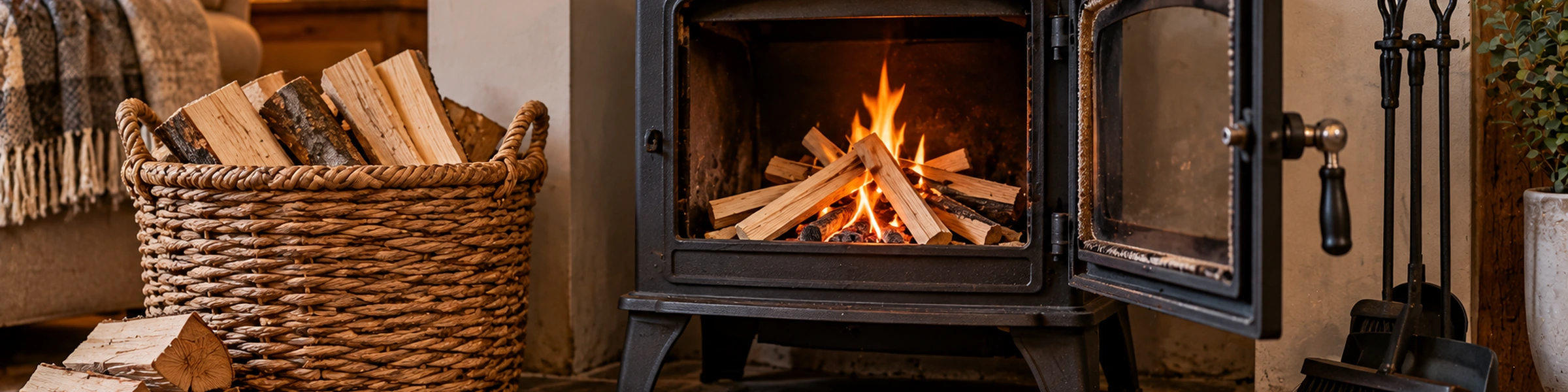
The first fire of the season rarely goes as smoothly as people expect, and it catches out experienced stove owners as reliably as new ones. A stove that behaved perfectly in March will sulk in October, and almost none of that is down to the fuel. As a supplier of fencing and timber supplies in Clitheroe selling firewood across the Ribble Valley, we field a great many calls in autumn from people convinced there is something wrong with their logs.
Why the First Fire Is the Difficult One
A chimney works on temperature difference. Warm air inside the flue rises, and that rising air pulls the fire along. After a summer of disuse, the flue is cold, the masonry around it is cold, and the column of air sitting in it is dense and static.
Lighting a fire into that is like pushing a heavy door. Once the flue warms, everything works normally. Getting to that point takes more kindling, more patience and a bit of understanding of what is happening.
Warming the Flue First
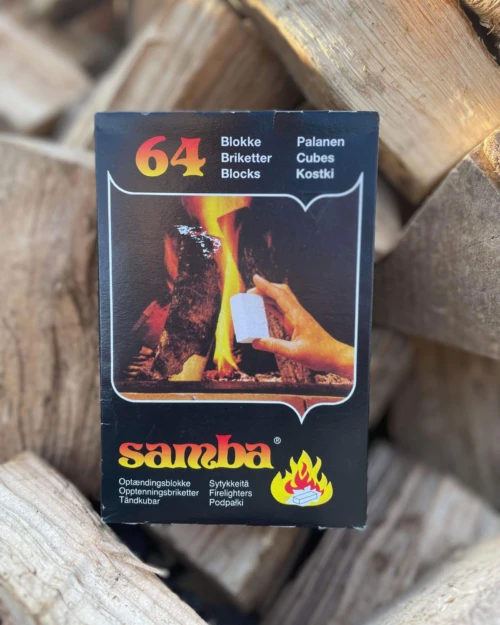
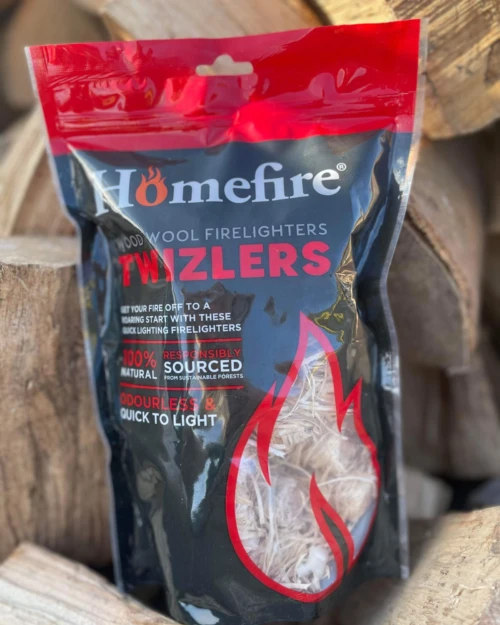
The oldest trick is still the best one. Before lighting properly, burn a small amount of tightly twisted paper or a single firelighter high in the firebox, close to the flue entrance, to start the air moving upwards. A minute or two of that establishes a draught, and the main fire then lights normally.
You can usually feel when it has worked. Air begins moving into the stove rather than sitting still, and smoke from a match drifts upwards instead of hanging.
Check the Stove Before You Light It
Empty the ash pan properly. A pan left full since spring restricts airflow through the grate, and airflow is exactly what a cold start needs. Check the air controls move freely, because linkages seize over a damp summer.
Look at the door rope seal. If it has flattened or come away in places the stove will not control air properly, which affects both lighting and burn quality. It is a cheap thing to replace and it makes a substantial difference.
The Chimney Sweep Question
Autumn, before the season starts, is the right time. A flue that has been unused all summer can have nests, debris or accumulated deposits, and finding that out on the first cold evening is not ideal.
Sweeping also removes the previous season’s creosote, which forms faster when wood has been burned damp. If the fire smoked at the end of last winter, sweeping before restarting is not optional.
Start With the Right Fuel
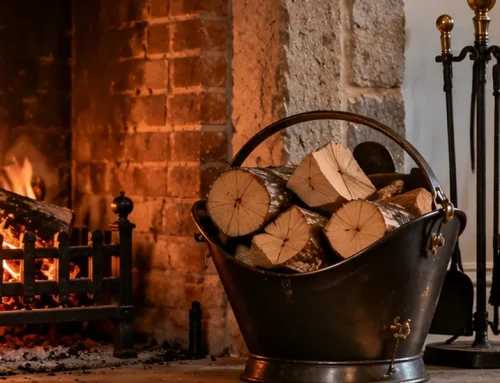
The first fire is not the occasion for large hardwood logs. Softwood, split small, catches far more readily against a cold flue and builds heat quickly, which is exactly what is needed to establish the draught.
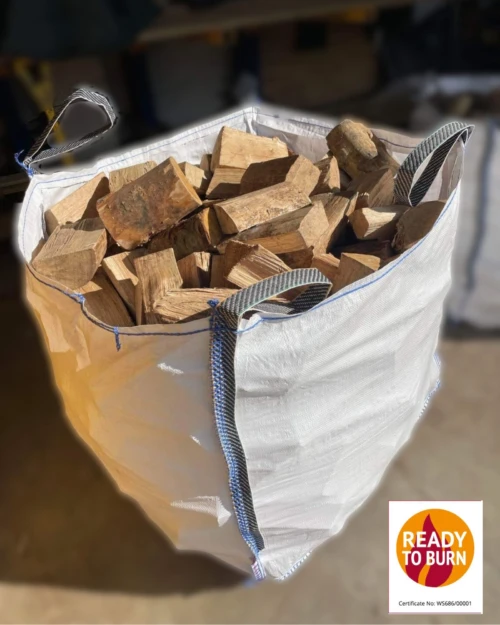
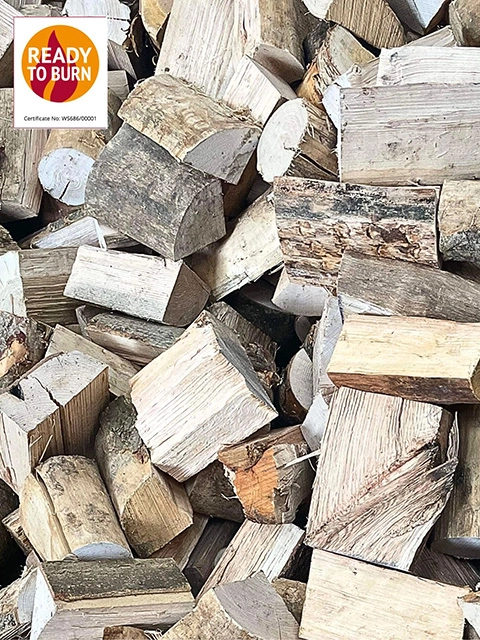
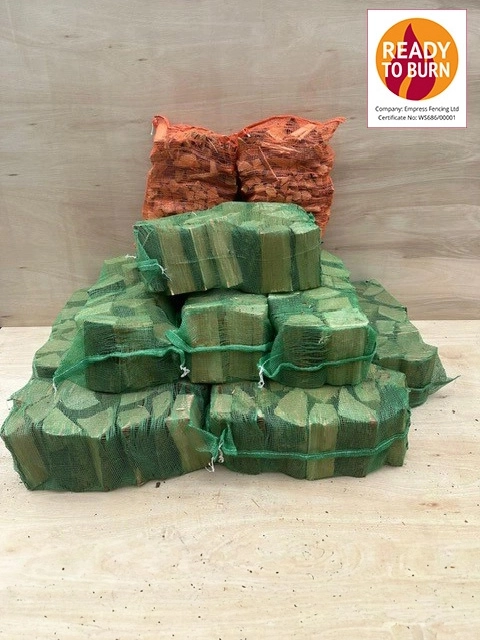
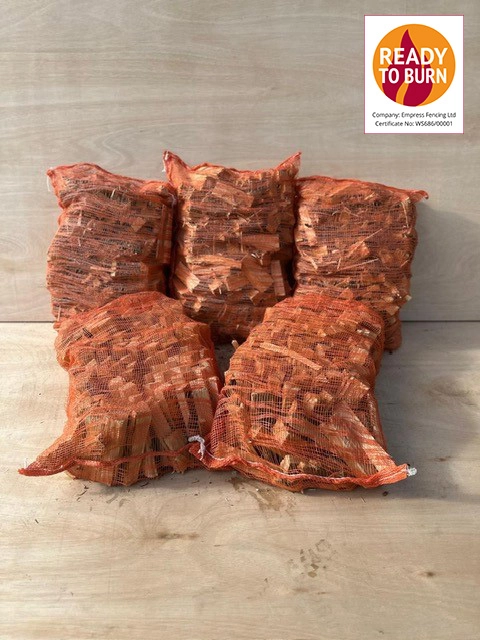
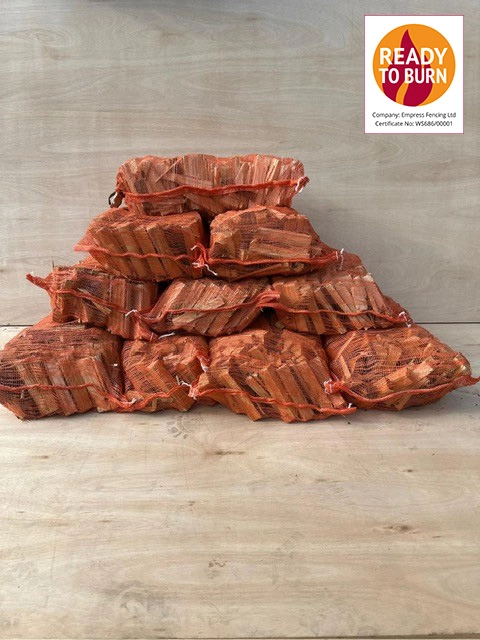
Once the stove is hot and the chimney is drawing, switching to hardwood for a longer burn makes sense. Our kiln dried logs delivered range covers both, and having some of each at the start of the season is genuinely useful rather than an upsell.
Expect Some Smell
The first burn of the year usually produces a noticeable smell as dust, and any residue on the stove body burns off. It is normal and it passes within a fire or two. Open a window and let it clear rather than assuming something is wrong.
If the smell persists across several fires, or if smoke enters the room rather than the flue, stop and get the installation checked properly.
Check Your Log Supply Now, Not in December
The other reason autumn matters is stock. Firewood bought in September has time to settle into your storage before it is needed, and you find out in good time if what you have left from last year has deteriorated.
Logs kept badly over summer take on moisture and will not perform. If last year’s remainder has been sitting uncovered, test a couple before relying on them. Ordering early avoids the scramble that starts with the first cold snap, when everyone in the county wants firewood at once. Customers ordering logs for sale Blackburn or logs for sale Darwen in early autumn generally get the delivery slot they want.
Build the Habit Early
The households that burn efficiently through winter are the ones that sort the stove, the flue and the fuel before the weather forces the issue. It is a couple of hours in September that saves a great deal of frustration later.
Get the Room Ready as Well as the Stove
Modern homes are considerably better sealed than the houses most stoves were originally designed for, and that affects how well a fire draws. If a stove struggles to establish itself despite dry fuel and a swept flue, try cracking a window in the same room for the first few minutes. It sounds counterproductive when you are trying to warm the place, but a stove needs air from somewhere, and a tightly sealed room starves it. You will usually feel the difference immediately as the fire picks up. Once the flue is warm and drawing properly the window can be closed again. Extractor fans running elsewhere in the house have the same effect in reverse, so it is worth switching them off while lighting.
To order firewood ahead of the season, call us on 01200 449930. We supply certified Ready to Burn logs from Clitheroe with free delivery on orders over £150 across all BB postcode areas.